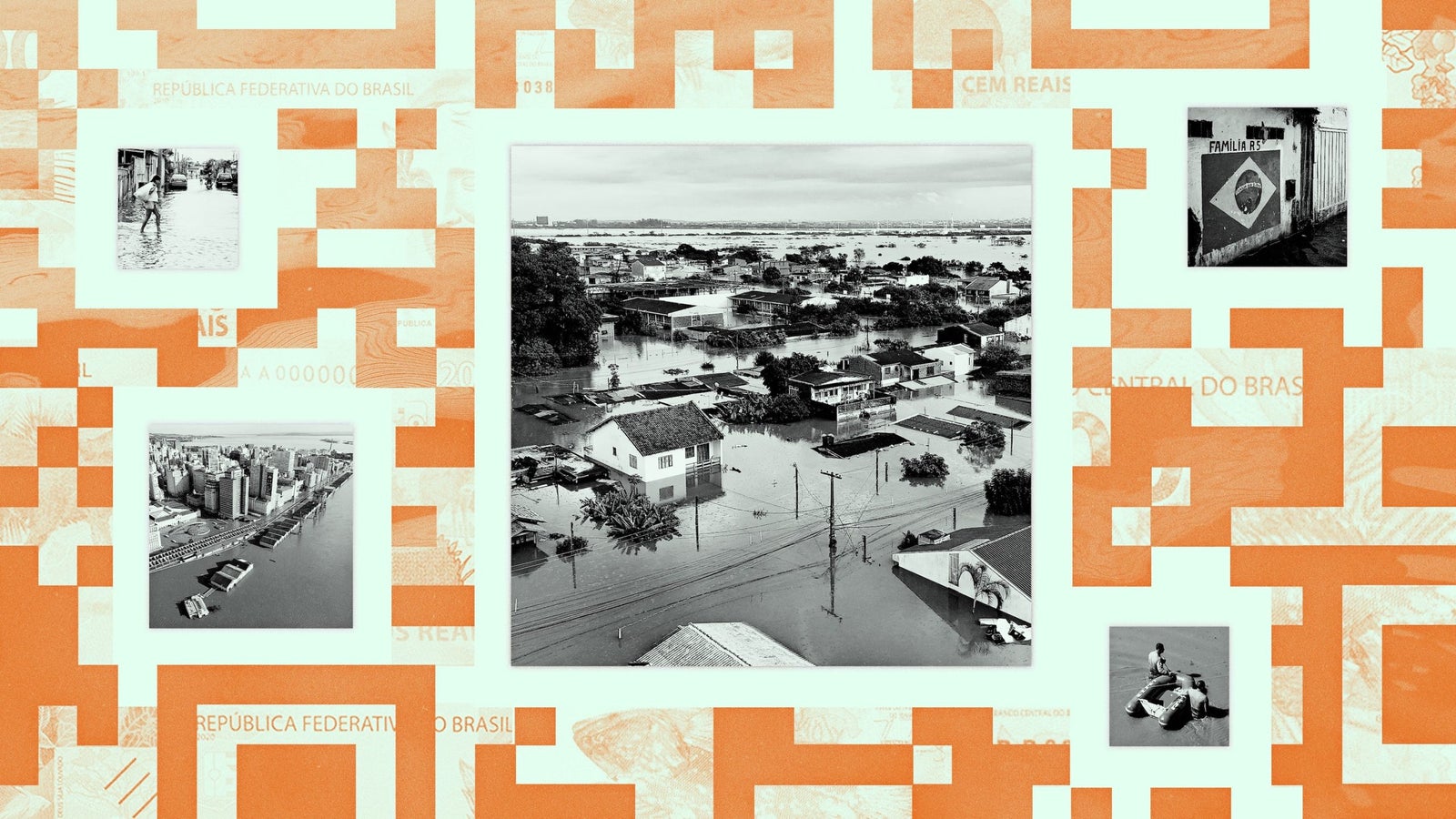
On May 4, Rafael Teixeira watched with concern as water started to seep into his house in Canoas, a town in Brazil’s southernmost state. Over the next few hours, Teixeira and his family were forced to grab essential items and flee the house, leaving most of their belongings behind. By the time they left, the waterline had risen to Teixeira’s neck.
The Teixeiras, who are now sheltering in a city more than 100 kilometers away, estimate they lost at least 30,000 reais (over $6,000) worth of personal belongings, not including the cost of damages to their home. Two days after they left Canoas, Teixeira and his relatives posted calls for donations on Instagram and WhatsApp. They included their Pix “keys” — aliases linked to a bank account that make easy, safe, and quick transfers of money possible. The family has so far received over 5,000 reais (about $1,000) through at least 35 donations made through Pix, a digital payment system launched by Brazil’s central bank in 2020.
“One of Pix’s greatest advantages is speed: You send the money and it gets to the account,” Teixeira told Rest of World. “A bank transfer usually takes between two to three days.”
Some 155 million Brazilians — more than two-thirds of the population — use Pix, according to government data. In the aftermath of devastating floods in Rio Grande do Sul, which killed 172 people and forced 580,000 to evacuate, users thronged to the app. Pix recorded the second-highest number of transactions in its history on May 7, three days after the heaviest day of rain, according to data from the central bank.
“A lot of people who wanted to help and didn’t want to pay a bank fee used Pix,” Mayara Trindade Yano, senior adviser for operations and management at Pix, told Rest of World.
Pix allows users to transfer money simply by scanning or registering a “key,” which can be a QR code or an alias — most commonly an email address or a phone number. It is similar to UPI, India’s government-operated unified payments interface. Every bank and financial institution in Brazil, including digital banks like Nubank, is authorized to integrate into the Pix system. Transactions through Pix are free of charge and carried out immediately.
Pix transactions grew 75% between 2022 and 2023, according to data from the central bank and the Brazilian Association of Credit Card Companies and Services, becoming the country’s preferred payment system over debit and credit cards.

Nathália Barros, another flood victim, was forced to leave her rented home in Canoas on May 4. The 29-year-old purchasing assistant had to leave behind a brand-new computer worth 4,000 reais (over $800), among other pricey items. She asked her Instagram followers to send donations to her bank account through Pix.
Donors would “transfer the money, and I’d spend the night buying things and then showing them the receipt the day after,” Barros told Rest of World. She has received 3,000 reais (about $600) in donations, which she is using for her apartment’s rent and furnishings in Porto Alegre, where she now lives.
Individuals are not the only ones relying on Pix. The Rio Grande do Sul government created a Pix account to receive donations for its aid fund, according to Gustavo Paim, deputy chief of staff of Rio Grande do Sul’s government.
The aid fund, called SOS Rio Grande do Sul, has received more than 117 million reais (about $23 million) through Pix — an unprecedented amount raised for relief work in the state, Paim told Rest of World.
Vakinha, Brazil’s largest online crowdfunding platform, receives about 80% of its donations through Pix. Since the floods, the number of new fundraising pages created every day on the platform has increased by about 50%, Vakinha CEO Luiz Felipe Gheller told Rest of World.
Some have taken advantage of the uptick in donations to scam donors, according to a special task force for cybercrime created by Rio Grande do Sul’s state police.
75% The growth in Pix transactions between 2022 and 2023.
Scammers have created websites that contain fake Pix accounts of fundraising agencies to defraud donors. These include fake pages for Vakinha and SOS Rio Grande do Sul. Some fraudsters have masqueraded as large retail companies, promising to donate the profits from the sale of appliances to flood victims. They have also advertised the fake websites on social media platforms using deepfake imagery of celebrities and digital influencers.
On May 15, officials detained two people suspected of posing as flood victims and asking for donations through Pix, according to a press release posted on the Rio Grande do Sul police department’s website. The police force have identified more than 60 cases of Pix scams related to the flood emergency in the last three weeks.
In Canoas, local newspapers reported on scammers who offered boat rescue services to flood victims in exchange for hundreds of reais through Pix — only to disappear after the payment went through. The Rio Grande do Sul police has opened 29 fraud investigations, according to its publicly available statements.
News of the Pix scams has made donors wary. Barbara Mattivy, a 39-year-old entrepreneur, told Rest of World she only donates to acquaintances who post updates on social media about how they used the money.