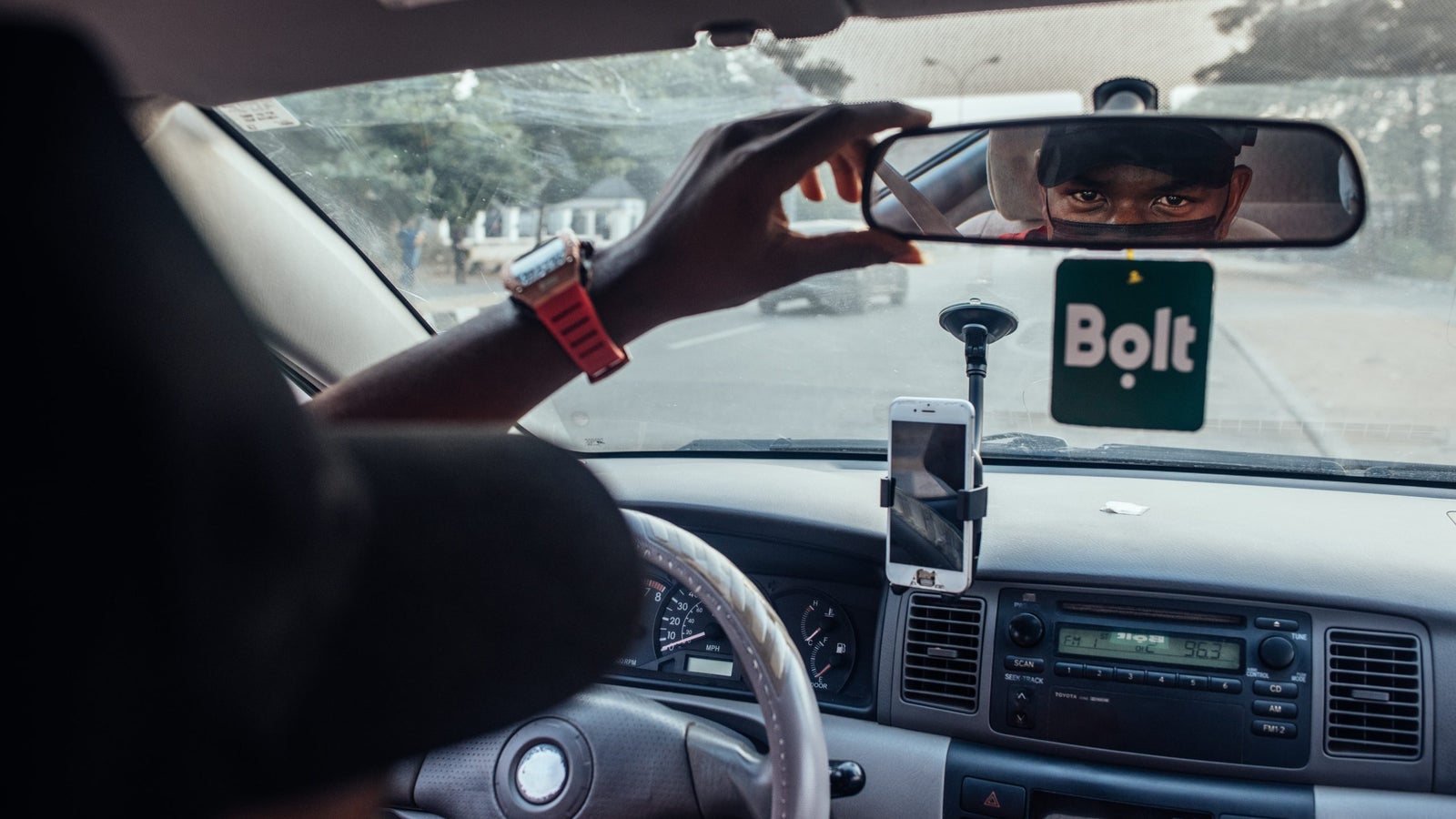
Femi Oladipo, a Lagos-based driver for Bolt, started getting constant headaches and chest pain in mid-August last year. He struggled to understand what was happening to him, until he realized that he was overworked.
At the start of August, Oladipo had learned that Bolt was promising health insurance cover to its “top performing” drivers every month. The insurance would include benefits such as malaria treatment, accident and emergency care, and cover major and minor surgeries. Oladipo wanted to get the perk.
For almost two weeks, he worked nearly 18 hours a day to meet the goal. He also slept in his car on several nights to save on the time it would take him to drive back home.
“It was one of the darkest seasons of my life,” Oladipo told Rest of World. “I was burned out because I thought if I could just meet the target, I could use the health insurance to access medical treatment without worrying about high medical costs, especially in these hard times.”
Oladipo is one of the 20 Bolt drivers in Lagos who told Rest of World they had worked up to 18 hours a day for several weeks in the hope of getting health insurance cover from the Estonian ride-hailing company. Its drive-to-win scheme had left them exhausted and forced them to take risks — such as driving while sleep-deprived — to clock more rides.
Calling the scheme “outrageous,” Isa Sanusi, the Nigeria director of human rights advocacy group Amnesty International, told Rest of World it was an example of how “technology widens the existing inequality that strips people like these drivers of their human rights.”
Bolt did not expressly tell the drivers how many trips would qualify them for the health insurance, but two drivers who won the bonus said it took them 300 trips.

A Bolt spokesperson told Rest of World the number of trips required to earn health insurance was 200 per month. “At no time were drivers requested to make 300 trips in a month before earning the health insurance. The correct figure was 200 trips,” the spokesperson said.
They added that Bolt stopped the 200-ride initiative in May 2023, and now provides health insurance to the 50 drivers with the most trips each month. The company also has an insurance scheme where drivers can pay a minimum of 1,000 naira (75 cents) monthly to get health coverage.
But 14 Bolt drivers told Rest of World they were unaware of this change in policy and had still been chasing 300 rides. They said the new system doesn’t change much for them.
“The new system will still require drivers to compete and work round-the-clock to be among the top 50,” Johnson Olufemi, a 42-year-old Bolt driver in Lagos, told Rest of World. “In a way, it will still require a large number of trips to qualify.”
Gamifying health insurance for gig workers has become a global phenomenon. In April, Rest of World reported that Swiggy, an Indian food delivery company, created a rating system for its workers to qualify for health insurance. Amazon created a “Delivery Premier League” in India to incentivize workers.
Nigeria is one of Africa’s biggest ride-hailing markets, estimated to generate $252.7 million in revenue this year. Bolt has recorded over 250 million rides in the country, according to local media reports.
Jolaiya Moses, a Bolt driver in Lagos, won the health insurance in March 2023. He said it was after his 300th trip that he received the congratulatory email.
“The app only told me to be a part of the top drivers to win health insurance. I worked for over 16 hours daily. I did 300 trips that month,” Moses, who serves as the national treasurer for the Amalgamated Union of App-Based Transporters of Nigeria, told Rest of World.
Moses said he did not use the health insurance because he was angry at the system that had caused several of his peers to feel frustrated and develop health issues. “One of our union officials is currently down with a severe backache,” he said. “He can’t properly sit or walk again, let alone drive, and he’s just 42 years old.”