In 2019, Carlos Pozos began lining up outside Mexico City’s National Palace at dawn for a seat at then-President Andrés Manuel López Obrador’s daily morning media briefings — hourslong events that often dominated the day’s headlines.
Largely unknown at first, Pozos’ antics at the conferences soon made him a household name: He handed López Obrador a series of gifts, read him poems, invited him to play a game of dominoes, and asked him to sign his master’s thesis. Often to be found sitting in one of the first two rows, Pozos’ exchanges with the president could go on for almost one hour.
Pozos and other content creators, who similarly rose to prominence after covering López Obrador’s press conferences, amassed a combined following of over 6 million across social media platforms. “Televisa doesn’t have it, nor Imagen, nor TV Azteca,” Pozos told Rest of World, referring to Mexico’s largest media corporations.
The social media creators’ direct line to the presidency was significantly diminished in October, however, when López Obrador’s six-year term came to an end. Dozens of them had built large social media followings by covering the former president, whose popular, hourslong daily pressers made him Latin America’s top Spanish-language streamer. Through the livestreamed conferences, López Obrador was able to set the national agenda for the U.S.’ second-largest trading partner. Now, many YouTubers who had been fixtures at the conferences are looking for ways to stay relevant as pro-government political commentators and journalists in the absence of Mexico’s most popular leader in recent history.
“We have to reinvent ourselves,” Hans Salazar, a food delivery worker who became a news influencer thanks to his daily presser-related content, told Rest of World.
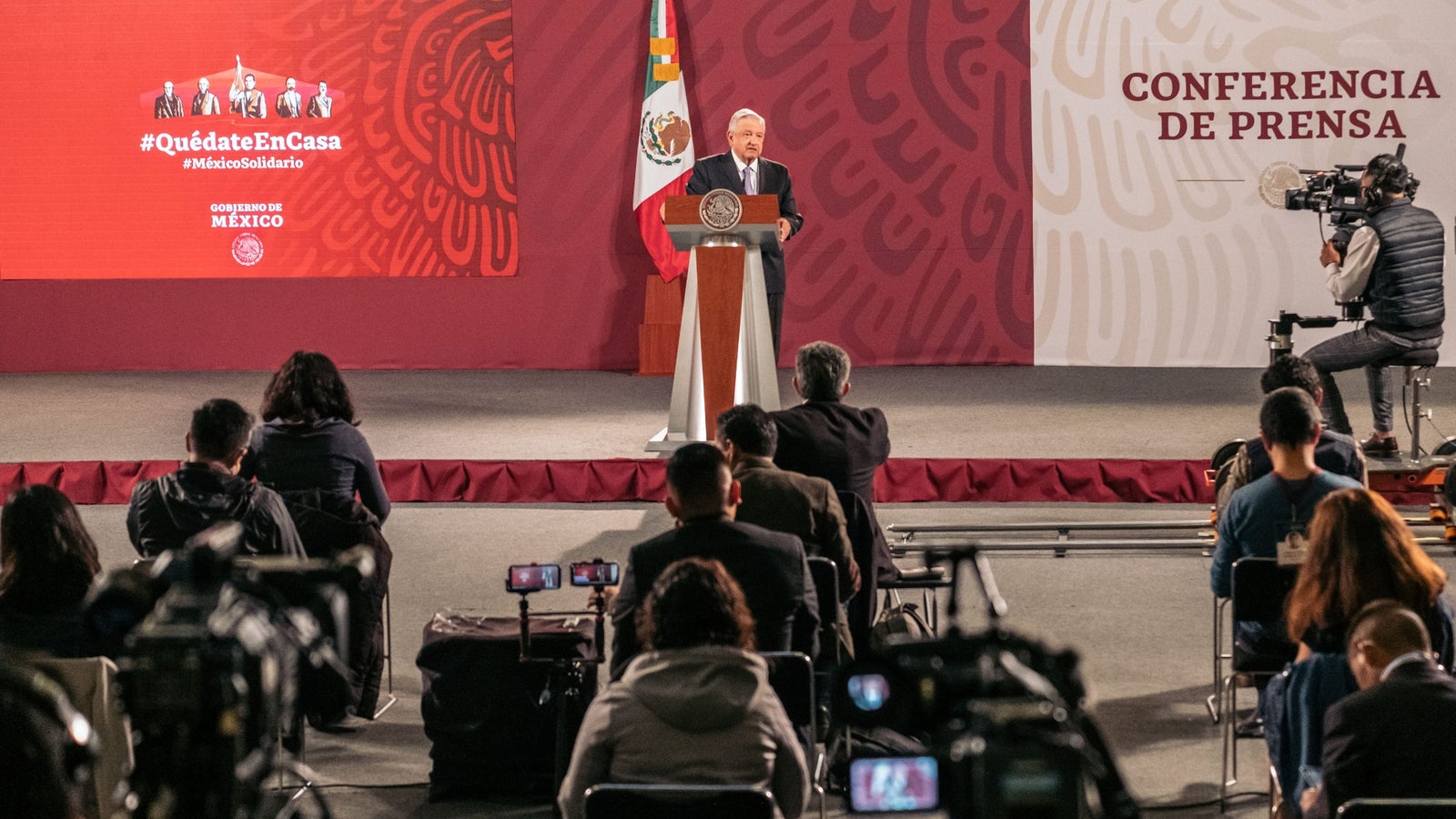
Nearly every morning between 2018 and 2024, López Obrador stood in front of two dozen attendees and a bevy of cameras at the Salón de Tesorería, a cavernous room at the National Palace, to speak about new social programs, gas prices, and security and health issues. By the end of his term, López Obrador had clocked close to 1,500 hours of meandering pressers that often went viral for the leader’s off-key singing, bizarre show-and-tell segments, and controversial statements, including the time he claimed a six-leaf clover amulet and a $2 bill would protect him against Covid-19. The conferences — some of which received over 3.5 million views online — were watched for 49 million hours in 2023 alone.
López Obrador, who left office with an approval rating above 65%, often used the briefings to launch direct attacks on journalists and go after his critics, while giving sympathetic content creators a chance to pose easy questions and deliver flattering monologues about him.
For them, López Obrador’s marathon-length pressers, also known as mañaneras, were lucrative endeavors, whether in the form of ad revenue or donations. Salazar said he received clothes, shoes, equipment, and money from followers, many of whom were Mexican migrants in the U.S.
For years, content creators and reporters who sympathized with the government sat in the first row, where their chances of being called on during the question-and-answer portion of the conference were higher. Over time, López Obrador’s office began implementing rules to ensure more equal access to those coveted seats. Now, in current President Claudia Sheinbaum’s conferences, a raffle organized by her press office determines who sits in the front row, split equally between men and women. Attendees who get a chance to ask a question must wait 10 days to participate in the raffle again.
Sheinbaum’s style is more somber and succinct. While some of López Obrador’s conferences ran longer than three hours, hers wrap up in just under two hours. Her team has also reportedly asked attendees to not use the microphone for more than five minutes each.
“The president’s answers are more concise and to the point and generally don’t last more than three to five minutes,” said Pozos. In response, he recently launched a new product he calls “rapiditas,” or quickies, on YouTube, Instagram, and TikTok.
Sandra Aguilera made her name on social media one morning in 2019 when she compared López Obrador to a Kenyan marathon runner in an effort to praise his good health during a briefing. Soon, she began amassing thousands of subscribers on YouTube and launched her own news site.
Aguilera plans to start a TikTok account to adapt to Sheinbaum’s more terse statements. “People are asking me to do it because they tell me they don’t see me as much” in the pressers, she told Rest of World, “and they are right.”
Avi Sánchez, a political consultant who became known for fact-checking López Obrador’s statements, said public interest in the morning pressers appears to be dwindling. Since Sheinbaum took office, her videos have received between 40 and 100 retweets each, down from as many as 10,000 during the previous administration. The new pressers, Sánchez told Rest of World, “are not working.”
Many in Mexico welcome the diminished interest in the daily briefings, which experts and fact-checkers had warned were a continuous source of misinformation. The conferences were “instruments of propaganda and not of political communication understood as an exercise in service of society and of information,” Raúl Trejo Delarbre, a professor of political science at the National Autonomous University of Mexico, told Rest of World.
“I get goosebumps when I see a journalist in the press conference who is straight-up telling the president how wonderful he is and how fantastic his government’s actions are,” Raúl Cortés, a professor at the Carlos Septién García School of Journalism, told Rest of World. “It goes against all logic of journalism.”
Content creators who rose to fame during López Obrador’s conferences no longer rely solely on these daily gatherings. Some have recently shifted their focus away from the executive to discuss broader issues related to politics and the judiciary. One popular subject is the controversial judicial reform — a constitutional change that will require the direct election of judges, magistrates, and ministers, including for Mexico’s Supreme Court.
Pozos has been posting propaganda from state governors on his channels. Many creators are exploring different outlets for their content. Salazar, who has 250,000 followers across X and YouTube, has done a few livestreams to provide updates on the passing of the judicial reform and criticize those pushing back against it. He now hosts hourslong livestreams with government supporters on weekends, is thinking about starting a podcast, and is in conversations with social media peers to launch a print magazine.
“Someone told me we are crazy for thinking about something in print,” he said, but “we are thinking about other tools of communication.”