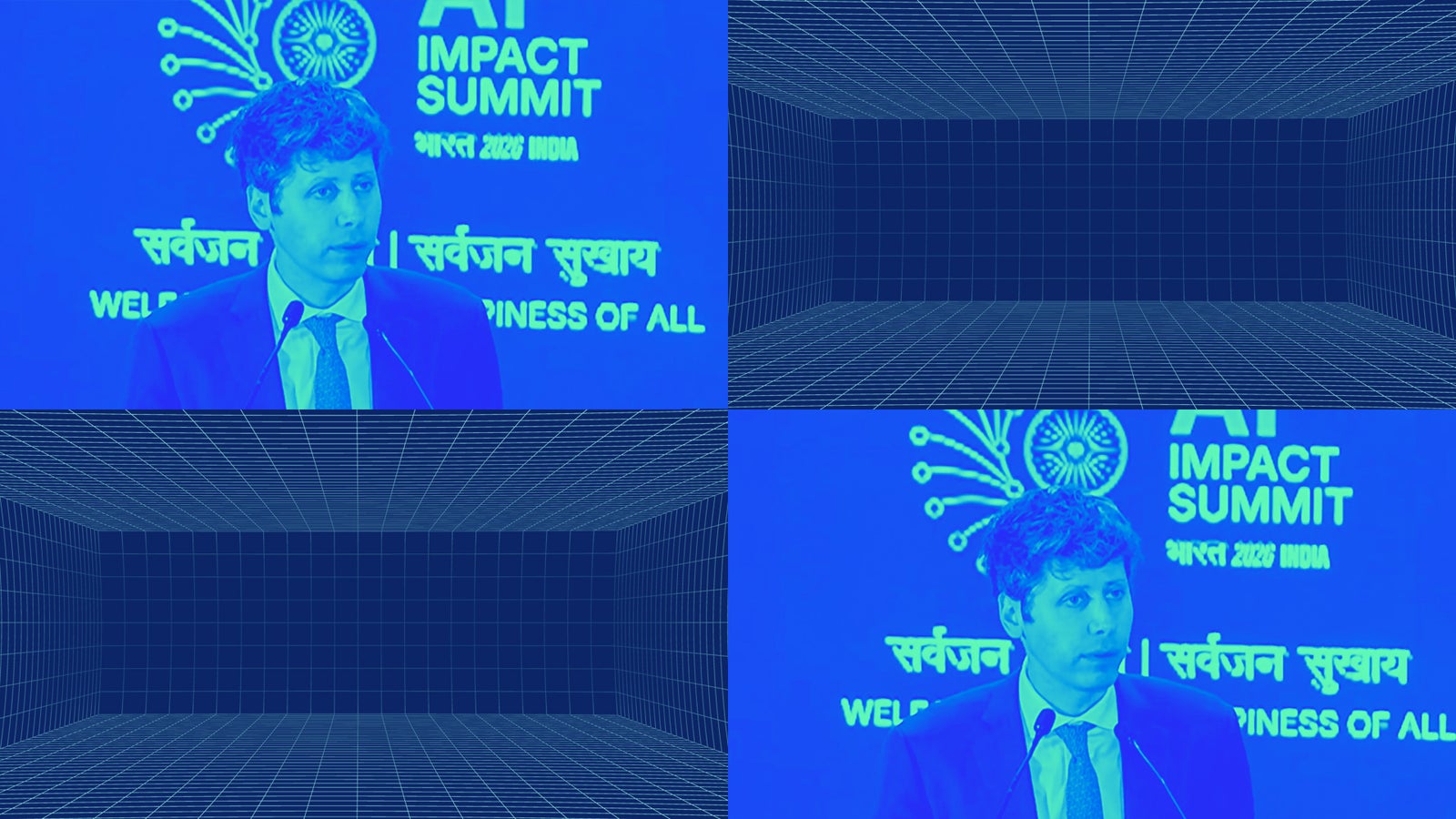
Something I heard at the India AI Impact Summit last month has stayed with me: “Current AI is not transparent — and this is not a bug, it’s a feature,” human-computer interaction researcher Maria Bielikova said on a United Nations-led panel about AI and child safety.
Big Tech touting the promise of AI isn’t new. Nor is the difficulty of peering inside these massive models and understanding how they work. AI firms comfortable with the government’s definition of “lawful use” are being rewarded: Anthropic insisting its models not be used for domestic mass surveillance and fully autonomous weapons resulted in the Pentagon walking away from it, and toward OpenAI. Increasingly, leaders in the field are suggesting that public scrutiny around AI safety should take a backseat.
Anthropic recently dropped its core safety pledge to not train an AI system unless it could guarantee in advance that its safety measures were adequate. At OpenAI, which had previously omitted references to “safety” in its mission language, CEO Sam Altman walked back his calls for formal licensing and safety oversight last spring. He warned that strict government approval requirements for powerful AI would be “disastrous” for U.S. leadership in the technology. Transparency about these shifts is better than silence. But the underlying reality remains: Safety commitments are being scaled back.
Calls to treat AI as wholly unprecedented are becoming a convenient shield against accountability. On the AI Impact Summit’s child safety panel, Chris Lehane of OpenAI said, “This is not social media and we should not make the classic mistake of fighting the last war with the next war.” But a lot of the harms for children are similar — exposure to inappropriate content, misinformation, privacy concerns, mental health impact. Social media suffered because it relied on a post-harm regulatory paradigm. We should learn from that.
In a later panel about scaling responsible AI, Meta’s Sunil Abraham argued that people should embrace AI with its inherent risks, as they have historically done with automobiles. But this is a false equivalence, I’d argue. Automobiles cause localized, physical harm — not structural harms like AI. Automobiles are subject to crash testing, seatbelts, age limits, drunk driving laws, and so on. AI demands equivalent, if not more conscientious, guardrails.
Meanwhile, AI leaders are asking us to quit complaining. In a recent interview with The Indian Express, Altman lamented the “unfair” critique that AI drains resources, claiming humans too require energy to train! He argued that we eat, we dodge predators, we perform science. I won’t belabor the ridiculousness of this comparison — The Atlantic already did it well.
It’s vital we include many voices in the AI safety conversation. The summit largely featured Silicon Valley’s AI elite including OpenAI, Anthropic, Microsoft, and IBM, which is great for putting India on the map. But don’t these entities hold a conflict of interest when it comes to balancing safety with growth? Even Geoffrey Hinton, often considered the “Godfather of AI,” has warned that many major tech leaders publicly downplay the risks of artificial intelligence, including job displacement, ethical concerns, or long-term safety, despite understanding them internally. (Notably, Hinton makes an exception for Demis Hassabis of Google DeepMind.)
Many civil society organizations, meanwhile, were left feeling they didn’t have a seat at the Indian summit’s table. Technology and human rights researcher Disha Verma wrote on LinkedIn that several organizations had to “find alternate venues to have real, rooted conversations.”
Should we take solace in the fact that a Guinness World Record was set during the India event for most pledges received for an AI responsibility campaign in 24 hours? But this was the collective work of roughly 250,000 citizens mobilized by schools and universities — accomplished a full day before the AI industry’s elite even set foot at the event.