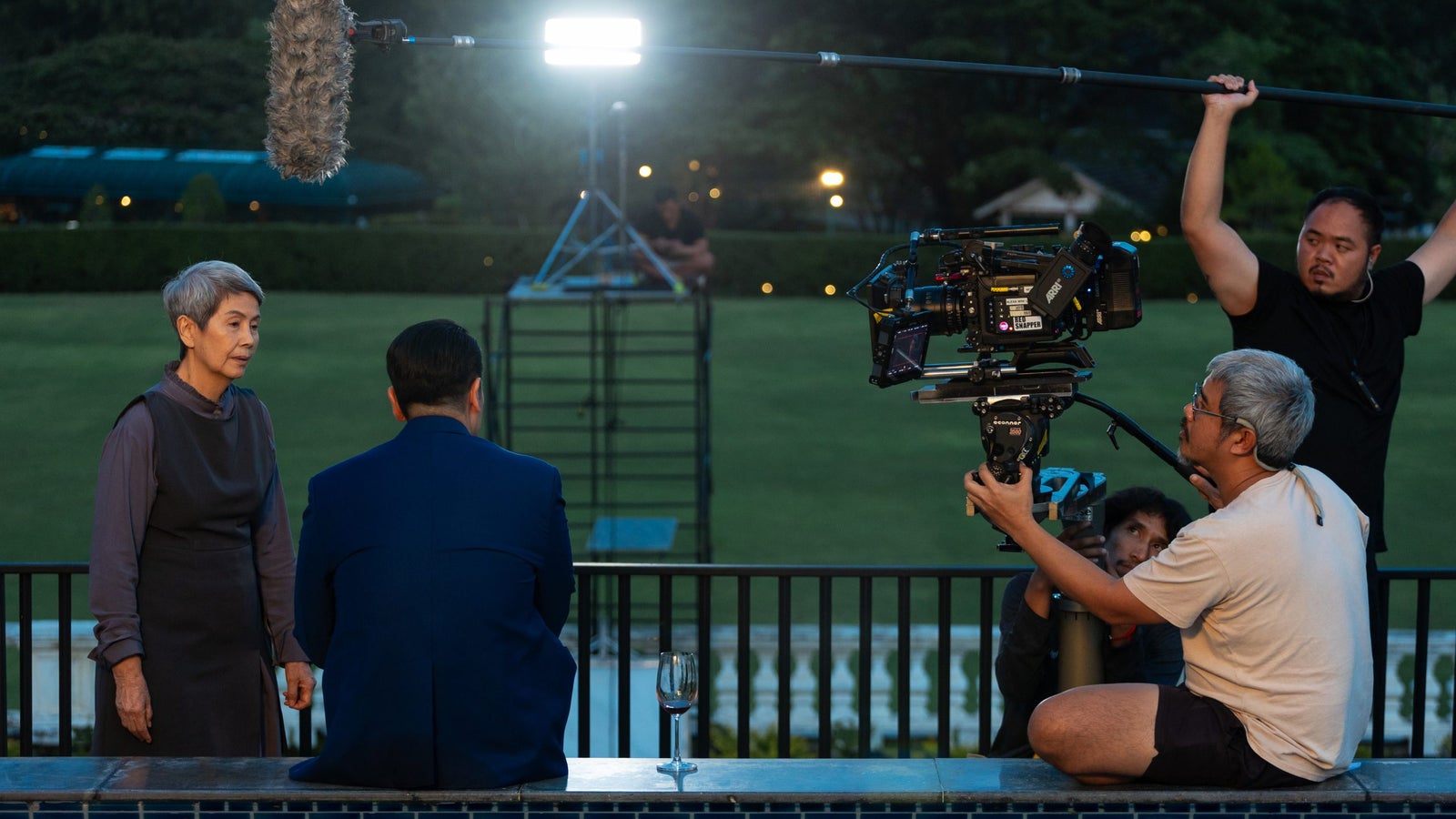
When Netflix began discussions on its first original Bahasa Indonesia series in 2018, it was struggling to sign on subscribers after having been blocked by the country’s biggest internet service provider. The streaming platform was unblocked in 2020, and the show, Gadis Kretek, or Cigarette Girl, based on a novel by the same name, premiered last year. With an all-Indonesian cast and crew, the period drama quickly climbed into the platform’s Non-English Top 10.
Six years on from that stumbling start, Netflix has six original titles from Indonesia this year, besides 10 from Thailand and a zombie film from the Philippines. One of the Indonesian shows, a supernatural sci-fi series from director Joko Anwar called Nightmares and Daydreams, made it onto Netflix’s U.S. Top 10 when it aired in June this year.
A platform that once leaned heavily on its Hollywood and South Korean fare to woo viewers in Southeast Asia, Netflix is now tapping more content from the region to attract both local and global audiences. It is also aiming to replicate the global success of shows such as Squid Game from South Korea and One Piece, a live-action remake of a popular manga series from Japan.
The primary aim is to bring “locally authentic” content to subscribers in Southeast Asia, Minyoung Kim, Netflix’s vice president of content for Asia Pacific (ex-India), told reporters at a recent briefing. In addition, the goal is to “make sure that these stories find audiences not only within their home country but also beyond domestic markets,” she said.
Of Netflix’s more than 277 million subscribers worldwide, over two-thirds are outside the U.S. The Asia-Pacific region is the smallest contributor to global revenue but is seeing some of the fastest growth. It had over 50 million subscribers as of June 30 this year, compared to about 40 million a year earlier.
Subscribers in Asia care more for familiar fare: About 80% of the viewership of premium video-on-demand is for local content, according to research firm Media Partners Asia (MPA). South Korean and Japanese content still dominate, making up 60% of viewer engagement on streaming platforms in Asia, according to MPA. But the audience for Southeast Asian fare is growing.
Southeast Asia also “presents opportunities for relatively more affordable content production compared to Korea and Japan,” MPA lead analyst Dhivya T told Rest of World.
“While the impact and travelability of [South Korean] K-dramas and [Japanese] anime is well-established … Thai and Indonesian content are also emerging as important categories,” she said. “Thai drama, romance, comedy, and Indonesian horror [are] emerging as the genres with the highest travelability and appeal.”
While the region has long been associated with the horror genre, Netflix is also exploring other content and seeing good results, Aoura Lovenson Chandra, co-founder at Base Entertainment in Indonesia, told Rest of World.
Thai family thriller Hunger topped Netflix’s Global Top 10 film (non-English) chart, and the drama Master of the House became the first Thai series to reach number one on Netflix’s Global Top 10 list in July. Indonesian action drama The Shadow Strays screened at the Toronto International Film Festival this year and is airing on Netflix next month.

“Netflix’s audience is varied, so they are open to any genre, as long as the story is authentic,” said Chandra, who was a production executive on Cigarette Girl.
Southeast Asian content is gaining global audiences also because the writing and production quality have improved significantly, Adam Knee, dean of the faculty of fine arts, media, and creative industries at the LaSalle College of the Arts in Singapore, told Rest of World.
“It’s not just that people are paying more attention, it’s also that the skills have developed — they’re really of an international standard now,” he said. “There’s also more consistent output: If you go to a cinema in Thailand or Singapore or Philippines or Indonesia, you’ll find plenty of local and regional productions. That wasn’t the case 20 years ago.”
To build a pipeline of talent, Netflix ran a film camp this year in Thailand for the second time. The 76 aspiring filmmakers will be offered training with its production partners, and Netflix will host a similar camp in Indonesia.
Thai drama, romance, comedy, and Indonesian horror [are] emerging as the genres with the highest travelability and appeal.”
Netflix’s actions in Southeast Asia run counter to its streaming rivals Disney+ and Prime Video, which have both pulled back from original content in the region, though they continue to invest in South Korea and Japan. That leaves Hong Kong–based Viu and Indonesia’s Vidio as Netflix’s chief rivals in the region.
For creators in Southeast Asia, Netflix provides an opportunity to reach a global audience, and it is “willing to choose stories that are more unconventional,” Indonesian director Yosep Anggi Noen told Rest of World. His film 24 Hours with Gaspar — about a private detective with 24 hours to live stumbling across a human trafficking syndicate while investigating a disappearance — is one such example. Released last year on Netflix, the film “caters to an audience that can appreciate a more complex plot and characters,” Yosep said.
Besides commissioning content, Netflix is also buying streaming rights of new movies more aggressively, Thai director Panu Aree told Rest of World. “Some of these movies don’t do well in the cinema but immediately top the chart when it’s available on the streaming platform.”
That is not the case with How To Make Millions Before Grandma Dies, which became the highest-grossing Thai film to date in several Southeast Asian nations. The story of a young man who takes care of his dying grandmother with an eye on her fortune, it began streaming on Netflix in September. The film will likely do well globally, said Knee.
“It’s neither a horror nor a romantic comedy, so it really surprised everyone,” Knee said. “But it’s something that is immediately relatable across Southeast Asia, as well as being well-written and well-produced. I’m sure it will do well in the West.”
With more content from Southeast Asia finding favor with global audiences, it’s not so far-fetched to think that a big global hit could come from the region. It’s only a matter of time, said Chandra.
“The South Korean film industry was already catering to a global audience for 10 to 15 years before Squid Game,” he said. “I think Southeast Asia is on the right track, but we have a different starting point compared to South Korea.”