This article is adapted from Rest of World’s recent feature: The math tutor and the missing $533 million
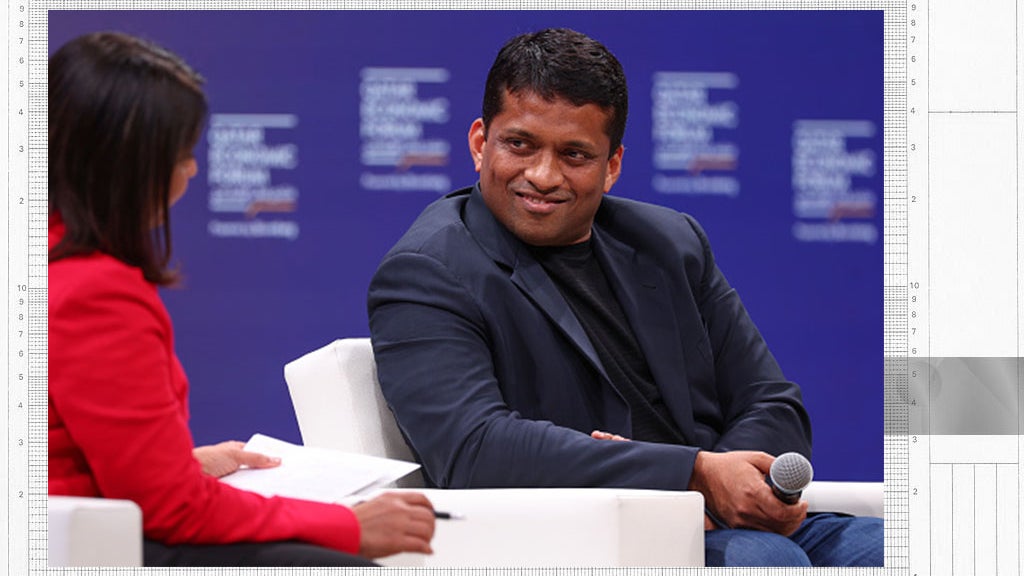
Named for its founder, Byju Raveendran, the learning app Byju’s (sometimes stylized as BYJU’s) was once one of the best known brands in India. The company was a pioneer in the field of educational technology, in a country with a massive appetite for education solutions. By 2017, big-name investors like the Chan Zuckerberg Initiative had vaulted Byju’s into the upper echelons of global edtech companies, sparking a worldwide acquisitions spree. At its peak in 2022, the company was valued at about $22 billion, with roughly 60,000 employees and millions of paying users. Today, its founder says it’s “worth zero.”
How did Byju’s start?
Byju Raveendran was born in 1980 in Azhikode, a small village in Kerala, the state with the highest literacy rate in India. Raveendran’s parents were teachers at the school he attended. His father taught physics and his mother taught math.
As a kid, Raveendran loved math — and he said his seventh-grade math teacher once even asked him to lead the class while she was away. “Otherwise I was an introvert,” Raveendran said. “But the moment I started teaching math, I saw the value that I was giving.”
Raveendran studied mechanical engineering at a nearby college. On a visit to Bengaluru in 2003, some friends asked if he’d coach them for an entrance test for the elite Indian Institutes of Management (IIMs), whose MBAs are highly prized in the international job market. Eventually, the lessons moved to a classroom at a local college, Raveendran said. “Once I started doing that — and it was free, this is not business, I was doing it for fun — they started bringing their friends.”
These in-person “math shows” quickly expanded. Raveendran says he rented an auditorium with a seating capacity of 1,200 and began charging 1,000 rupees per ticket — around $20 at the time — to cover rentals. As word spread of Raveendran’s abilities and his students’ success, demand rose. Raveendran rented sports stadiums that could seat up to 25,000 students.
As smartphones and broadband internet became ubiquitous, Raveendran began recording his lectures on video. In 2011, he founded the company Think and Learn, whose goal was to create instructional content that would appeal to students of all ages. In August 2015, the company launched the Byju’s learning app, which combined recorded lectures with virtual demonstrations, animations, and games. Within months, millions of Indians had downloaded the app. Within a year, Byju’s had acquired some 300,000 paying subscribers.
Why did Byju’s go bankrupt?
As investors lined up, Raveendran wanted Byju’s to become a global edtech giant. Starting in July of 2017, the company began a string of acquisitions with TutorVista, an online company used mainly by students in the United States.
Demand for Byju’sByju’sA leading edtech firm, Byju’s was founded in 2011 by Byju Raveendran and Divya Gokulnath and is headquartered in Bengaluru.READ MORE remote learning content soared when the Covid-19 pandemic shut classrooms in 2020. But the increase in downloads masked serious business troubles. Byju’s 2021 earnings report made it evident that the business had not been profitable for some time. The company had lost a staggering amount of roughly $550 million in the previous year.
In the absence of real growth in profits, Byju’s became dependent on new rounds of fundraising. In March 2022, it announced it had raised a total of $800 million via a personal contribution from Raveendran and new funding from three investment companies, bringing the company to a reported valuation of $22 billion.
The missing $533 million and a hedge fund inside an IHOP
In November 2021, the company had raised $1.2 billion in a “term loan B” from lenders in the United States. Byju’s defaulted on the loan. In March 2023, the lenders removed the leader of Byju’s U.S. subsidiary, Alpha Inc, and appointed a new director. In February 2024, Alpha filed for bankruptcy. Lenders sued Byju’s parent company, Think and Learn, in a bankruptcy court.
Plaintiffs alleged that $533 million of the $1.2 billion loan had been siphoned to Camshaft Capital Fund, a hedge fund once registered at the address of an International House of Pancakes restaurant in Miami. Camshaft was run by a 23-year-old with seemingly no relevant educational or professional experience, who’d purportedly spent part of the funds on a Ferrari, a Lamborghini, and a Rolls-Royce. In February 2025, the court validated the allegation that Alpha Inc had fraudulently transferred funds from the $1.2 billion loan to Camshaft, essentially engaging in theft.
Things were starting to unravel in India as well. In July 2024, insolvency proceedings were initiated against Byju’s in India after the country’s National Company Law Tribunal admitted a lawsuit over unpaid dues from its sponsorship of the Indian cricket team. Tens of thousands of employees were let go in successive rounds of layoffs. At a press briefing in October 2024, Raveendran lamented that the legal troubles and investor exits had all but destroyed the company. “It’s worth zero,” he declared.
Where is Byju Raveendran now?
Today Raveendran lives in a mansion in Dubai. Speaking to Rest of World in January, Raveendran insisted the allegations of theft are baseless. He said Byju’s troubles had simply resulted from “trying to grow too soon, too fast,” and described himself as a victim of a conspiracy by U.S. lenders. Raveendran says he expects to regain control of his company. Barring that, he could simply start a new one: “The moment I start teaching, I’m sure I will fill stadiums again.”