When 25-year-old Guilherme wants to take a break during his 8-hour shift as a Rappi delivery worker in São Paulo, he heads towards the nearest public square to sit on a concrete bench under a thatch of trees. He chats with other workers while filling up his water bottle. When he gets hungry, he buys some pão de queijo — Brazilian cheese bread — from a street vendor nearby.
Gig workers around the world spend long hours rushing from one job to the next, with few breaks, if any. In January, Rest of World met with 104 ride-hailing drivers, delivery workers, and cleaners across 10 cities in Latin America, Africa, and Asia, to understand how and where they rest between gigs. Nearly half the gig workers surveyed told us that they had been harassed, or had their belongings stolen while taking a break.
The workers also often navigate harsh — and dangerous — challenges like heavy traffic, cops who refuse to let them park their cars to collect deliveries, security personnel who drive them away from residential areas, and restaurants that stop them from sitting outside, even while waiting to pick up orders.
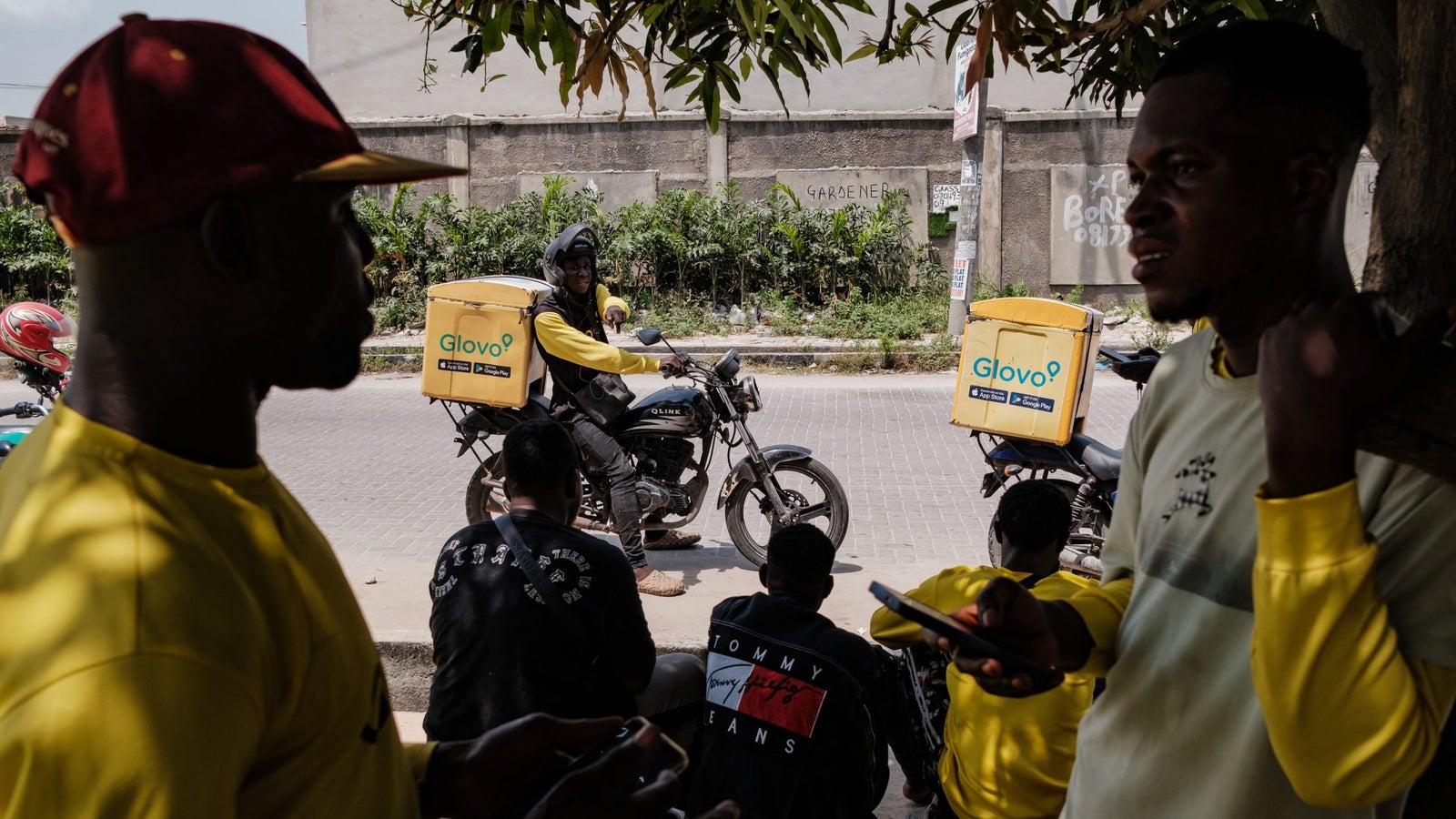
Rest of World’s photographers shadowed gig workers in four of these 10 cities — São Paulo, Lagos, Dhaka, and Jakarta — to get an intimate look at how they catch a breather between orders. The level of safety and comfort differs from one city to the other. In São Paulo, some workers have access to company-run hubs where they can relax on bean bags, charge their devices, and warm their food. But in Jakarta, most workers take breaks at makeshift wooden shelters set up by gig worker communities.
The common thread we discovered between gig workers across the four cities was a sense of community. The workers laughed and joked together, shared cigarettes, napped, and watched videos on their phones … until their app pinged to indicate an order. They then got back into their cars or jumped back on their bikes and went back to their day.
Dhaka, Bangladesh
In Dhaka, delivery workers mostly use bicycles for their work. As they navigate the city’s unruly traffic for hours, they need breaks to recharge. They congregate at roadside tea stalls and chat with other workers over cups of chai, smoke cigarettes, and charge their phones.


Jakarta, Indonesia
In Jakarta, gig workers often rest at base camps operated by peer-support groups known as communities, though platforms like Grab and inDrive also provide lounges in the city. The workers spend time playing games on their phones, chatting with each other, and napping.


São Paulo, Brazil
In São Paulo, workers take breaks at iFood rest stops and public squares. But sometimes, during languid afternoons when orders are few and business is slow, they play a game of football at Ibirapuera, the largest public park in the city.


Lagos, Nigeria
For gig workers in Lagos, taking a break is a luxury that they often cannot afford as they try to earn enough to support their families. But when they do pause, an alleyway outside a restaurant is their best option. It’s normal for 20-year-old Philip Saheed to skip breaks altogether and work for nine hours nonstop. But if he gets a chance, he heads to a restaurant called The Place in the Yaba area of Lagos to grab a meal.