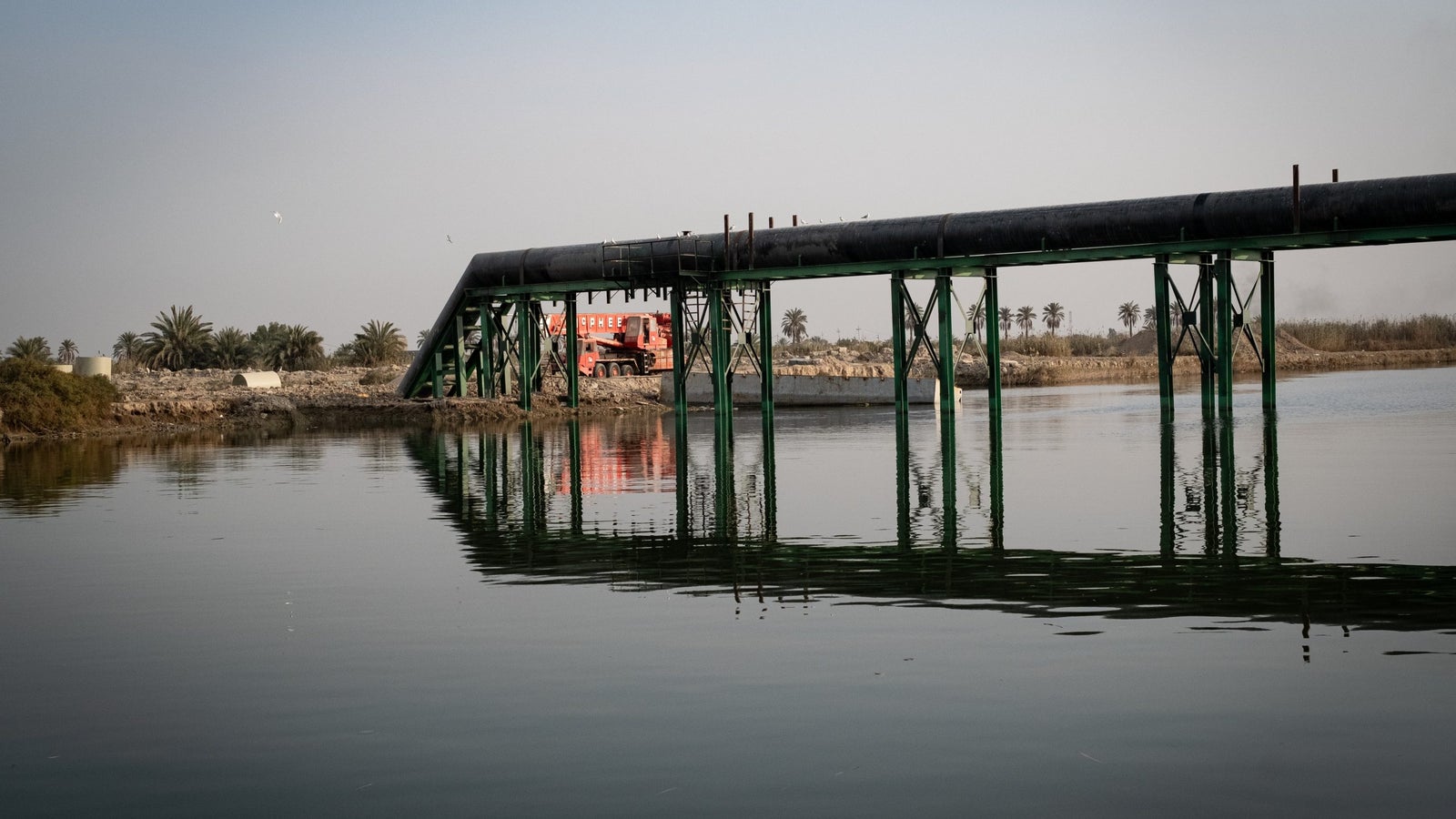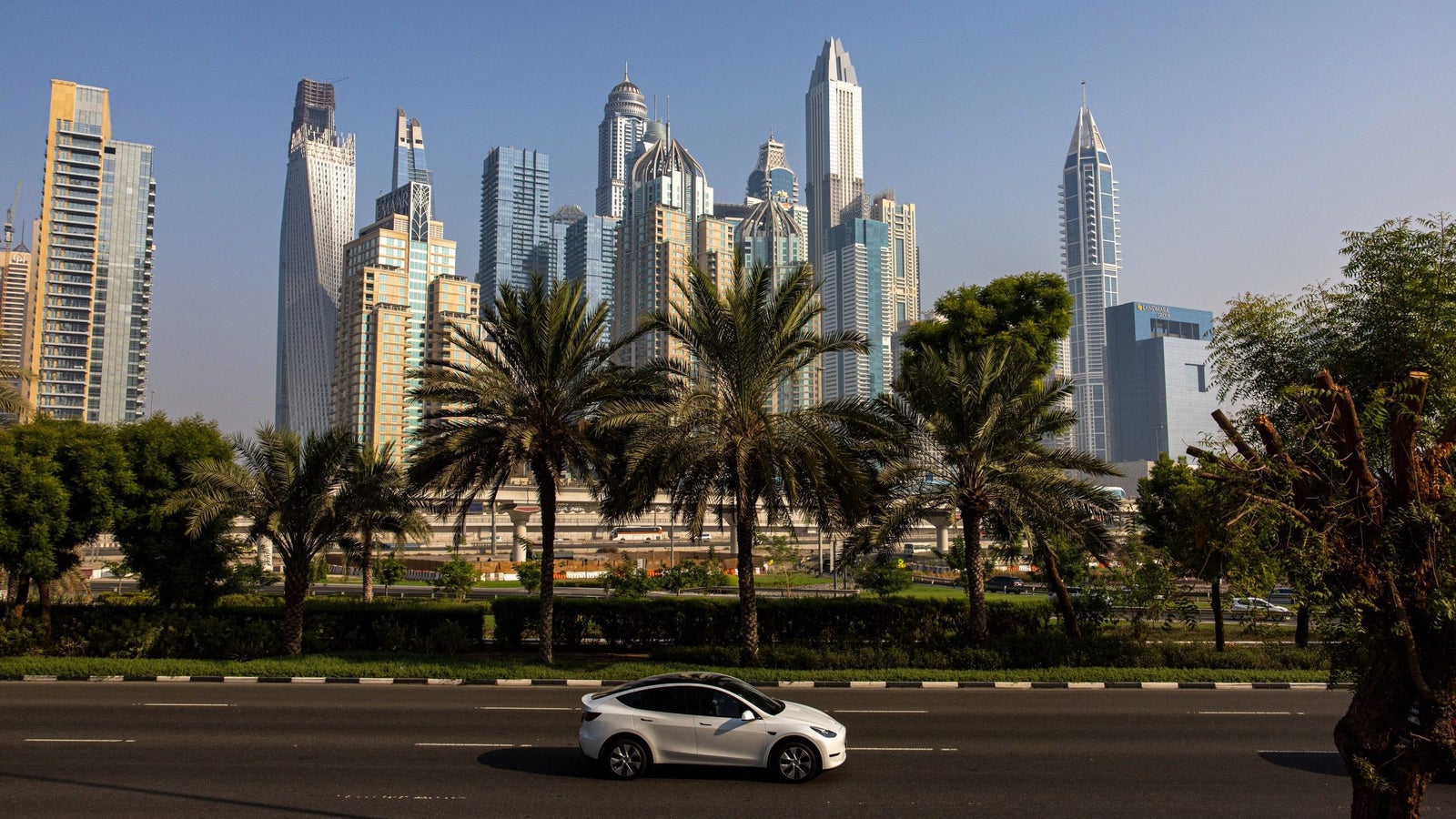
Once a land of gas-guzzling super-cars, the United Arab Emirates is rapidly emerging as the Middle East’s unexpected electric vehicle leader, signaling global energy transition has reached the heartlands of petroleum production.
Ambitious climate targets, expanding charging infrastructure, and a growing range of vehicles at various price points are driving this EV revolution. EVs made up 13% of total car sales in 2023, according to the latest Ministry of Energy and Infrastructure figures, jumping from 3.2% in 2022 and a mere 0.7% in 2021. About 260,000 new vehicles were sold in the UAE in 2023, according to Hamburg-headquartered data collator Statista.
The pivot underscores an evolution for a nation built on oil wealth, with green mobility forming a key component of its economic diversification and sustainability strategy. The UAE aims to have EVs making up half of all vehicles on its roads by 2050, said Sharif Al Olama, undersecretary for energy and petroleum affairs at the Ministry of Energy and Infrastructure in Abu Dhabi.
“The UAE is strongly committed to shifting towards cleaner and more sustainable energy sources,” Al Olama told Rest of World. “Prices are dropping, demand is rising, and infrastructure is expanding rapidly.”
The UAE had more than 147,000 electric and hybrid vehicles on its roads as of last year, with EV registrations alone rising by more than 25% year on year. Total new vehicle sales in the UAE were 316,000 units in 2024.
147,000 Number of EVs and hybrids in UAE as of 2023
The UAE might surpass its 2050 EV target ahead of 2050, given the pace of innovation and consumer interest, said Alessandro Tricamo, partner for transportation and services practice for the Middle East, Africa, and India at consulting firm Oliver Wyman in Dubai.
“If Norway, also a major oil producer, can reach over 96% EV sales for new cars, there’s no reason the UAE can’t follow,” Tricamo told Rest of World.
EV demand in the country is already high: Almost two-thirds of the people want to make EVs their primary mode of transport by 2025, according to a joint survey by the UAE’s biggest car dealer Al-Futtaim and London-based market researcher YouGov, which collated answers from more than 2,000 respondents.
“The rapid growth in the adoption of NEVs [new energy vehicles] presents an exciting new phase in the UAE’s mobility landscape,” Paul Willis, president of Al-Futtaim Automotive, told Rest of World. “The very fact the UAE is actively diversifying its oil-based economy paves the way for electrification and carbon reduction across sectors, including transportation.”
The roots of the UAE’s EV boom lie in its ambitious climate initiatives. In January 2017, the country launched its UAE Energy Strategy 2050, and followed up in October 2021 with Net Zero 2050 — both of which aim to slash emissions and increase the share of clean energy in the country’s power mix to 30% by 2031.
“It’s a combination of cost, climate awareness, and policy,” Willis said. “But increasingly, it’s also about performance. Modern NEVs provide a smooth, quiet ride with instant torque and cutting-edge features that are attracting tech-savvy consumers.
”The perception of EVs has evolved dramatically. Customers are increasingly attracted by the modern designs, advanced features, and superior driving comfort, coupled with lower ownership and maintenance costs, and growing environmental awareness, Tricamo said.
Al-Futtaim’s EV offerings span a wide range from Toyota and Lexus to China’s BYD and GAC Aion, making electric cars accessible to a much broader segment of the population, Willis said. New launches such as the BYD Sealion 7 and hybrid models like the Lexus LX 700h are helping Al-Futtaim maintain sustained double-digit growth aligned with the UAE’s goals, he said.
The real story is not about replacing oil but about creating balance and resilience in a future-ready economy.”
Over the past decade, the UAE has introduced a range of incentives to promote EV adoption, from short-term perks to long-term strategies. Buyers are recognizing that innovation, sustainability, and energy efficiency can co-exist, according to Moutaz Louis, CEO of Smart Mobility International, a UAE-based EV distributor.
“The real story is not about replacing oil but about creating balance and resilience in a future-ready economy,” Louis told Rest of World. “Electric and hydrogen-powered vehicles will play an increasingly dominant role.”
Even as UAE fuel prices remain about a fifth lower than average U.S. rates, according to Rest of World calculations, EVs are winning over consumers through reduced long-term operational costs and shrinking range anxiety, thanks to an expanding charging infrastructure, Louis said.In May 2024, the Ministry of Energy and Infrastructure started UAEV, a joint venture with Etihad Water and Electricity, to build a nationwide charging network. Under the venture, the country is expected to have 1,000 public charging stations to cater to varying numbers of vehicles by the end of 2030 — many of them fast chargers, according to a statement from UAEV.

The Dubai Electricity and Water Authority currently has a wide network of about 740 charging points across the city. Started in 2014, DEWA aims to expand its EV green charger network to 1,000 stations by the end of the year. Al-Futtaim aims to provide 10% of the country’s charging stations by 2030 through Charge2Moov, a turnkey charging solution for homes and businesses, Willis said.
Still, the UAE’s efforts pale in comparison to global leaders. China had 12.82 million charging points by the end of December 2024 — up 49% from the previous year, with 4.2 million points added in 2024 alone, according to data from the nation’s Electric Vehicle Charging Infrastructure Promotion Alliance, an industry group. The U.S. had more than 204,600 EV charging outlets as of March this year, with California accounting for almost a quarter of the total, Statista figures show.
The UAE has in the last three years offered EV owners incentives including free charging, parking privileges, and smart toll cards, while introducing policy frameworks with mandates for EV-ready infrastructure in new developments and innovative green financing initiatives.
“We’re seeing a more institutionalized approach now,” Louis said. “It’s less about freebies, and more about infrastructure and long-term viability.”
These benefits have resonated with UAE consumers. EV owners spend just a quarter of what traditional car owners do on fuel, Willis said. EV maintenance costs are also significantly lower because of fewer moving parts and longer service intervals.
Chinese manufacturers play a pivotal role in expanding market options. Not only are they cost-competitive, they are equally tech-competitive, Louis said. Brands like Avatr, BYD, and GAC Aion have combined advanced battery technology with competitive pricing to take on established players.
Smart Mobility has begun offering so-called range-extended electric vehicles (REEVs), whose electric drivetrains and onboard generators produce a range of more than 1,000 kilometers (620 miles). No other company in the Middle East is selling such vehicles yet.
By the end of 2025, internal combustion engine vehicles might feel as outdated as horseback riding.”
Challenges remain in the UAE’s electric journey. The harsh desert climate can strain battery performance, and charging infrastructure must continue to expand to meet growing demand. Battery recycling and second-life applications will become increasingly important as the EV fleet grows, Tricamo said.
The government is working with environmental company Beeah to launch the country’s first electric and hybrid vehicle battery recycling facility, Al Olama said.
“We are addressing disposal challenges before they become a roadblock,” he said.
Additional measures, including mandating minimum charging points at gas stations and malls, encouraging more players to enter the charging market, and implementing congestion charges would further incentivize EV adoption, Tricamo said.“The shift to electric is happening faster than anyone anticipated,” he said. “By the end of 2025, internal combustion engine vehicles might feel as outdated as horseback riding.”