I’ve mostly treated AI videos like a curiosity — impressive, a little creepy, and easy to scroll past. Then I clicked on a seven-minute AI film called Sign that 16 million people had already watched on a Chinese platform. I wasn’t expecting it to work. It kind of did.
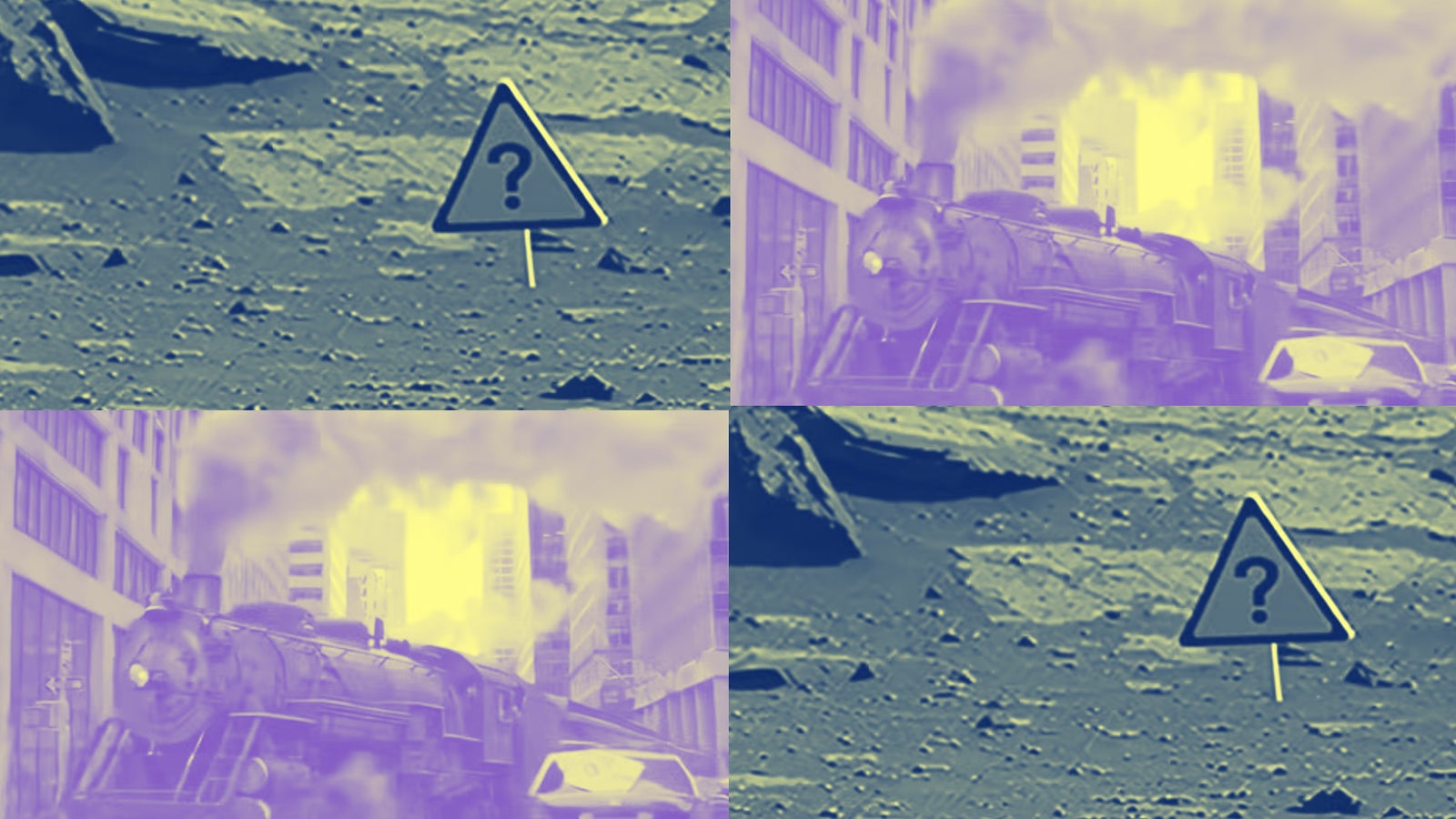
Sign imagines a world where mysterious road signs begin warping reality, scrambling language, and cutting people off from one another. What follows is a fast-moving, visually inventive story about humans trying to reclaim meaning itself. Some commentators said they were moved to tears as the humans triumphed at the end of the video. Frant Gwo, director of Chinese sci-fi series The Wandering Earth, called it impressive.
The visuals, though, are unmistakably AI — the slightly rubbery faces, the over-smoothed skin, the emotional flatness that still gives these characters away. One hint: A character looked like a Danny DeVito cameo.
In Hollywood, AI is often seen as a threat to both intellectual property and jobs. Studios have sued over the use of copyrighted material to train image and video models, and filmmakers warn of the impact on creative work. When ByteDance’s Seedance 2.0 was used by an Irish filmmaker to generate a clip of Brad Pitt fighting Tom Cruise, the Human Artistry Campaign, an artists’ rights group, called it “an attack on every creator around the world.” The Motion Picture Association sent a cease-and-desist letter to ByteDance.
Some independent creators have defended AI, arguing the technology gives them a chance for creative expression without the budget to hire professional actors, cinematographers, and composers. Anyone with a story could direct a movie.
“In the traditional media industry, it would take a lot of climbing up for me to become a director and make an impact with my works,” Candy Lin, who was in charge of post-production for Sign, told me. “Now we get to tell people about what we are thinking about, our stories, and our interesting thoughts.”
Lin and two other Chinese media professionals, all around 30 years old and based in London, created Sign in their spare time. They used video generators including Runway, Google’s Veo, and Kuaishou’s Kling. The score was made with AI music generator Suno. The director, Jiaze Li, had run thousands of prompts before landing on the right clips — a compute-intensive and unpredictable process that AI users compare to buying lottery tickets. The production cost less than 5,000 pounds ($6,750), mostly used to pay for the AI tools.
It took Li more than a month to work out how the road-sign apocalypse would unfold, while Lin’s editing required constant creative judgment. The filmmakers say originality and copyright have always been the most important priorities for the team.
But AI models may accidentally produce celebrity similarities without being prompted. The creators said they were unaware of any resemblance to DeVito. “There was no intention to include or reference Danny DeVito in the prompt,” Lin said. “If there happens to be any resemblance, it would be purely coincidental and likely an artifact of the generative model.”
The team has entered Sign in an AI film competition on Chinese video site Bilibili, and published it on YouTube and Instagram as well. “Technology is no longer the barrier,” Li said. “The real competitiveness comes from creativity.”
AI videos can look impressive and still feel like a remix — familiar, even when it’s new. That’s the tension running through Hollywood right now: In addition to fears about jobs and copyrights, there’s a deep skepticism about originality. Making AI images look real was the first hurdle. Making them feel new is the harder one.