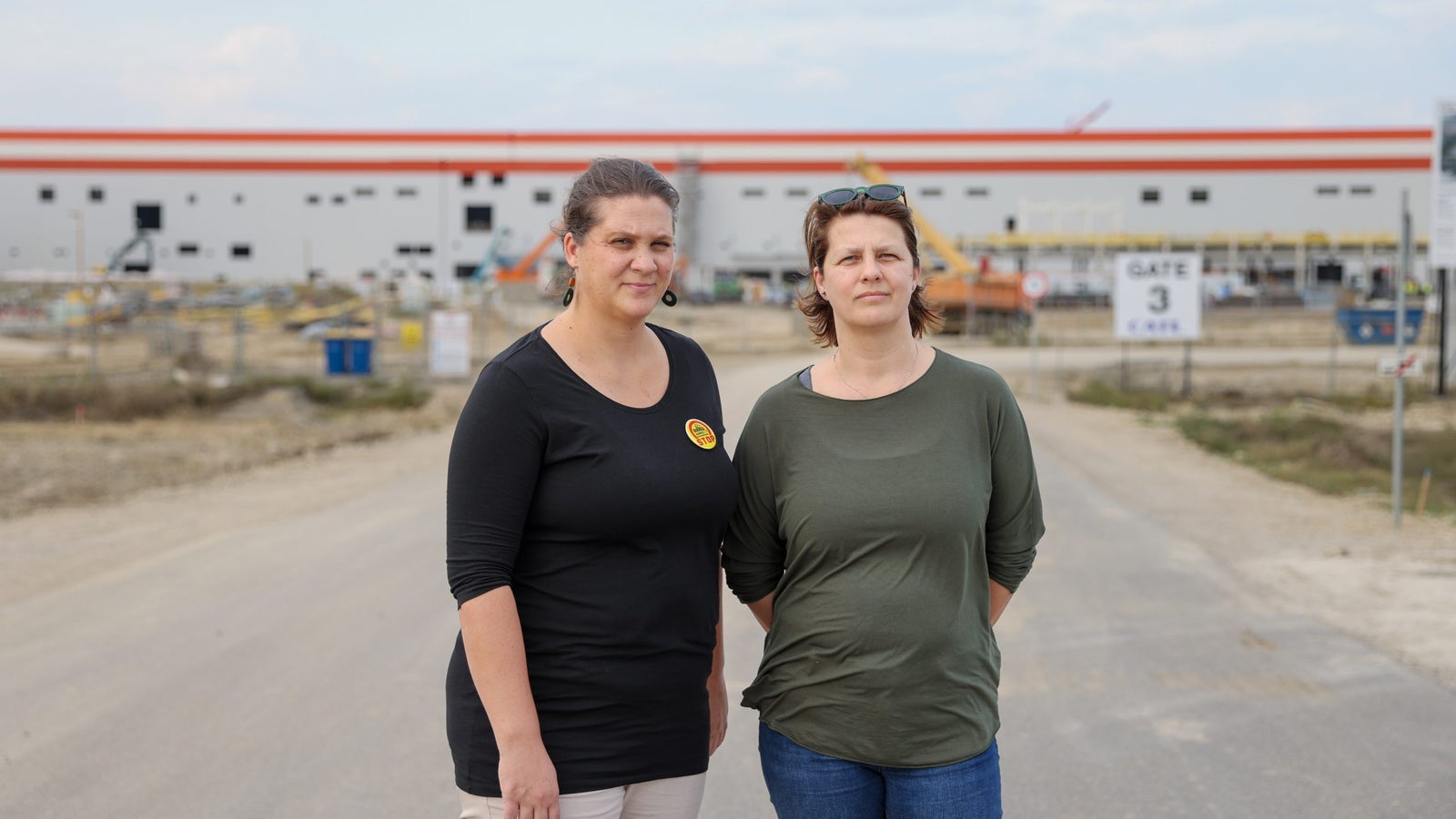
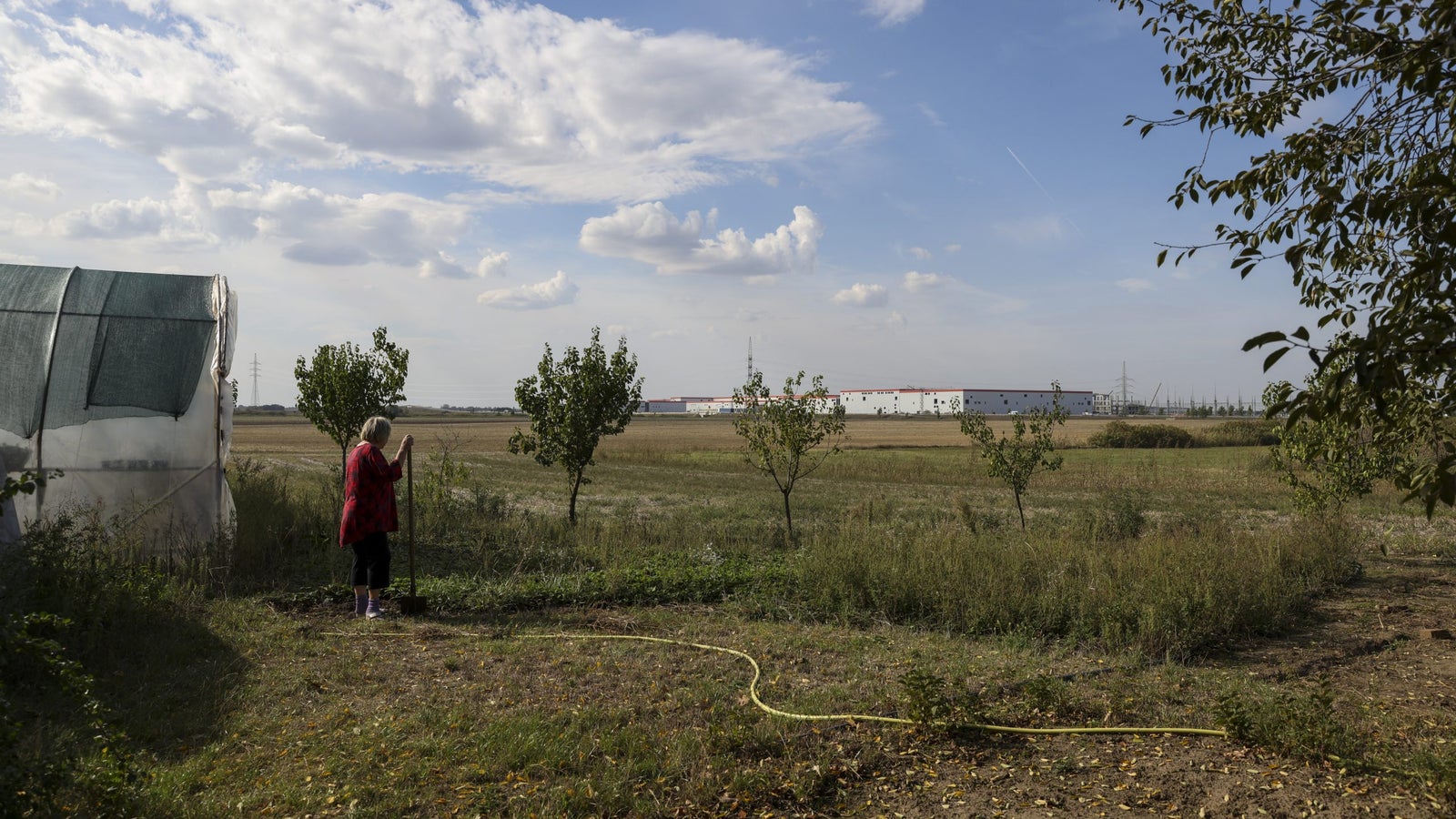
Eva Kozma watched as excavators raked up clouds of dust and flatbed trucks shuttled steel beams across a bustling construction site on the outskirts of a tranquil Hungarian village. A longtime resident of the village, Kozma pointed at the former farmland where Chinese battery giant CATL is building a factory. Bales of hay still dotted the 221-hectare industrial park.
“Before the factories, we had fields of corn, wheat, and sunflowers. There were apple and cherry farms, and the cows were still grazing,” Kozma, a 48-year-old mother of three with an environmental engineering background, told Rest of World.
CATL, the world’s largest producer of electric vehicle batteries, is constructing an $8-billion battery plant just north of Mikepércs, a town of around 5,000 located 250 kilometers east of Budapest. “We fear that CATL will bring pollution and environmental consequences on our land,” Kozma said.
CATL dominates global EV battery production with a more than 40% market share, employing over 80,000 people worldwide and supplying leading car brands including Tesla, Ford, and Volkswagen. The company operates five overseas factories in the EU and Southeast Asia, and is in talks with American carmakers to launch plants in the U.S. CATL did not respond to Rest of World’s request for comment.
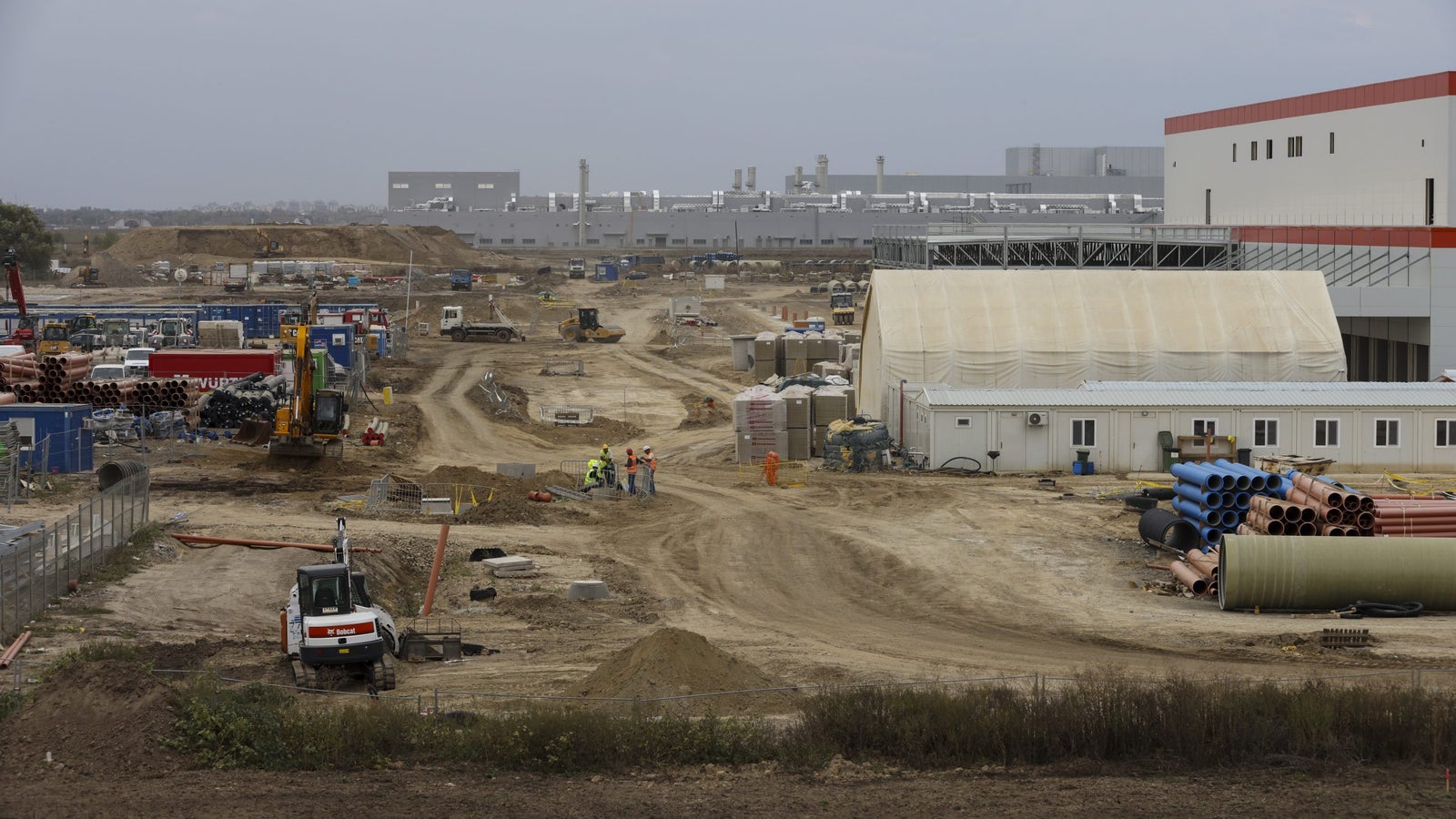
Kozma gestured to a nondescript, gray building next to the busy construction site. It was the office of Halms, the Hungarian arm of China’s Zhejiang Huashuo Technology, an auto parts manufacturer focused on EVs. Earlier this year, government officials fined the firm for dumping contaminated water from its factory into a local runoff channel. Halms didn’t respond to Rest of World’s request for comment.
“So the mothers banded together,” Kozma said. She is one of several local women who founded Mikepércs Mothers for the Environment (Miakö) in April 2023. The organization joined a network of small towns that works to hold polluting battery companies accountable, and is part of a number of growing protest movements in rural areas across the country.
People fear them as poison factories. Once they hear that a new battery plant is coming … they think it’s another polluting and problematic company.”
Since the late-2010s, Prime Minister Viktor Orbán has championed an industrial strategy that aims to transform Hungary into a global EV battery hub, attracting money, technology, and skilled workers from Asian nations. Orbán offered government subsidies that first lured South Korean battery giants to the country to open factories.
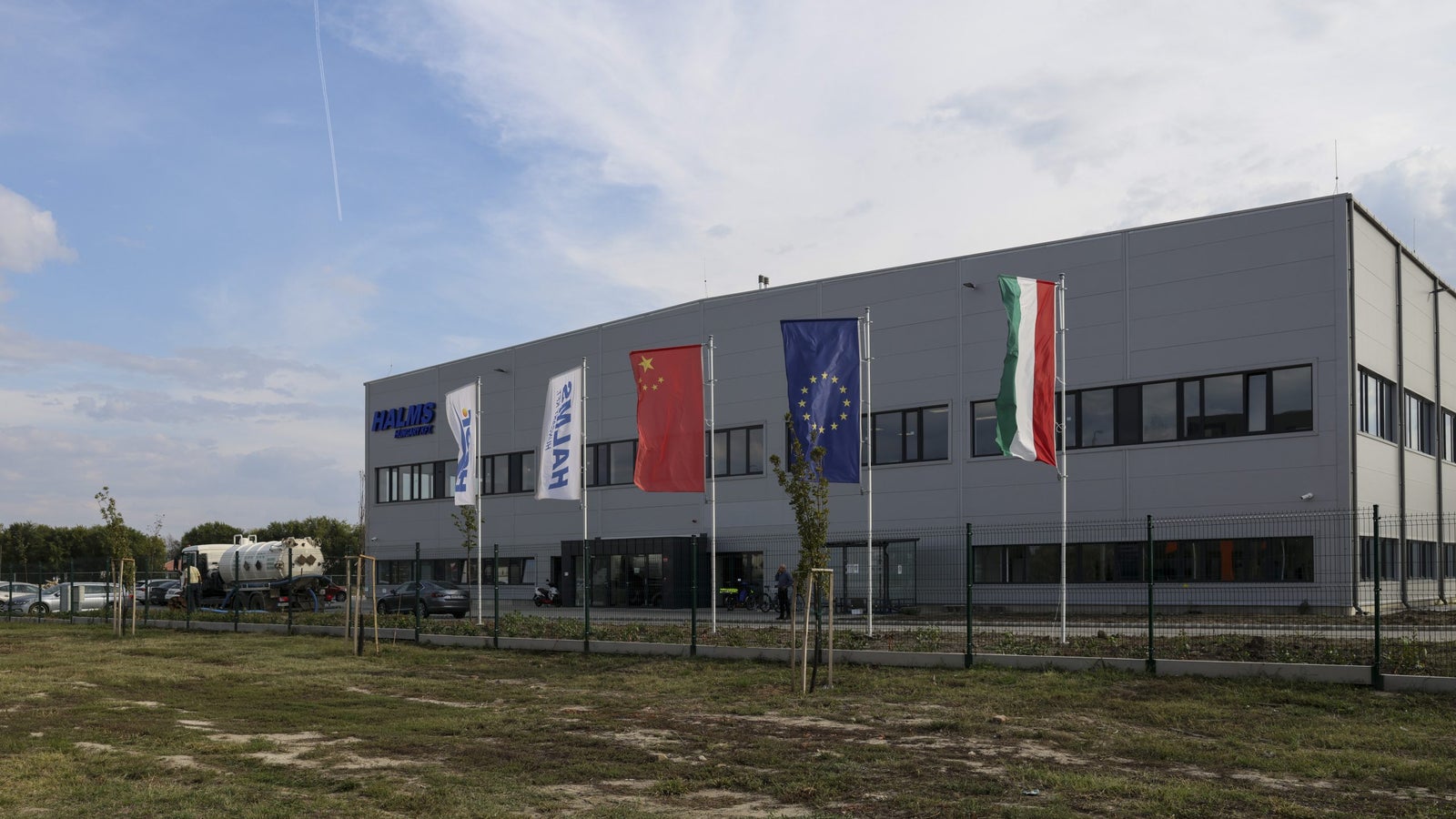
The announcement of the massive CATL factory in 2022 has sparked a new phase in small-town Hungary’s ongoing battle against the burgeoning EV battery industry, with powerful new players: Chinese investors. In 2023 alone, China funneled over $8.5 billion in foreign direct investment to Hungary. The funds largely went to its battery sector. Chinese battery manufacturers have announced planned investments of over $10 billion to produce EV batteries in Hungary.
“People fear them as poison factories. Once they hear that a new battery plant is coming … they think it’s another polluting and problematic company,” Andrea Éltető, economist and senior research fellow at the Institute of World Economics’ Hungary branch, told Rest of World.
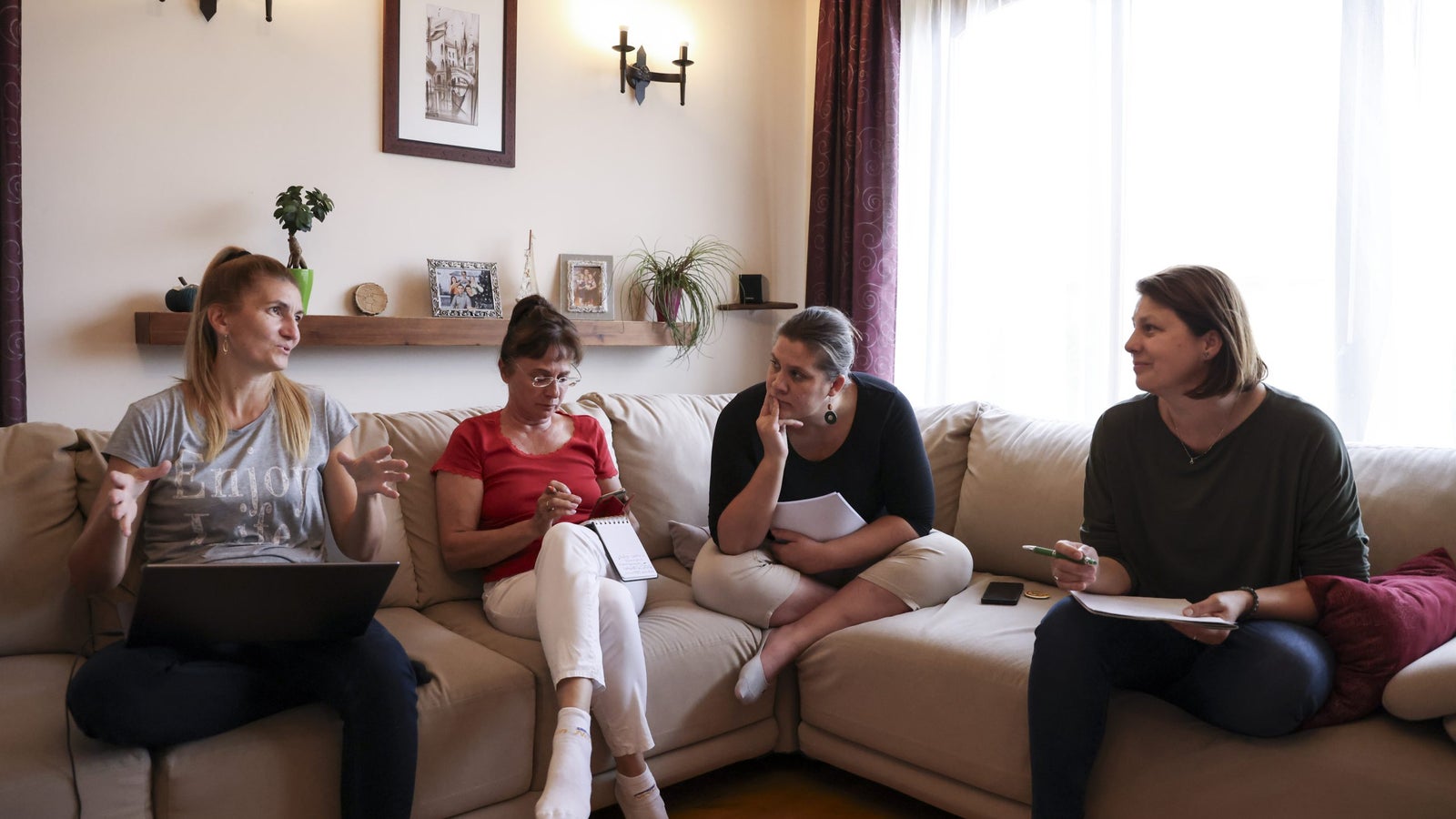
Vera Csuvarszki, a 43-year-old speech therapist and mother of three, said she felt compelled to try to relocate because she believes her children are being exposed to factory pollutants. She told Rest of World her house sat on the market for one year, but “nobody wanted to buy it” because of its proximity to the industrial park.
As the white-and-blue flags of Semcorp, a Chinese producer of lithium-ion battery separators, flapped in the wind, Csuvarszki, a co-founder of Miakö, said their group is also concerned about pollution from Semcorp’s $370 million factory. The company’s full manufacturing operations are expected to start next year; the plant has launched at least one successful trial run of its production lines.
“Compliance with the applicable environmental, health, and safety standards is of the utmost importance to us. We are committed to working with the relevant authorities and other stakeholders to ensure our operations continuously maintain those standards,” Csaba Wolf, vice president of Semcorp Hungary, told Rest of World.

In recent years, investigative efforts from local journalists and environmentalists have spotlighted environmental damage and negative health effects from South Korea-funded battery plants in Hungary. In Samsung SDI’s EV battery cell factory in Göd, a town of about 22,000 located 30 kilometers north of Budapest, the plant had exposed workers to high levels of carcinogenic materials, emitted toxins linked to serious health issues, and contributed to the town’s unusually high carbon dioxide levels. SungEel HiTech, a battery recycler with multiple plants in Hungary, experienced explosions and fatal fires, and was fined by regulators last year for endangering its workers and improperly storing toxic battery waste.
“We have already seen evidence that one Chinese battery supplier company [Halms] has polluted [just like the South Korean ones]. It’s not a good sign,” Éltető told Rest of World.
Locals protesting the now China-dominated EV battery ecosystem told Rest of World that they are not against the role of EVs in combating climate change, but are troubled by what they view as the government’s opaque decision-making that has silenced public input.
Even if [the plant] would have worked in a safe way … in recent weeks it has caused unrest among the [town’s] population and raised significant public debates and tension.”
The EV investment boom of recent years boosted Budapest and Beijing’s relationship, and led to China becoming Hungary’s top foreign investor in 2023. Almost half of all Chinese foreign direct investment in Europe now flows to Hungary. The country’s proximity to EU markets means easier access for Chinese companies. CATL’s Hungarian gigafactory plans to supply batteries to carmakers including BMW and Mercedes-Benz, according to partnership agreements.
In the past, widespread protests and lawsuits against South Korean factories effectively pressured the government to hold companies accountable. Local residents formed grassroots networks including environmental nonprofits, legally challenged companies’ operational permits in court, and voted in new political leaders who vowed to protect the environment. Authorities fined Samsung SDI 56 times to the tune of nearly $550,000 from 2018 to February 2024, and temporarily shut down SungEel’s operations.
Now, Hungarians are using a civic toolkit honed by their experiences with South Korean plants — a mix of legal action, civic protest, and small-town political wrangling — to push back against the new Chinese factories roaring to life in the Hungarian countryside.
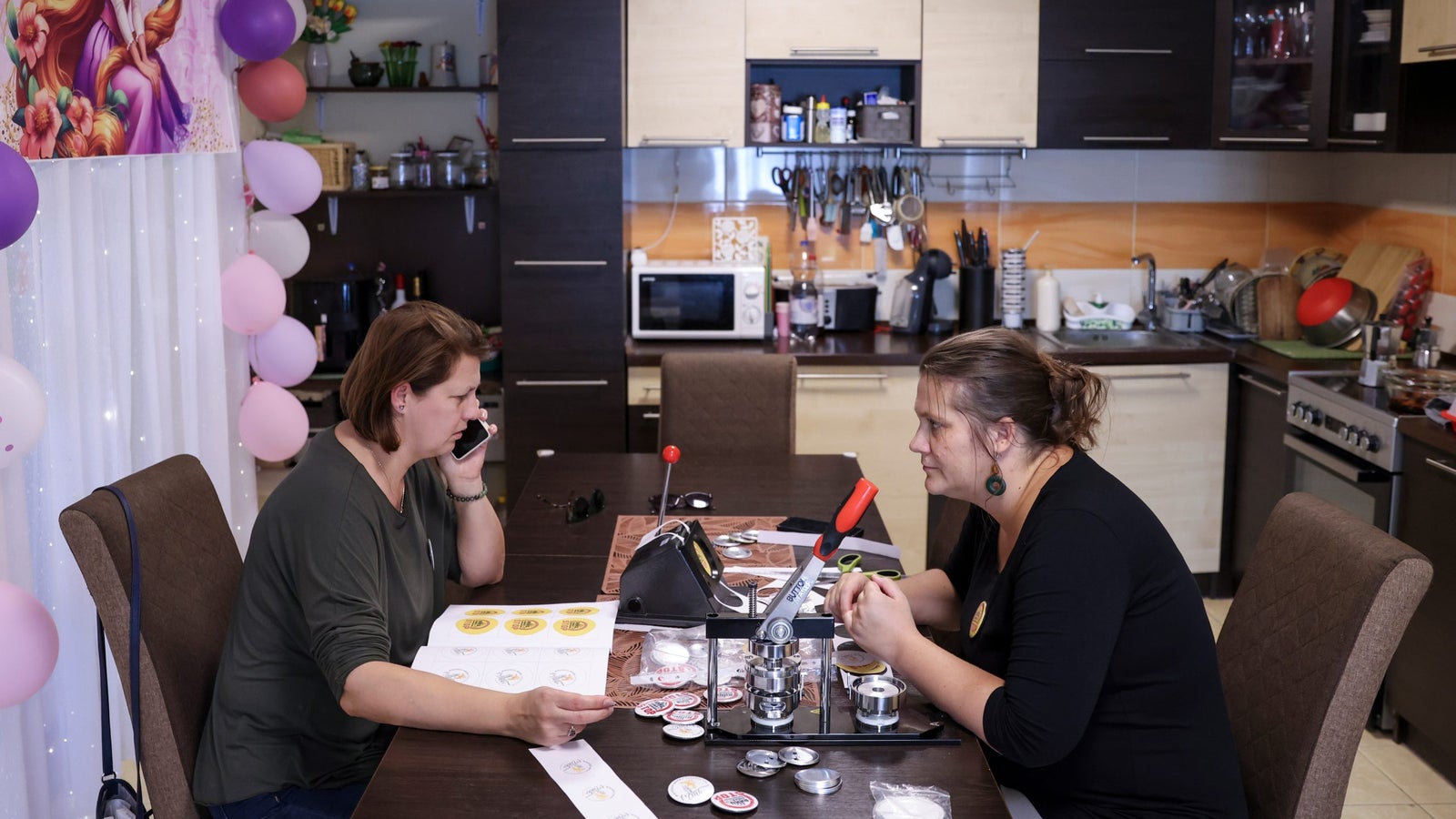
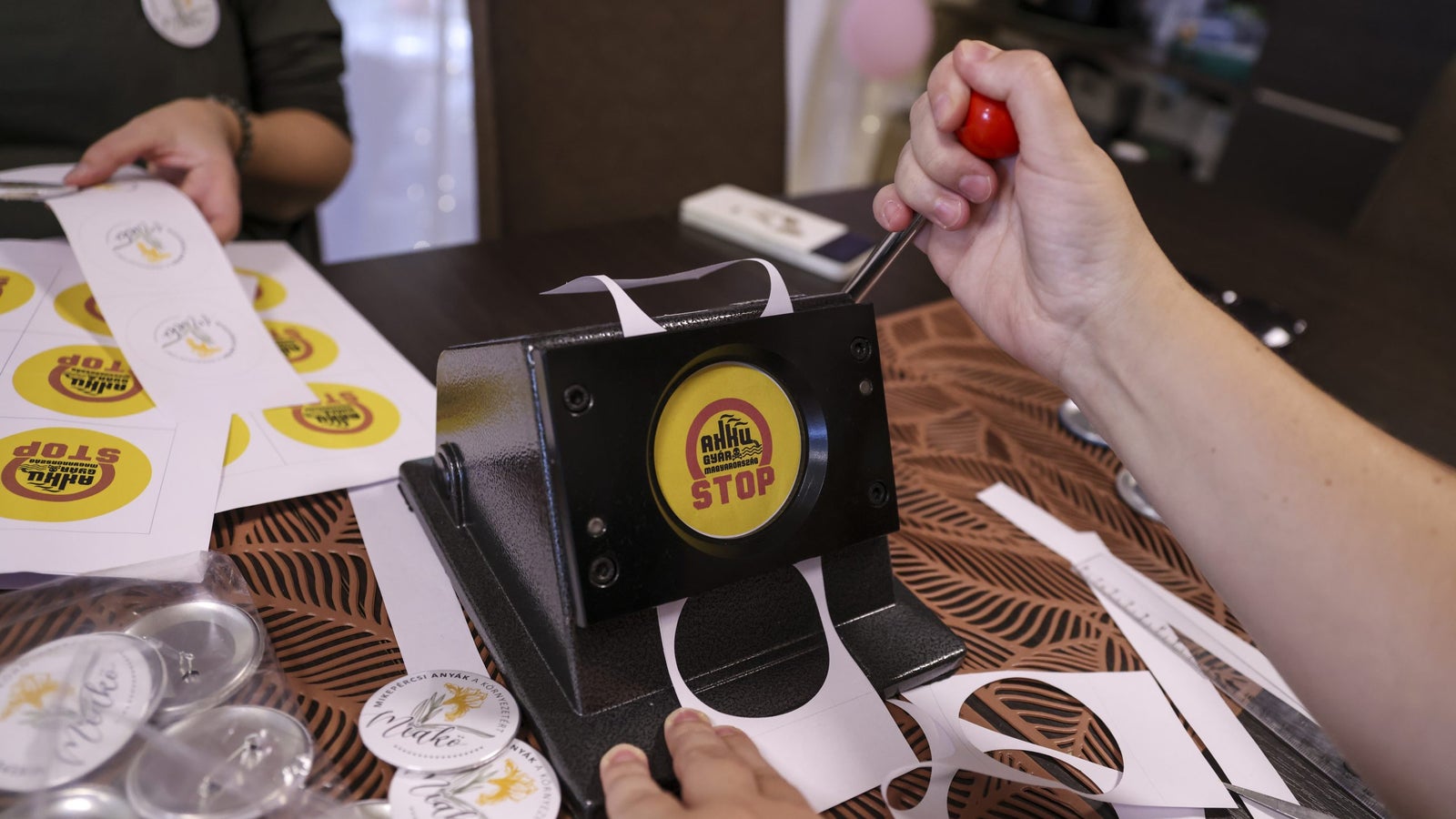
The Miakö group of Mikepércs mothers has been organizing demonstrations and hosting public meetings with technical experts to help citizens learn more about EV battery technology and production. Last year, members and town residents launched lawsuits against Hungarian authorities who had issued safety and environmental permits for CATL to operate. The court included CATL as a defendant, allowing the company to present its arguments. The case is currently stalled. In March, the case’s presiding judge ruled that those who initiated the suit must prove they live in an area affected by the factory, which Kozma says is “hard” to demonstrate.
Similar protest campaigns have expanded to at least 10 Hungarian cities.
In Ács, a battle is playing out at the courthouse between a local environmental organization and the county government office that issued the operational permit for Bamo Technology Hungary, the domestic subsidiary of a Chinese cathode factory. The trial, which began this month, could take half a decade to conclude, and has cost the environmental group tens of thousands of dollars in legal fees, a resident involved in the lawsuit told Rest of World, requesting anonymity as they were not authorized to speak to the media.
Recent rallies in Heves have successfully forced the mayor to cancel the town’s $109-million contract with China’s BYN Chemical to build a plant to produce NMP, a solvent for the manufacture of lithium-ion batteries. “Even if [the plant] would have worked in a safe way … in recent weeks it has caused unrest among the [town’s] population and raised significant public debates and tension,” the mayor wrote on his Facebook page.
As civic action ramps up, so, too, has government pressure. Last month, the government launched a “special investigation” into Göd-ÉRT, a civic organization led by a local investigative journalist that examined Samsung SDI’s activities. Authorities have accused the association of using foreign aid to influence elections, and are requesting extensive data and documents that include information on their press appearances, databases, and “public opinion” campaigns. Orbán’s office did not respond to Rest of World’s request for comment.
The women from Mikepércs fear that they will be targeted next. But they and other activists in Hungary’s small towns say they will continue their work. They are celebrating other small victories this year, such as in Alsózsolca, where local protests halted a Slovenian firm’s plans to build a battery recycling plant. Meanwhile, CATL told Chinese state media earlier this year that “everything is on schedule,” and its battery plant near Mikepércs will begin production in 2025.
“Even if we can’t stop this [CATL] factory, we hope our actions embolden others,” Csuvarszki said.