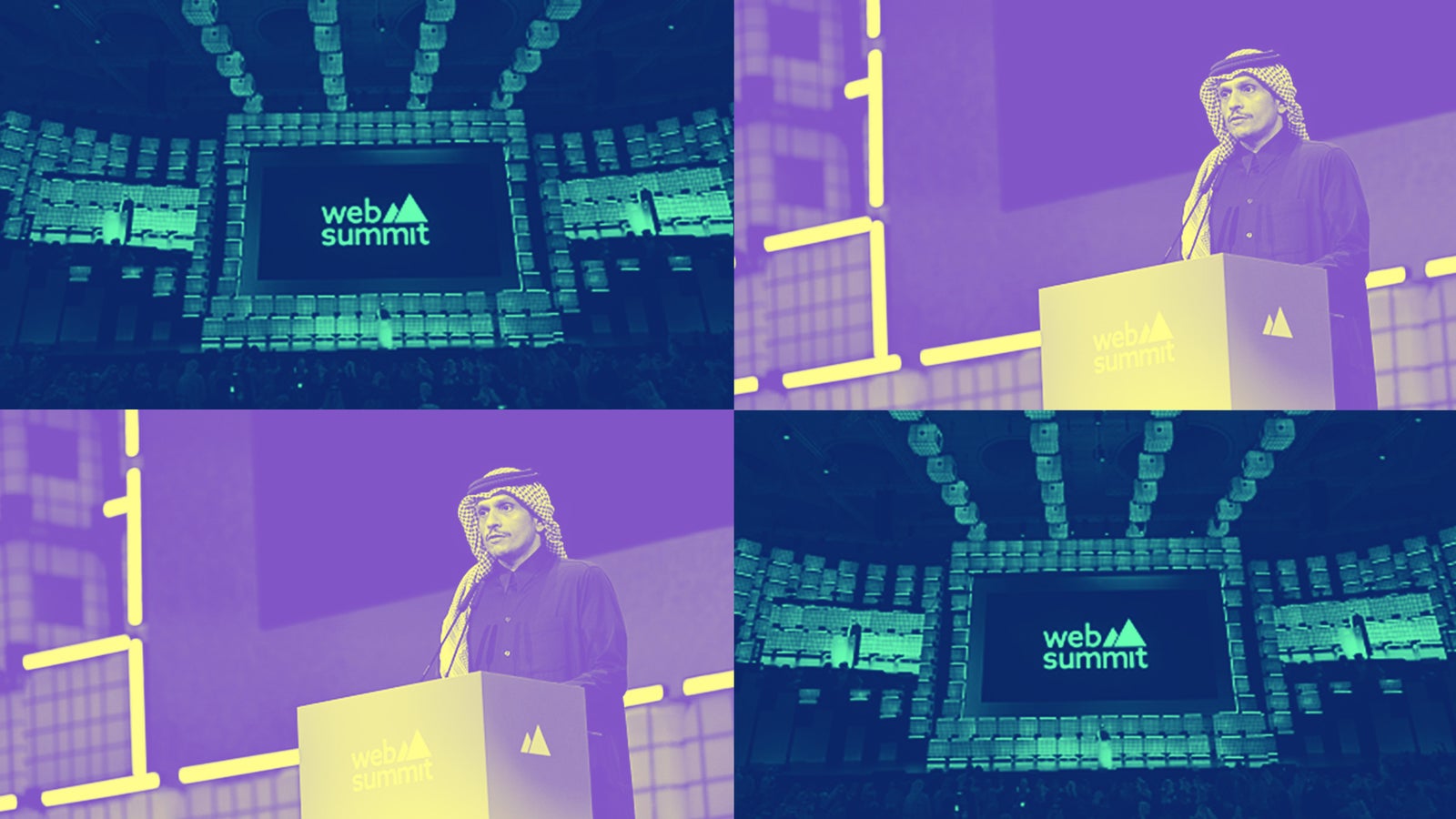
I spent four days this week at the Doha Exhibition and Convention Center with 30,000 people from 124 countries, and came away convinced that the center of gravity in global tech is beginning to move.
Web Summit Qatar 2026, now in its third edition, has carved out its own identity and no longer feels like a regional offshoot of the flagship event in Lisbon. Paddy Cosgrave, Web Summit’s founder, put it bluntly on opening night: Three years ago, people were talking about entering a multipolar world, and now we are living in one. He called it the biggest global opportunity in centuries.
The Qatari government is betting accordingly. Prime Minister Sheikh Mohammed bin Abdulrahman bin Jassim Al Thani announced an additional $2 billion for a program to anchor VC firms in Doha, a 10-year residency program for founders, and the start of a national AI company. The pitch was unambiguous: Put down roots here.
But the moment that captured the room came on opening night. When Issam Hijazi, the UpScrolled founder whom Rest of World interviewed last week, walked onto center stage, the applause began before he said a word. His social media app, built as an alternative to platforms he believes censored Palestinian voices, had crossed 2.5 million users in six months with no paid marketing.
Cosgrave introduced him as proof of the new order: a Palestinian-Jordanian engineer who, almost singlehandedly, built a platform that topped Instagram and TikTok on U.S. download charts in the days following TikTok’s sale to a group led by Oracle co-founder Larry Ellison. Hijazi’s message was blunt: You don’t need Silicon Valley money to build something people want, and there are good people out there willing to back you.
The next day, Sheikha Moza bint Nasser, the chairperson of Qatar Foundation and the mother of the current emir, took the stage and deepened the theme. She spoke about Arabic fighting its “decisive battle on the frontlines of technology,” a battle over meaning, identity, and the power to persist. If Arabic is defeated in this era, she warned, it will not be a linguistic defeat alone, but a defeat for everything the language represents.
I heard echoes of that sentiment in my conversation with Professor Amal El Fallah Seghrouchni, Morocco’s minister of digital transition. I asked whose model Morocco is learning from: the U.S., the EU, or China? All of them, she said, but Morocco, along with Africa and the Arab world, can offer something distinct: a third voice for AI, one that is ethical, frugal, and built for the 80 languages the big models ignore.
Walking out on the final day, that phrase stayed with me. A third voice. It was perhaps the most interesting idea to come out of Doha this week.