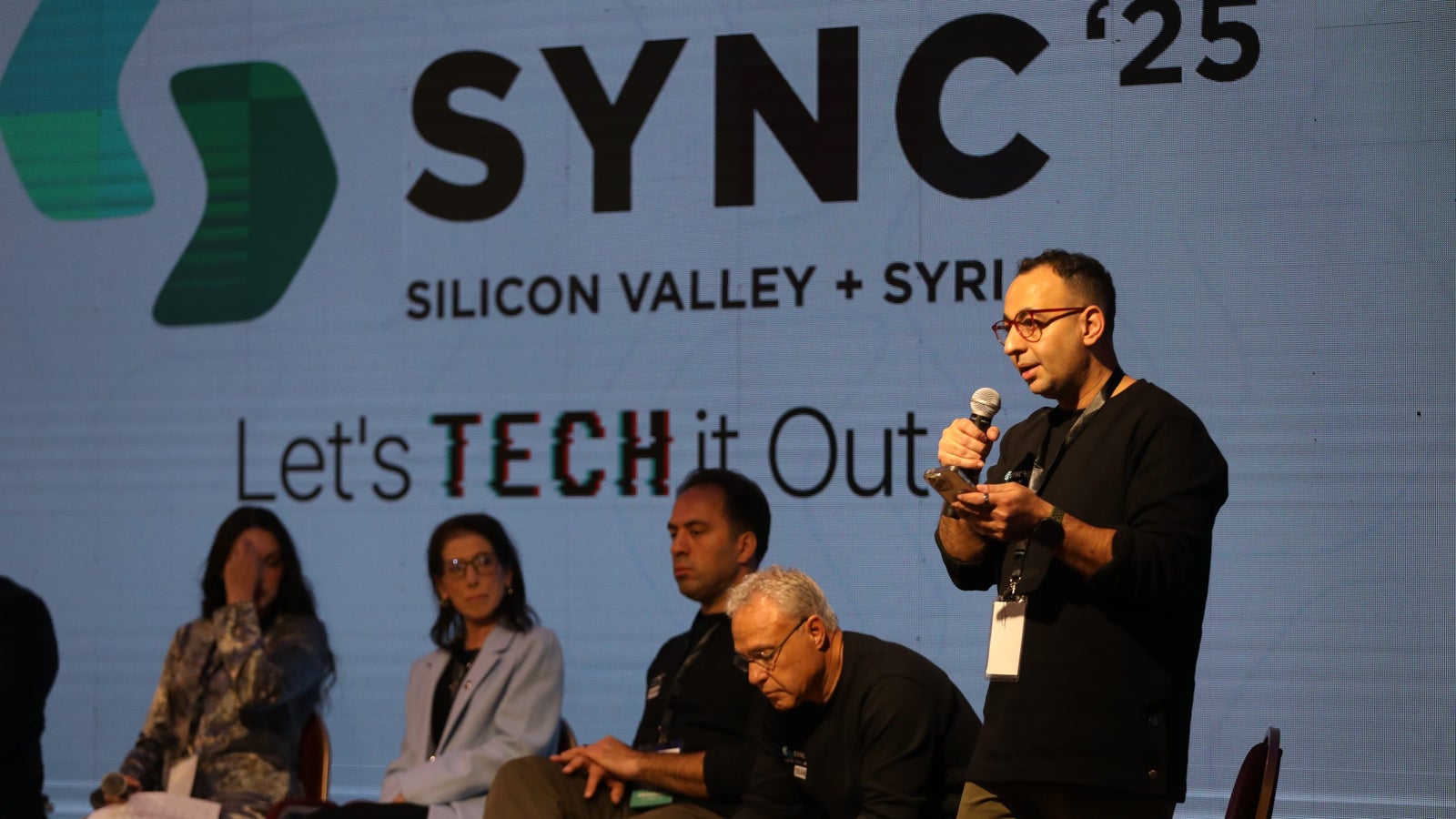
While much of the world was focused on a radical proposal by the U.S. president to transform the Middle East, a group of Silicon Valley entrepreneurs and tech leaders gathered in Damascus last weekend for a one-of-a-kind event. For the first time in 50 years, a free Syria hosted an independent tech conference, as the conflict-ravaged country looks to rebuild its economy and infrastructure from the devastation of a 13-year-long civil war.
We wanted to bring Silicon Valley to Damascus.”
The two-day SYNC 25 conference, organized by a group of Syrian-Americans working in Silicon Valley, included workshops and discussions on artificial intelligence and data security, among other tech-related topics. The program aimed to connect Silicon Valley with Syria’s emerging tech ecosystem.
“We wanted to bring Silicon Valley to Damascus,” Bassel Ojjeh, co-founder and CEO of LigaData, a Palo Alto-based company, who was one of the organizers of SYNC 25, told Rest of World. “We wanted to connect with entrepreneurs, industry leaders, and change-makers to exchange expertise and form strategic partnerships.”
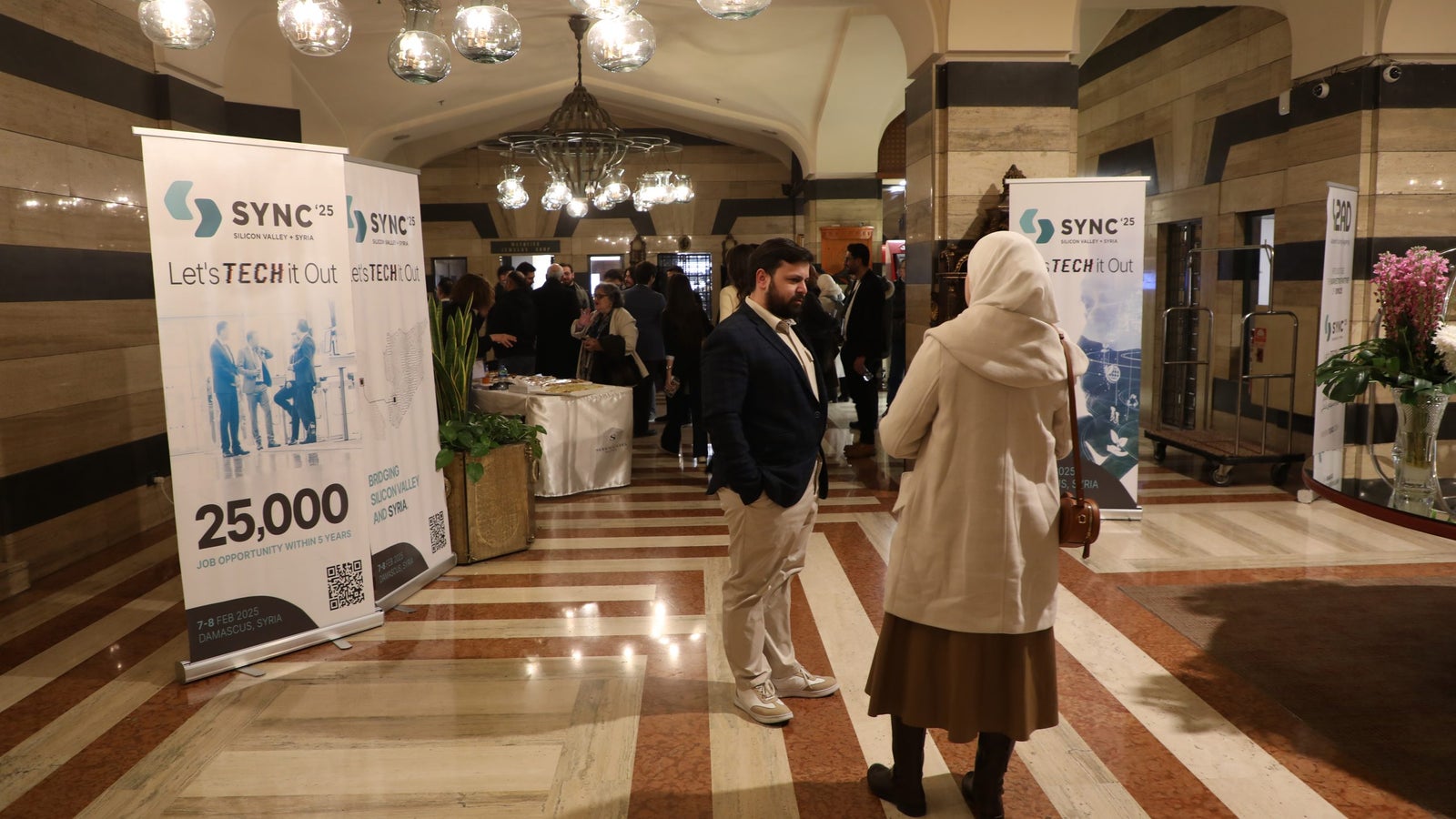
SYNC 25’s organizing group, which includes Silicon Valley entrepreneurs and investors of Syrian descent, aims to help create 25,000 new jobs in Syria’s technology sector over the next five years, Ojjeh said.
Tech entrepreneurs who attended the conference hope the event is a starting point to help build a better infrastructure for investors in Syria. “We need to look at employment and we need to improve the internet infrastructure,” Yazan Enayeh, a Syrian entrepreneur and founder of Switzerland-based watch company L’Orloger, told Rest of World.
The conference took place amid the transitional government’s active outreach to regional powers, seeking to build support and re-establish diplomatic ties after ousting former President Bashar al-Assad in December. In the past month, Syria’s interim leader Ahmed al-Shara has met with Turkish President Recep Tayyip Erdogan in Ankara and Saudi Crown Prince Mohammad Bin Salman in Riyadh, as a part of his effort to invite economic and humanitarian help for the country. The Saudi state news agency said that among other things, the two leaders discussed future plans in the fields of energy and technology.
The event came together in less than a month, Ojjeh said. “We moved quickly to try to liaise and speak to people in Syria about the country’s ailing technology industry,” he said. “SYNC is like a puzzle that is still finding itself out. The fact we managed to put on this conference — which was fully booked — just over a month after the fall of the regime is a testament to people’s hopes and dreams.”
Syria’s economy is in a state of turmoil. While Western sanctions imposed during former President Bashar al-Assad’s regime are slowly being lifted, the country is still dealing with a lack of international trust.
Earlier this month, Ayman Hamawiye, head of the Syrian Investment Agency, told Reuters that Western sanctions on the country’s banks are preventing it from receiving critical investments from Arab and European businesses. He said that each day, he fielded dozens of requests from investors wanting to back projects like building hospitals, developing real estate, and setting up wind power facilities in Syria.
Within Syria, there is a shortage of basic amenities: Electricity is in short supply, the internet is slow, and the telecom infrastructure is outdated. The country also urgently needs to update laws and regulations around technology-related sectors.
“Revisiting foreign and public trust in Syria’s economy now is vital,” Nour Al-Khatib, global brand and sponsorship senior manager at MTN, the South African mobile telecom provider and one of the two main telcos in Syria, told Rest of World. “These types of conferences will go a distance in terms of building trust and regaining the confidence of people and foreign investors to fill the gap of the knowledge and capabilities.”
Syria introduced mobile phone services only in 2000, after the government licensed two private companies: Syriatel and Areeba. Syriatel was owned by Assad’s cousin, Rami Makhlouf. Areeba later merged with the South African MTN Group. The telecom sector in the country, however, operated under excessive state control throughout Assad’s rule.
“We need an initial assessment as to the reality of the infrastructure,” Al-Khatib said. “We need people and skills — the people who are going to drive whatever technology is going to come in. Human resources are the main element of this challenge.”
Despite the challenges, Syria is home to a fledgling tech industry. An average of two new tech companies have been launched annually in the country over the past 10 years, according to data and research platform Tracxn.
Syria has a pool of “strong software engineers who are extremely resilient, who can be productive with two hours of electricity a day while working with an awful internet system and still being able to compete with their international counterparts,” Ojjeh told Rest of World.
On the sidelines of the conference, Ojjeh, along with a group of representatives who had organized the event, met Syria’s interim president al-Sharaa at his residence to discuss the future of Syria’s tech industry.
“The new authorities are super keen on the continuation of these kinds of conferences and workshops and any boost to the economy in the tech field,” Ojjeh said after the meeting.