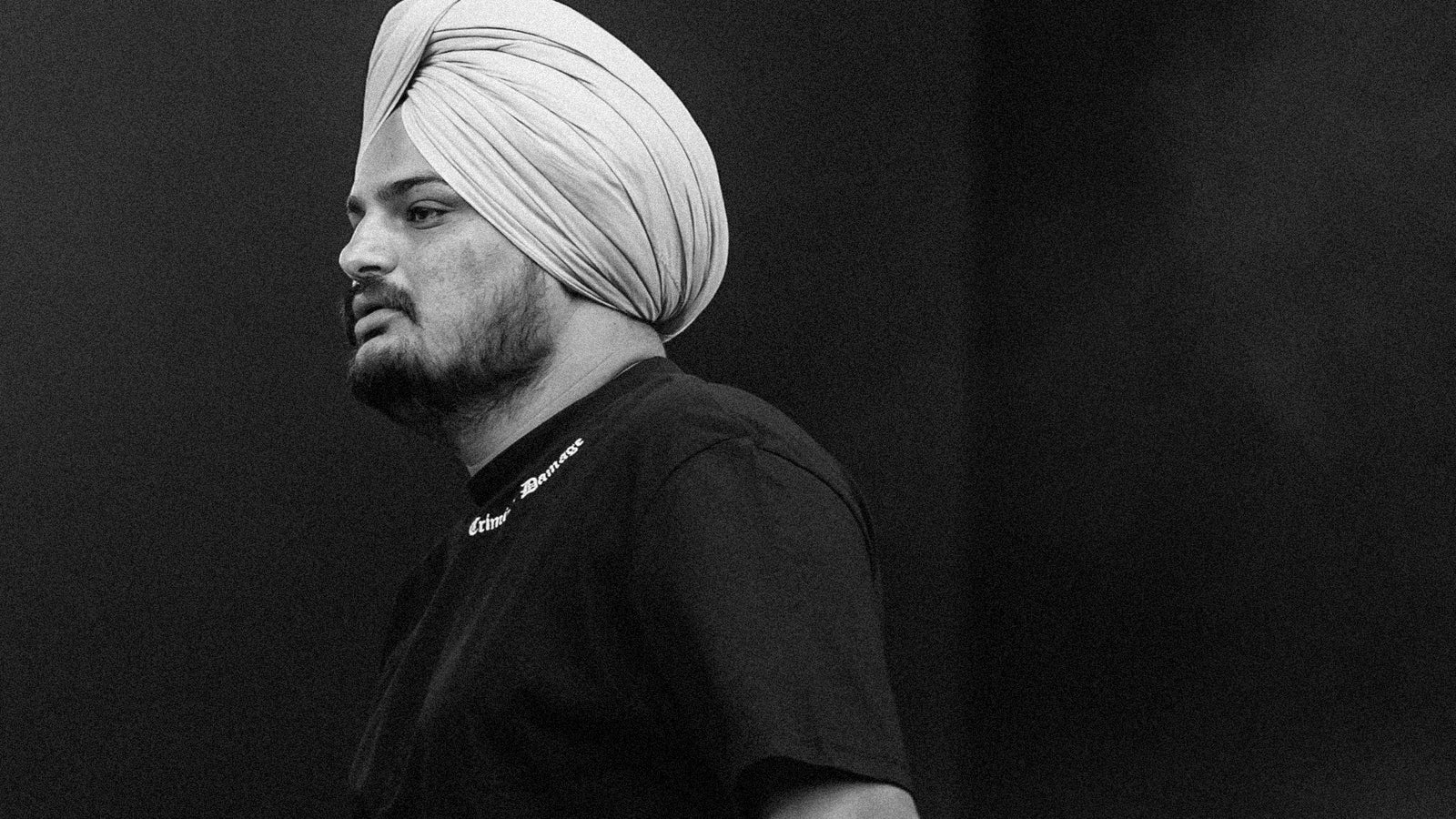
Mukesh Singh navigates his minibus through jam-packed traffic on the roads of Jammu, India, with a YouTube playlist of his favorite artist, Sidhu Moosewala. He switches to “Clash,” a cover of artist Diljit Dosanjh’s Punjabi pop hit. “Anything [Moosewala] touches turns into gold,” Singh told Rest of World.
Except this version of “Clash” was never actually sung by Moosewala himself. One of South Asia’s most influential hip-hop figures, Moosewala was shot dead by gunmen on May 29, 2022. A whole year after his death, artificial intelligence is being used to generate a number of Punjabi tracks in his voice. Rest of World found at least 38 such tracks across SoundCloud and YouTube, some of which had over tens of thousands of views.
“The idea was to keep his voice alive and spread his legacy so much that it will last for generations,” Amarjit Singh, the 29-year-old producer of “Clash,” told Rest of World. “And that shit just blew up.” The song went viral; since April, it has racked up over a million views on Instagram.
Before he released the track, Singh spent three weeks on voice diffusion with AI to finesse it. The Denver-based DJ, known by the alias MRA, claimed he had wondered if it was ethical. “To me, producing this track was like a slap to the face of the killers of Sidhu,” Singh said. “I thought it’d make his parents, who lost their only son, happy.”
Instead, on May 14, Moosewala’s family put out an official statement condemning the AI-generated tracks for doing “more damage than good” to his legacy. “His talent was unmatched and we would like it to stay the same,” the statement read. It requested the producers putting out AI-generated music to stop.
The rise of AI has presented the music industry with a slew of new problems, including copyright ownership and royalties. Several AI-generated songs have flooded social media platforms, accumulating thousands of views. There’s “Eminem” rapping about his love for cats, “Message from Above” generated in late rapper Tupac Shakur’s voice, a fake collab between rapper Drake and Moosewala, and many more.
“Using Moosewala’s vocals and trying to get an artist to say something that they never said is very disturbing and uncomfortable to me,” Ahmer Javed, a Kashmiri rapper and the co-founder of Srinagar-based hip-hop collective Koshur Nizam, told Rest of World. “We don’t have any control over it and anyone filled with hatred can do stupid shit.”
The most notable precedent for the problem of AI-generated fakes is the episode involving artists Drake and The Weeknd. On April 4, an unknown TikTok user named @ghostwriter977 released an AI-generated track, “Heart On My Sleeve.” The Universal Music Group, which represents both artists, had it taken down from most platforms — Apple Music, Spotify, YouTube, and TikTok have all pulled the track. The company also issued a statement about the dangers of AI and copyright infringement, after the song amassed over 20 million views.
But the music industry in India has a lot more to lose. According to Uday Kapur, music consultant and co-founder of Azadi Records, AI will only serve to reduce the payout musicians get, which is already a pittance. “It’ll devalue the work of humans — that is, more job losses. It’ll change the way people value art,” he told Rest of World. “This industry is fucked up, so any new tech that is being introduced in it is likely to be fucked up as well.”
Kapur said he was worried about how AI would dilute music itself. “As AI gets more inducted into softwares, everything — from commercial stuff [to] scores for ads and movies — will sound more and more similar,” he said.
For Kashmiri rapper Javed, the beauty of music production is rooted in the imperfections of humans. “That gets killed by the AI,” he said. “In the music industry, there is a lot of struggle in making money. We’re already struggling in this scene.”
“No matter what you do, [the problem of AI-generated fakes] is here to stay,” Kapur said. “In India, we are still figuring out our copyright laws. [Regulation of AI] is like an issue 100 years ahead for us.” A YouTube channel has compiled a playlist of the popular AI Moosewala tracks. Video tutorials on the platform guide users on generating vocals of the deceased rapper.
It is a disruptive technology and we are operating in a legal vacuum in India.”
In April, India’s minister for electronics and information technology, Ashwini Vaishnaw, informed the Parliament that the government was not planning to regulate or set any laws for AI. He noted, however, that “the government has started making efforts to standardize responsible AI and even promote the adoption of the best practices.”
According to lawyers, there’s a lack of clarity on how to deal with AI-generated music in India. “It will be a convoluted situation in the court because there is no precedent for AI regulation,” Anushka Jain, policy counsel at digital rights advocacy group Internet Freedom Foundation, told Rest of World. “That’s why it is a disruptive technology and we are operating in a legal vacuum in India.”
After seeing the statement from Moosewala’s family, a “saddened” Amarjit Singh took down all related tracks from his YouTube channel. “I was thinking that with this AI, we can release all the songs that Moosewala wrote but never recorded,” he said.