
Annual Report
Letter from our Founder & Publisher and Editor-in-Chief
Sophie Schmidt
Anup Kaphle

There’s a saying in business: Being early is the same as being wrong. Tech history is littered with promising startups that were just before their time. Luckily for Rest of World, being early in journalism is exactly where you want to be.
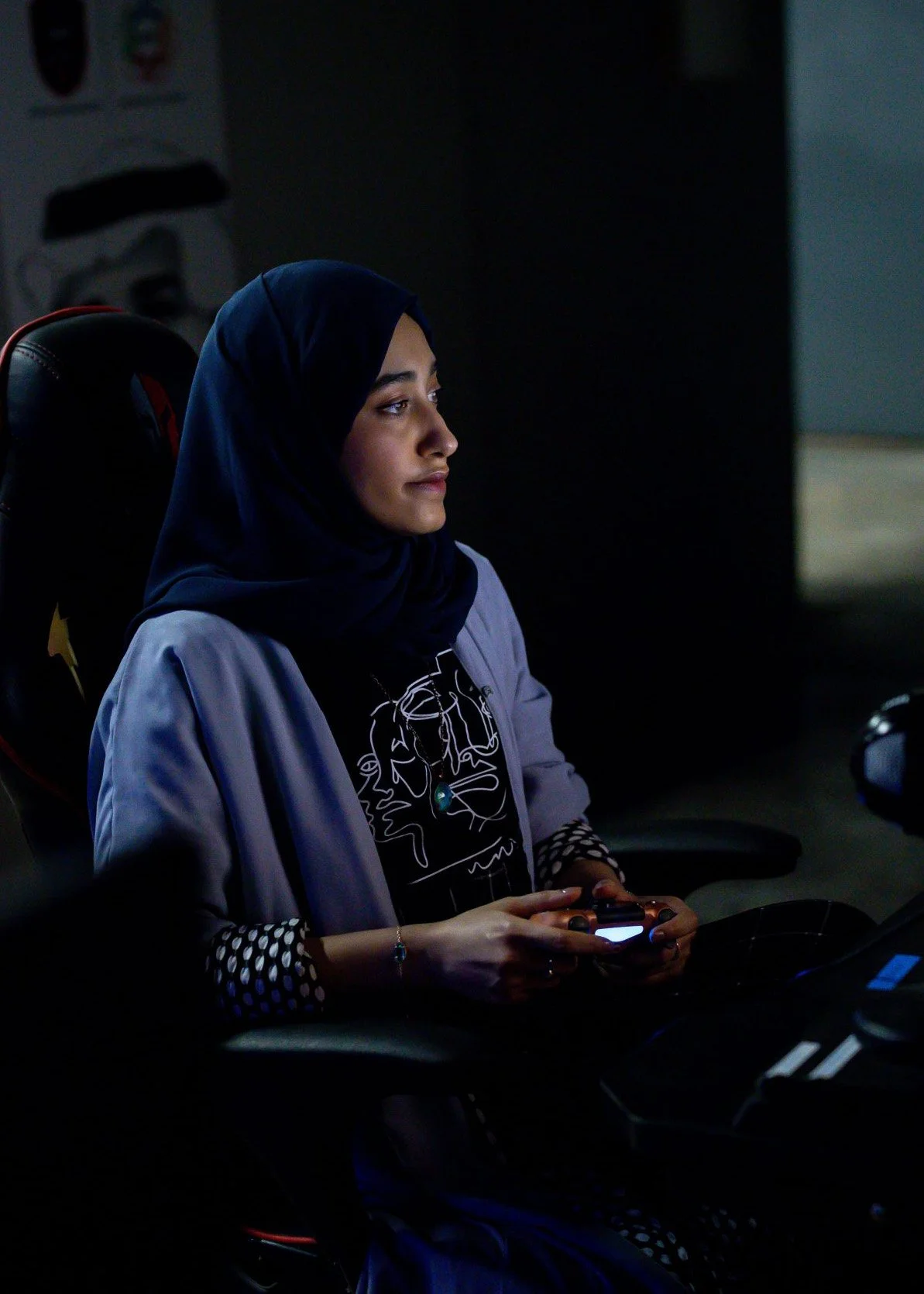
Sophie, Founder & Publisher: When I started Rest of World, I often heard our mission described as “niche,” which I found amusing. Some 85% of the world’s population lives outside the West, and nearly all of them now have smartphones. As we began to publish — and readers came to understand the enormous diversity of tech-driven experiences across Asia, Africa, and Latin America — we gained a reputation for surfacing both new insights and early warning signals about technology from unexpected places.
When I think about impact for Rest of World, I keep a long view. Of course, I am buoyed by the day-to-day impact of our stories on individuals, companies, and the communities that we cover. It’s thrilling to be the first publication to ever report on a disruptive new tech product or outcome in the English language. But I always keep one eye on the global horizon, because our work captures bigger, more consequential shifts underway everywhere from Singapore to Lagos to Washington, D.C.
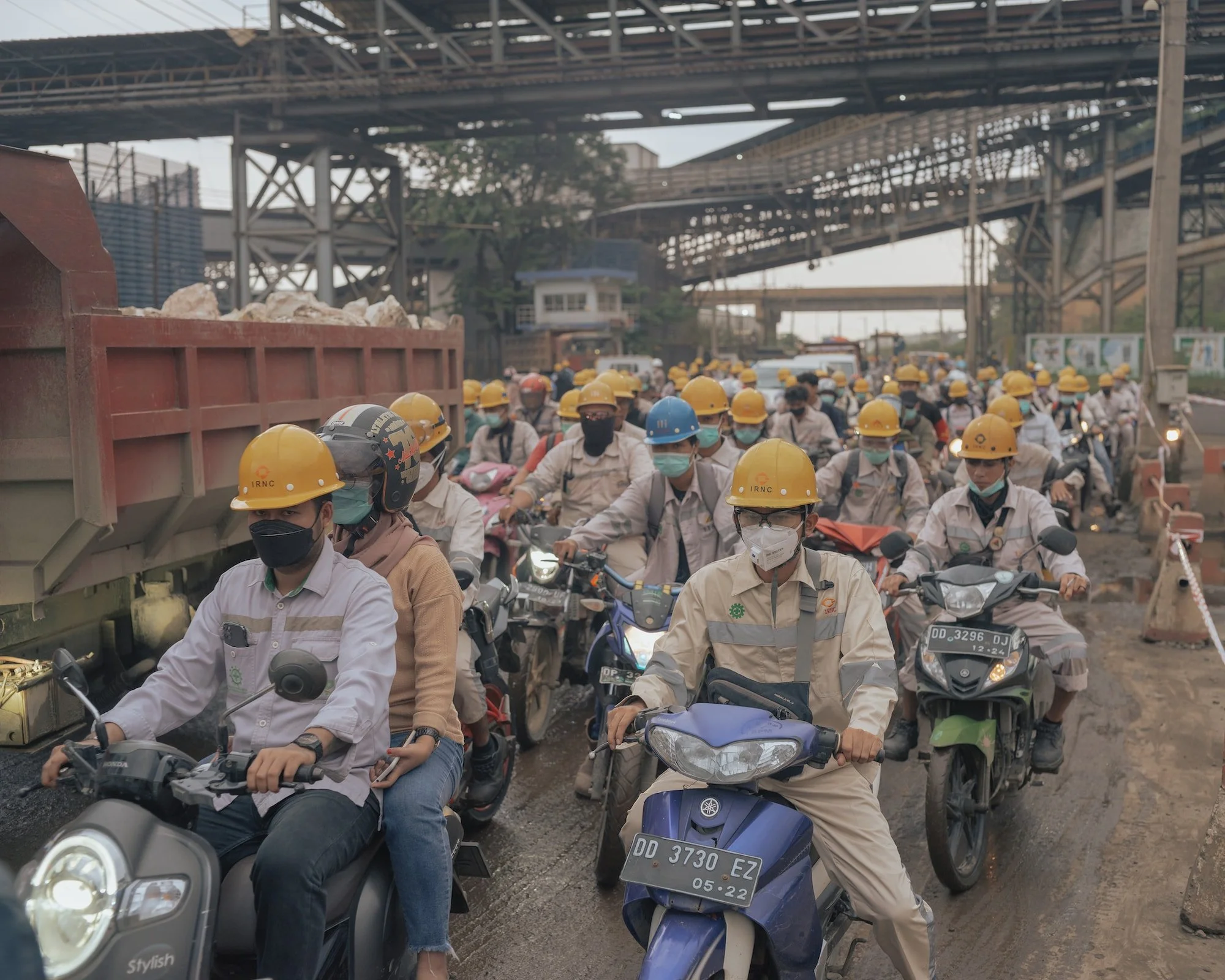
We can all feel it. The pace of technological disruption is speeding up, creating avenues for unknowable new risks and unfathomable opportunities. Traditional centers of power, anchored by Western governments, fray at the edges as new economic and political heavyweights from outside the West assert their influence. Our deep interconnectedness means heightened interdependence, affecting everything from supply chains and geopolitics to human migration patterns. Systemic change is afoot all around us: 2024 will see more voters go to the election polls than ever before — some 49% of the world’s population — as levels of misinformation rise globally.
85%
49%
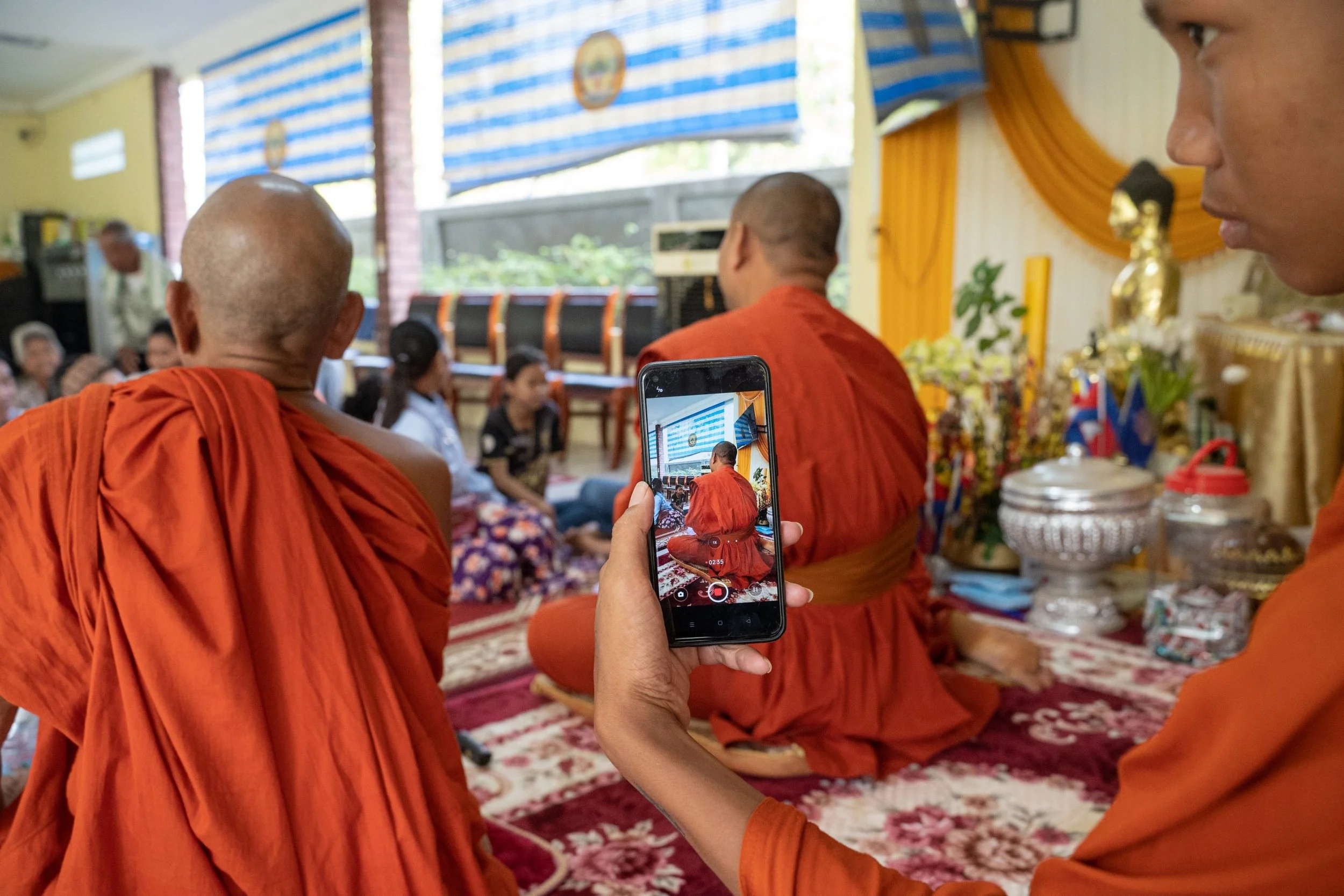
Anup, Editor-in-Chief: And Rest of World is prepared to meet this moment. In our first four years, we’ve published over 1,500 stories from over 100 countries. Each article is a snapshot of how quickly life is changing with new technology in every corner of the planet — transformations that, before Rest of World, were almost totally unknown to the West.
We insist on finding local voices to tell their own stories, which means working with hundreds of journalists and photographers in their own countries. That’s a big departure from how international journalism is traditionally done. I would know: I spent a significant part of my career working in Western newsrooms, particularly focusing on world coverage. As a Nepali immigrant who watched stories from countries like the one I grew up in covered — with glaring gaps, hastily summarized analyses, and dangerous misrepresentations — in mainstream publications, I know how urgent and meaningful building a truly international newsroom is.
In my view, there are two sides to impact: We want to hold bad actors in global tech accountable, and to highlight the innovation emerging outside the West as people try to solve problems in their communities. We employ a technology lens at Rest of World because tech is a catalytic agent anywhere it lands (and, as our work shows, tech is everywhere in 2024). Embedded in all of the macro global trends are billions of tech users, entrepreneurs, creators, gig workers, companies, bots, apps, and viruses, each pursuing their own goals, ultimately driving our world forward into the unknown.
1,500
It’s our privilege and responsibility to be a trusted guide for our readers to make sense of all those forces. To find the human story underneath every tech trend, and to untangle the nuances within every culture, so that every Rest of World story — whether set in Bogotá or West Papua — highlights just how interconnected we are, and that with every connection, there are consequences.
Thank you for your trust and support for our mission.
About Us
Our Mission
Rest of World challenges expectations about whose experiences with technology matter.
We connect the dots across a rapidly evolving digital world, through on-the-ground reporting in places typically overlooked and underestimated.
Who We Are
Rest of World is an award-winning nonprofit publication that focuses on how tech is transforming the daily lives of billions of people across emerging markets. Our reporting spotlights communities and countries that have long been dismissed and underestimated by mainstream Western media.
Over 4 billion of the world’s 5 billion internet users live in non-Western countries. Whole ecosystems of online services, opportunities, and scams have emerged to greet these new arrivals. Yet we still know very little about what’s going on in these environments, or how what happens there can affect us here.
Our work fills the information gap in the West with rigorous, accessible and immersive journalism. We follow the unintended consequences of powerful new technologies as they reshape societies, connecting dots from Silicon Valley to Nairobi to Hanoi. Through on-the-ground reporting, we are often the first to cover a critical trend or product with global implications in English — stories that can’t be found anywhere else.


“Rest of World is bridging a real gap. When I found it, I thought, ‘there isn’t anything else like this.”
MARGARET, CHILD POLICY CONSULTANT
THE NETHERLANDS
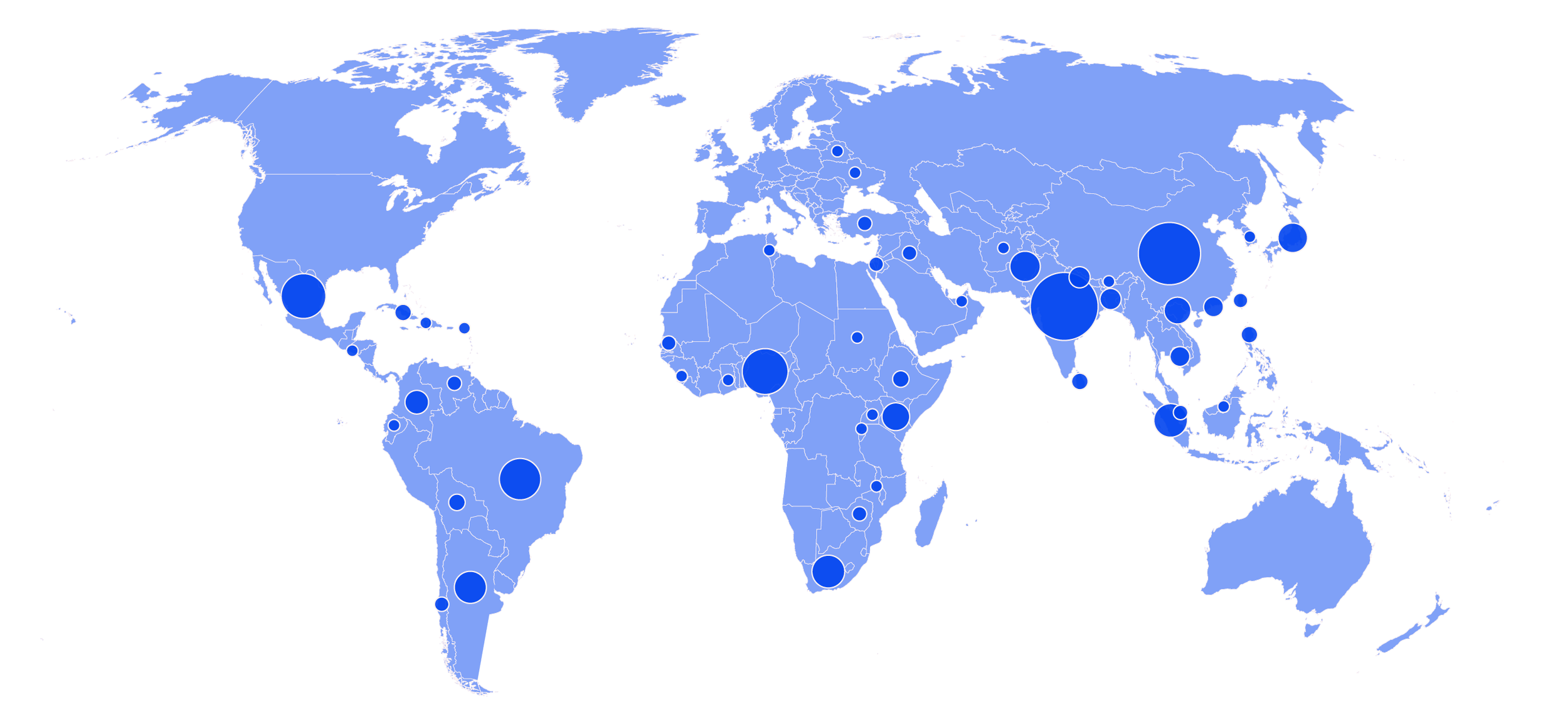
We reported on 49 countries in 2023
Our Audience
750,000
2/3
67
>50%
Our readers come to us directly and from web search. We’ve also seen a growing increase in readers coming from owned channels like newsletters, and from RSS.
Over half our readers are between the ages of 25–44 years, and the majority of them work in tech followed by nonprofits, government, policy, and journalism.

“My face lights up whenever I see the Rest of World newsletter in my inbox.”
LINDA, IT WORKER
SOUTH AFRICA
Impact
Change and Accountability
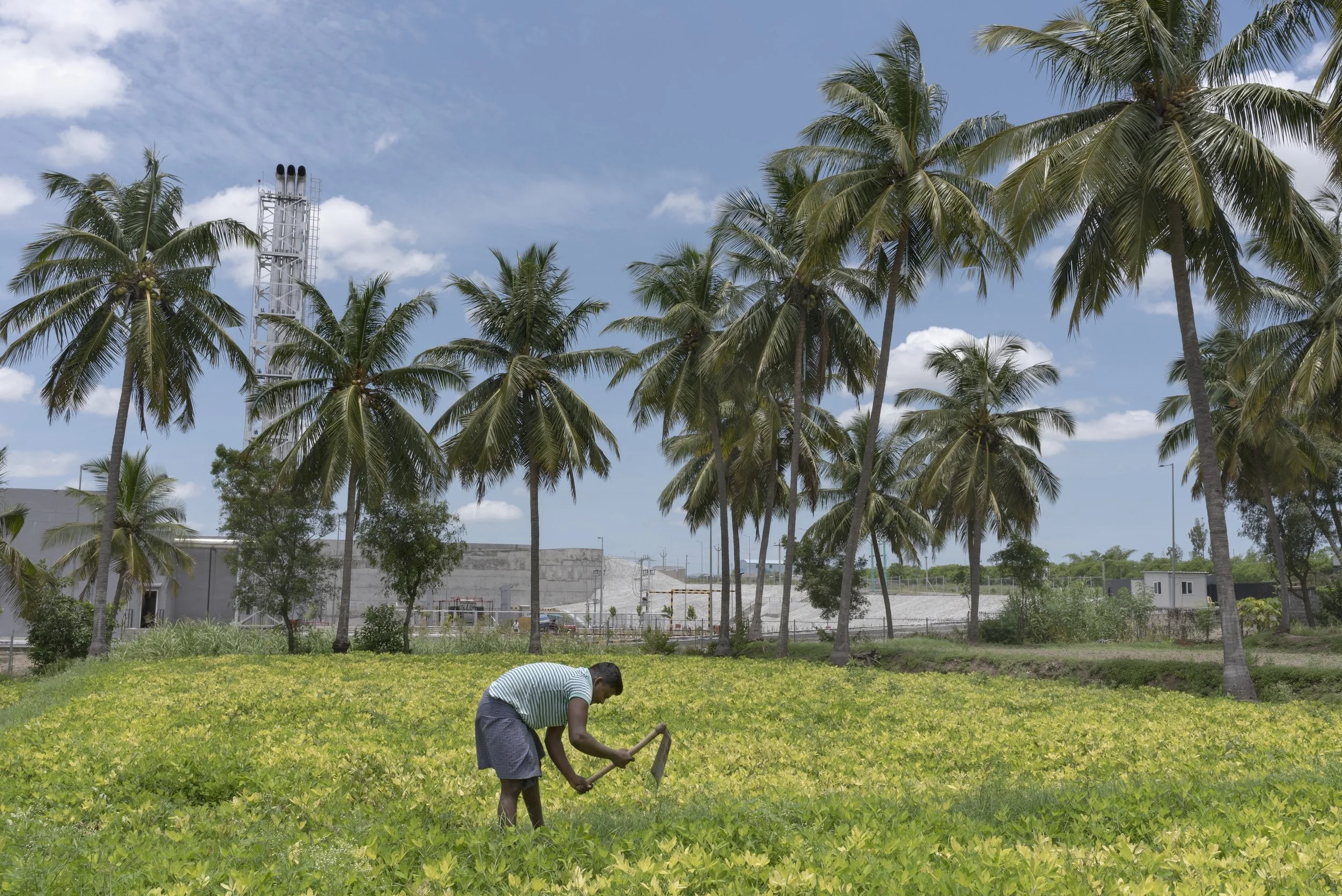
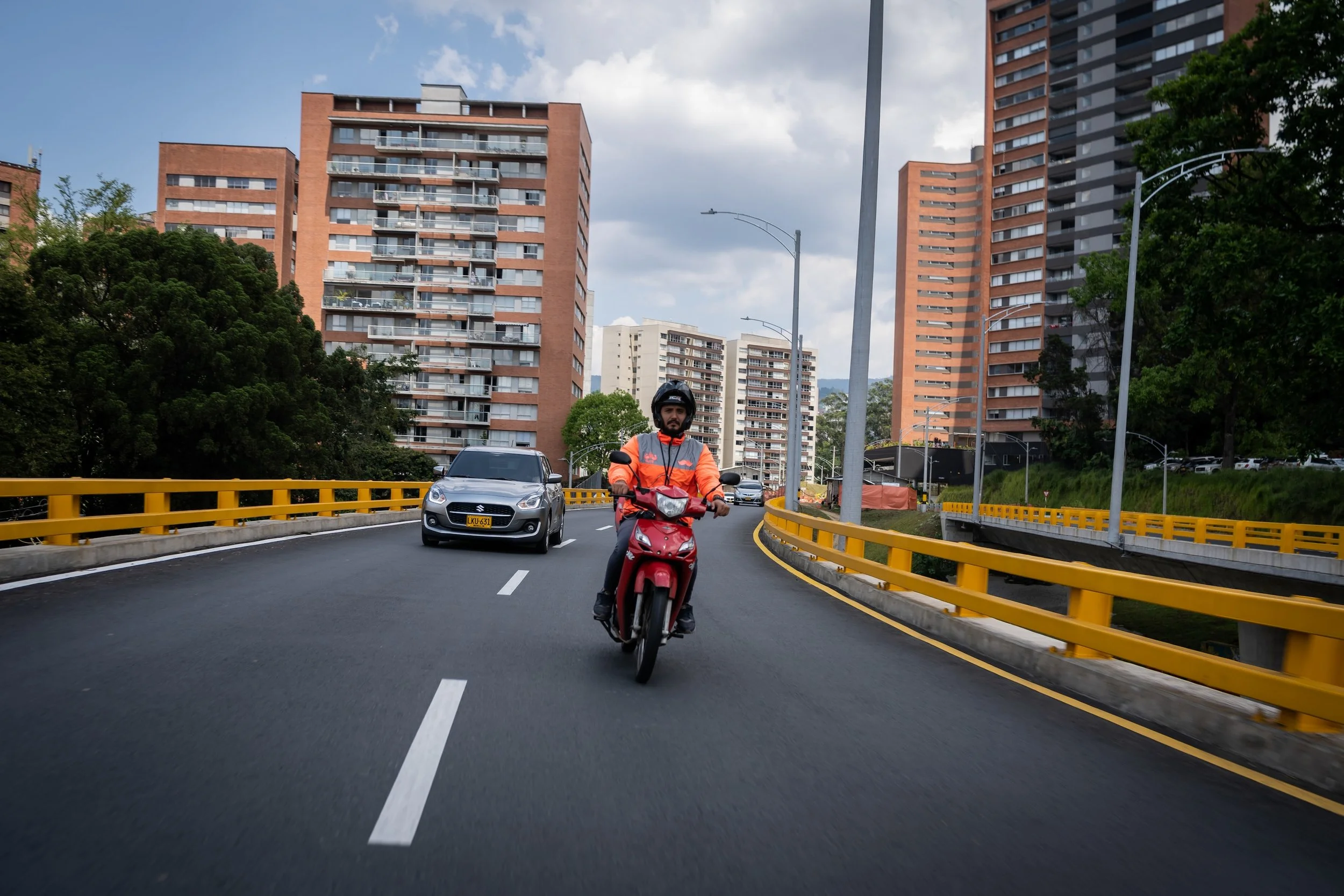
From the halls of governments around the world to multinational corporations and investment firms, Rest of World’s reporting has been the catalyst for tangible, real-world impact. Our global investigative journalism has shed light on critical issues, prompting policy changes, corporate accountability, and creating opportunities for local economies to flourish.
Here are just a few examples of some of the biggest impacts we saw from our reporting last year.
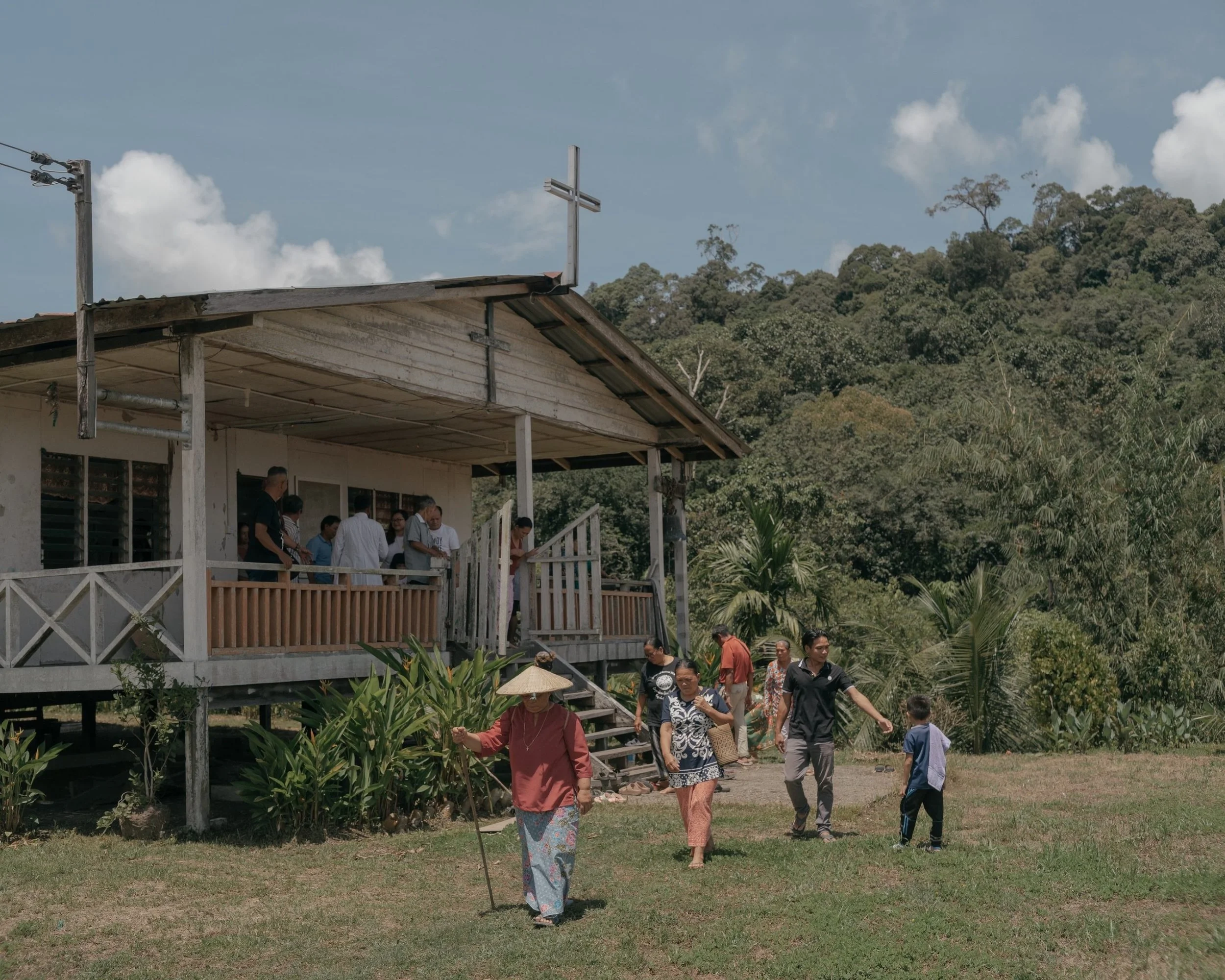
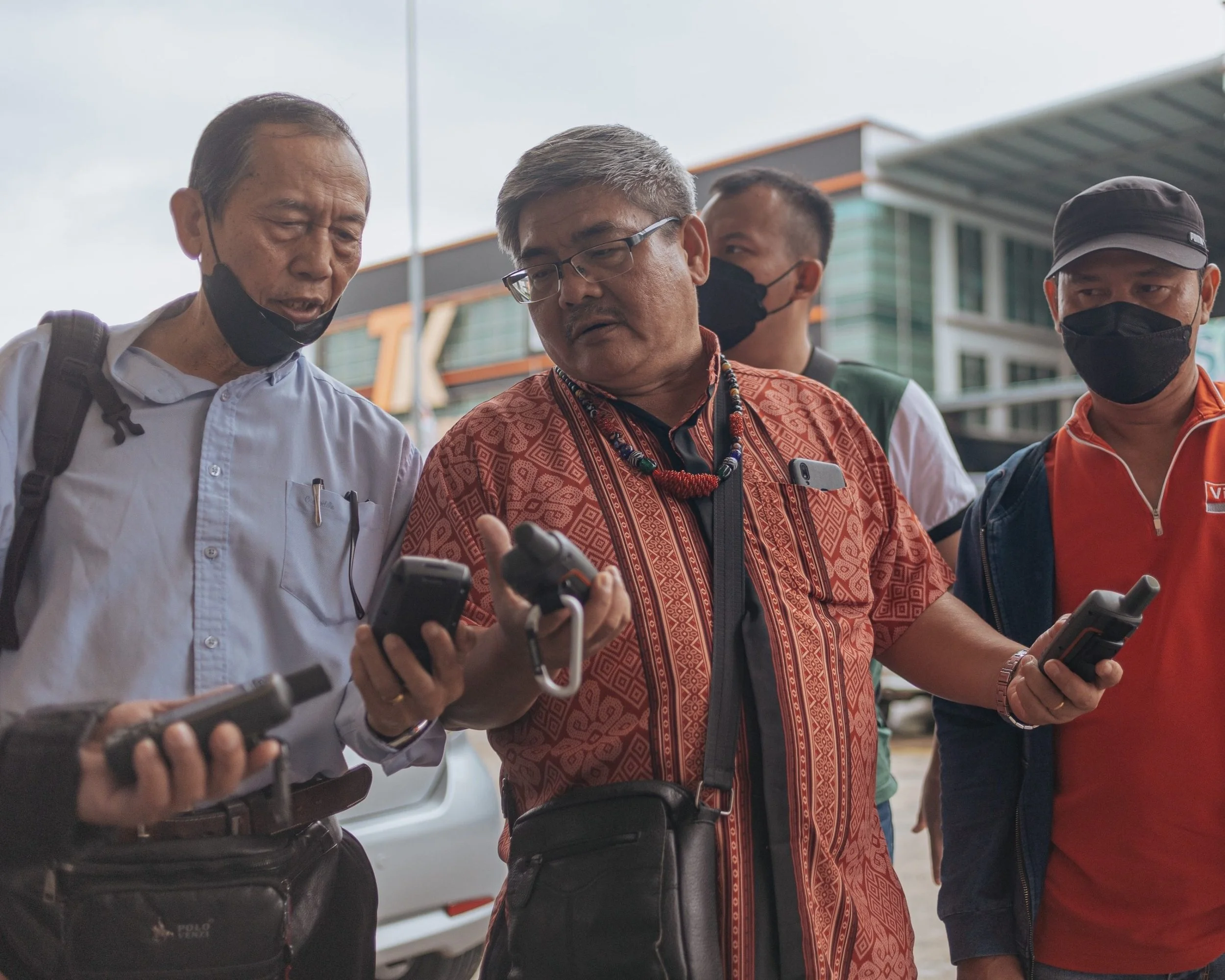
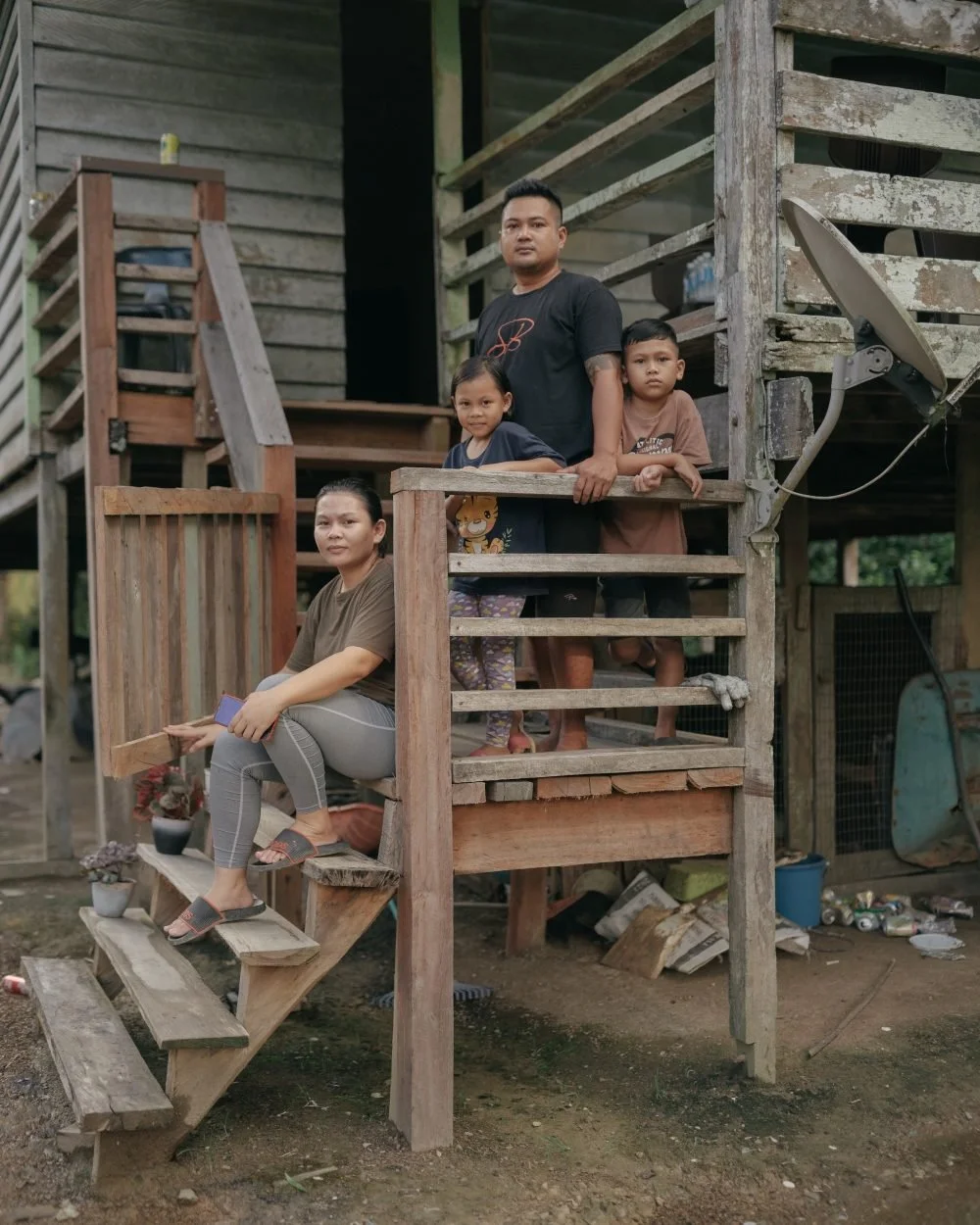
Indigenous communities worldwide are engaged in a struggle to safeguard their land against displacement and environmental degradation, often due to industrial agriculture. In order to protect their ancestral land, these communities need highly precise, technical maps to outline their heritage so they can prove to the government that the land is actually theirs. Rest of World wrote about one such community, in Borneo, that is leveraging advanced GPS and mapping technologies to protect and reclaim their native land. Reporter Liani MK and photographer Muhammad Fadli, both of whom are local to the region, spent time with those in the community, learning about their ancestral lands and their struggles to protect them. They went to community hearings, visited palm oil plantations, and spent time with a local nonprofit organization that helps educate people on how to use mapping technology, creating an immersive, visually driven piece about this community’s struggles.
After the publication of this story, Indigenous community leaders began receiving inquiries from global organizations seeking to fund their drone technology, furthering their goal of documenting and protecting their ancestral land. Earlier this year, the Cadasta Foundation, a U.S.-based land rights organization, visited Malaysia and engaged in discussions with a lawyer representing the Indigenous community organization we profiled regarding potential collaboration and funding opportunities. That the Indigenous communities covered now have new funding options as a result of our reporting speaks to the immediate and powerful impact of the story. Additionally, Rest of World received communication from Cerulean Ventures, an investment firm that referenced our reporting in their investor materials, highlighting the challenges, complexity, and conflicts stemming from the lack of land titles for Indigenous communities.
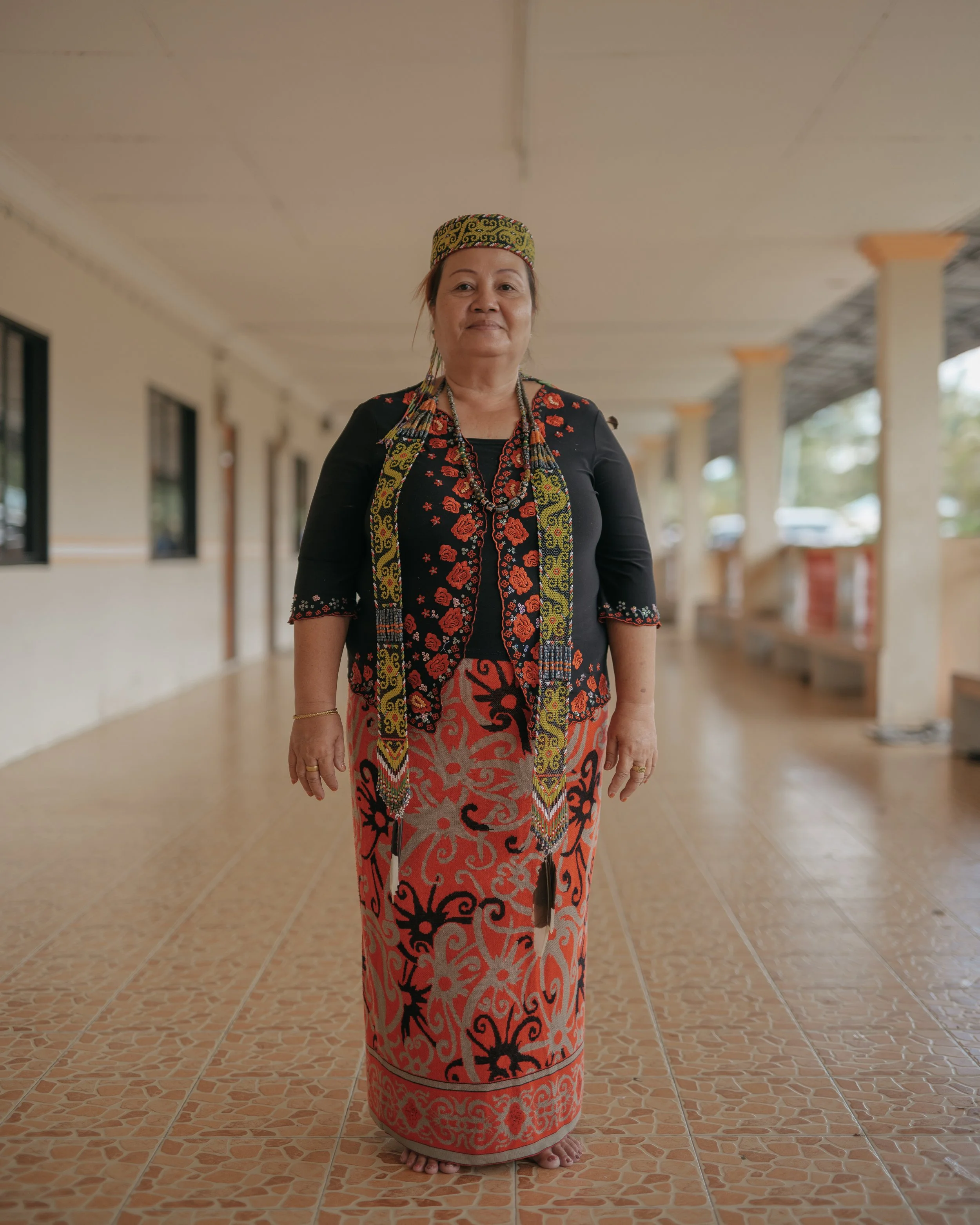
Rest of World was footnoted by Cerulean Ventures in reference to the fact that their client, Meridia.land, has the largest, most comprehensive land-title database for smallholder farms based on their work with agricultural communities around the world for the past six years. Our story was cited as an illustration of the cost, complexity, and conflict arising from a lack of land title for Indigenous communities. Cerulean Ventures noted that Meridia’s tech for land titling gives farmers both an asset and an address while their business model alleviates the technical and compliance costs for smallholders by pushing it up the supply chain to commodities buyers and traders.
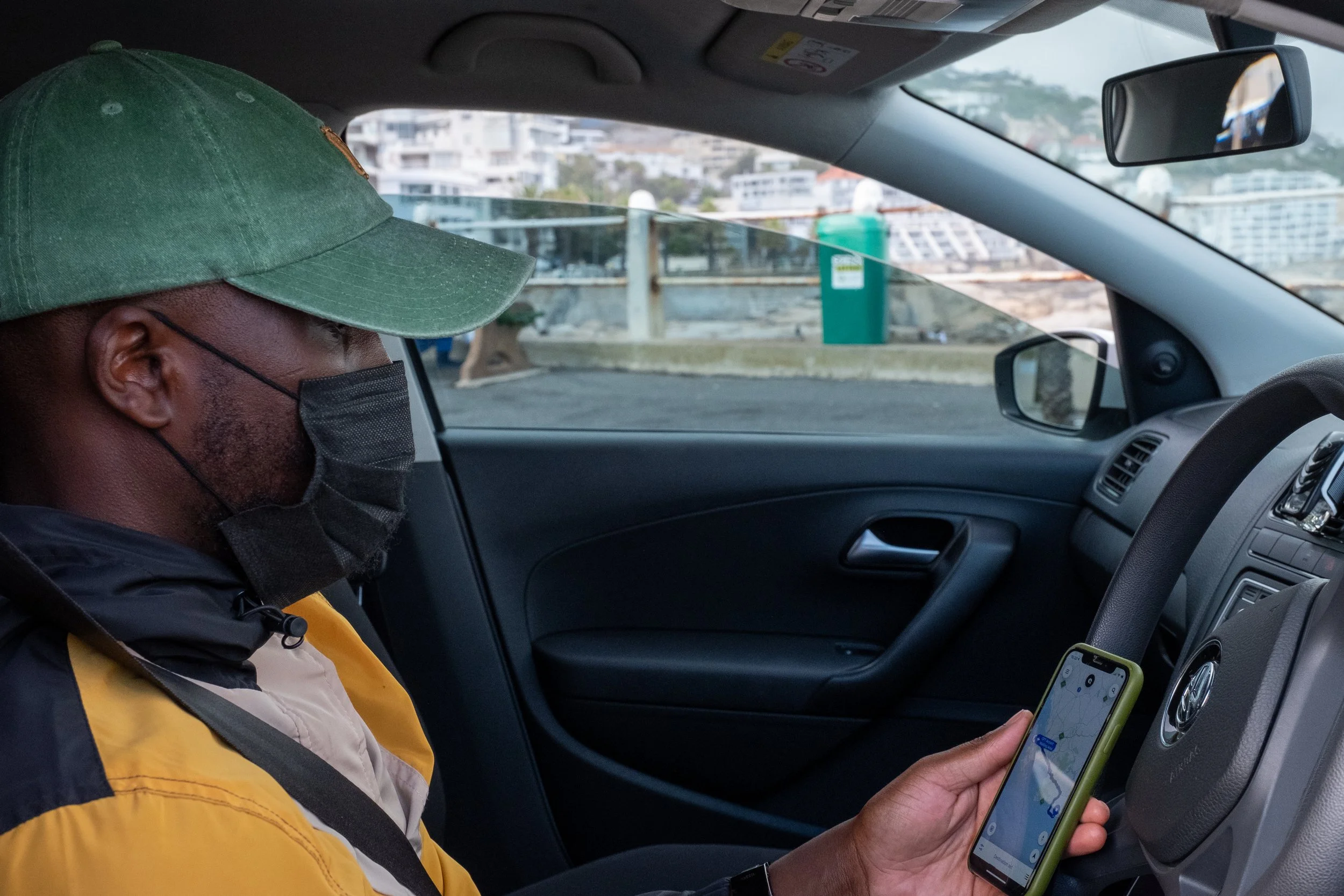
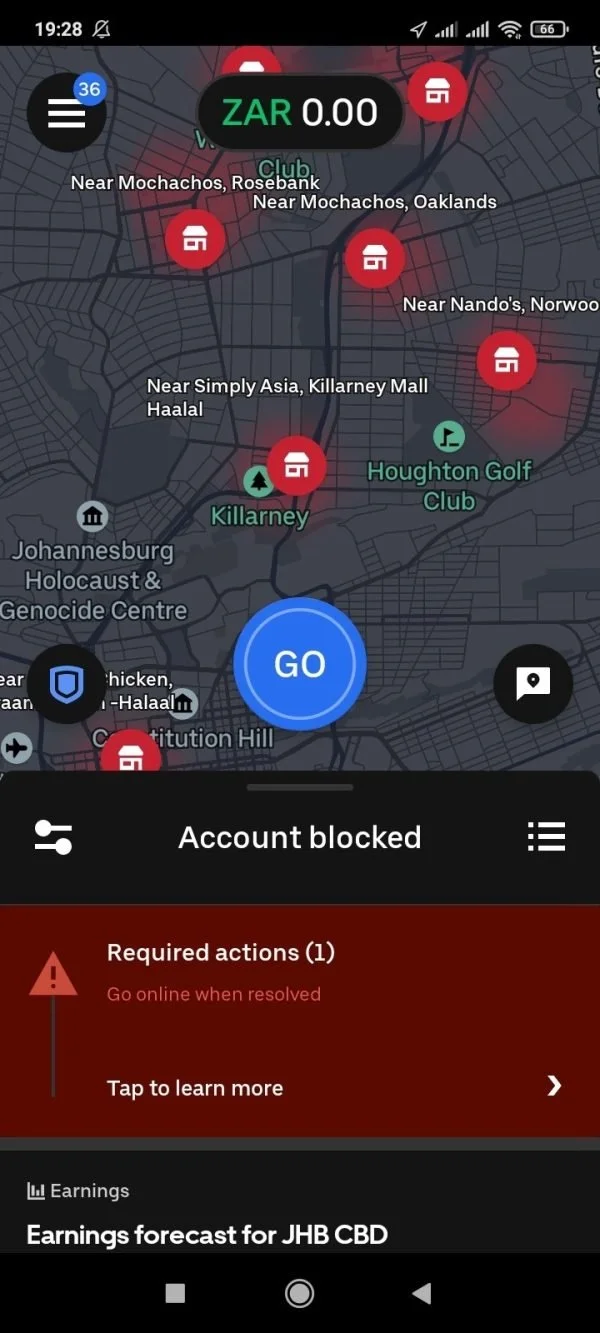
Meanwhile, in South Africa, Uber Eats drivers were facing app lockouts as the country experienced unprecedented electricity shortages in 2023. Kimberly Mutandiro, one of our Labor x Tech reporting fellows based in Johannesburg, spoke to multiple delivery drivers, many of whom were blocked from the app due to late deliveries caused by power issues, or because they used a different navigation app to avoid areas affected by power cuts. Though the drivers said they had contested the bans with Uber many times, their requests to the company had fallen on deaf ears, and their wages suffered as a result.
Mutandiro’s reporting made its way around the internet, and she appeared on local radio to talk about the issue that Uber Eats drivers were facing; the drivers she spoke with passed it around their networks, too. Just days later, those drivers began reaching back out to Mutandiro to tell her that Uber quietly rolled out a new feature that allowed them to report power and navigation issues within the app, personally thanking her for her reporting that pressured Uber to change.
High Profile Citations
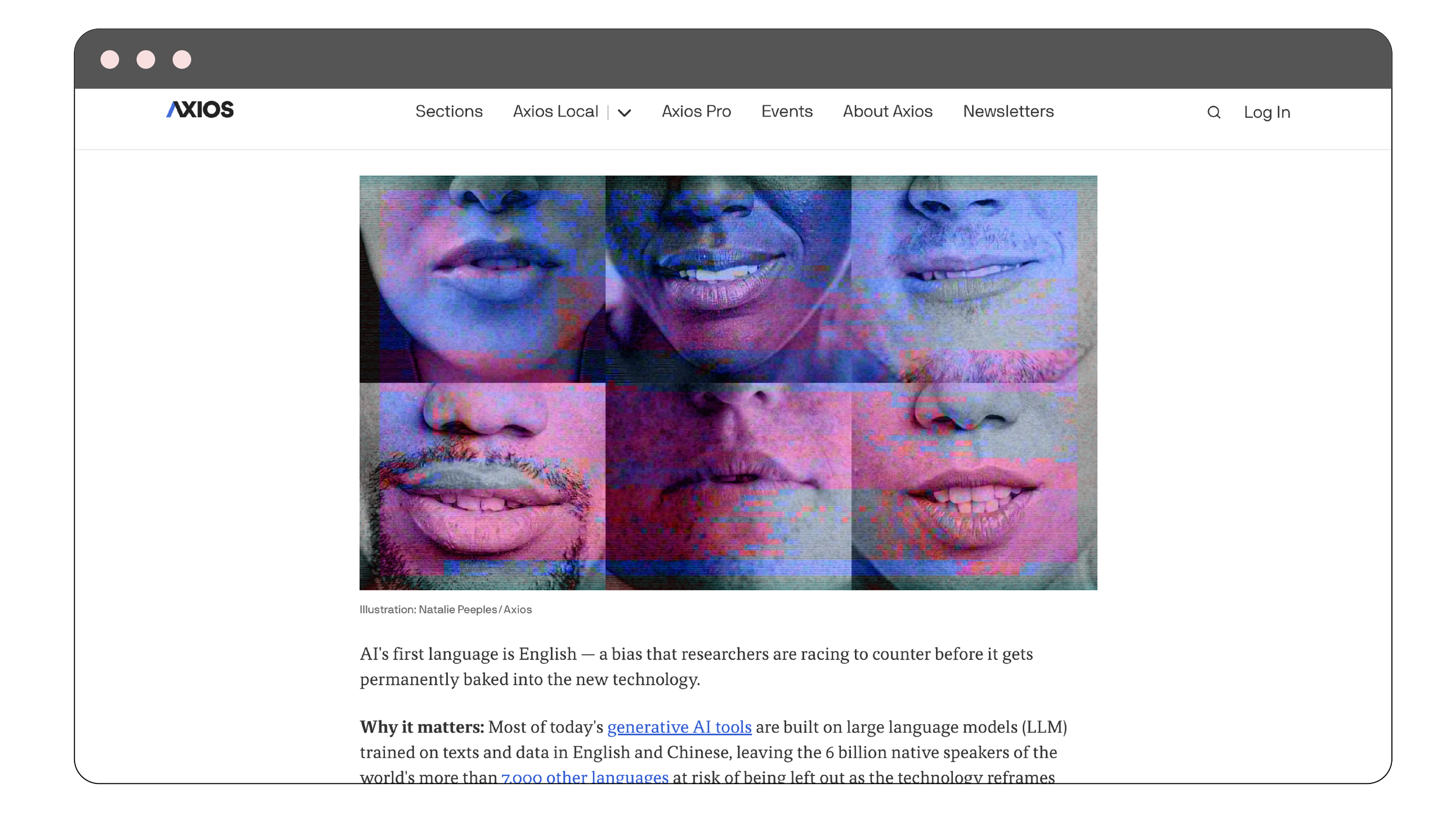
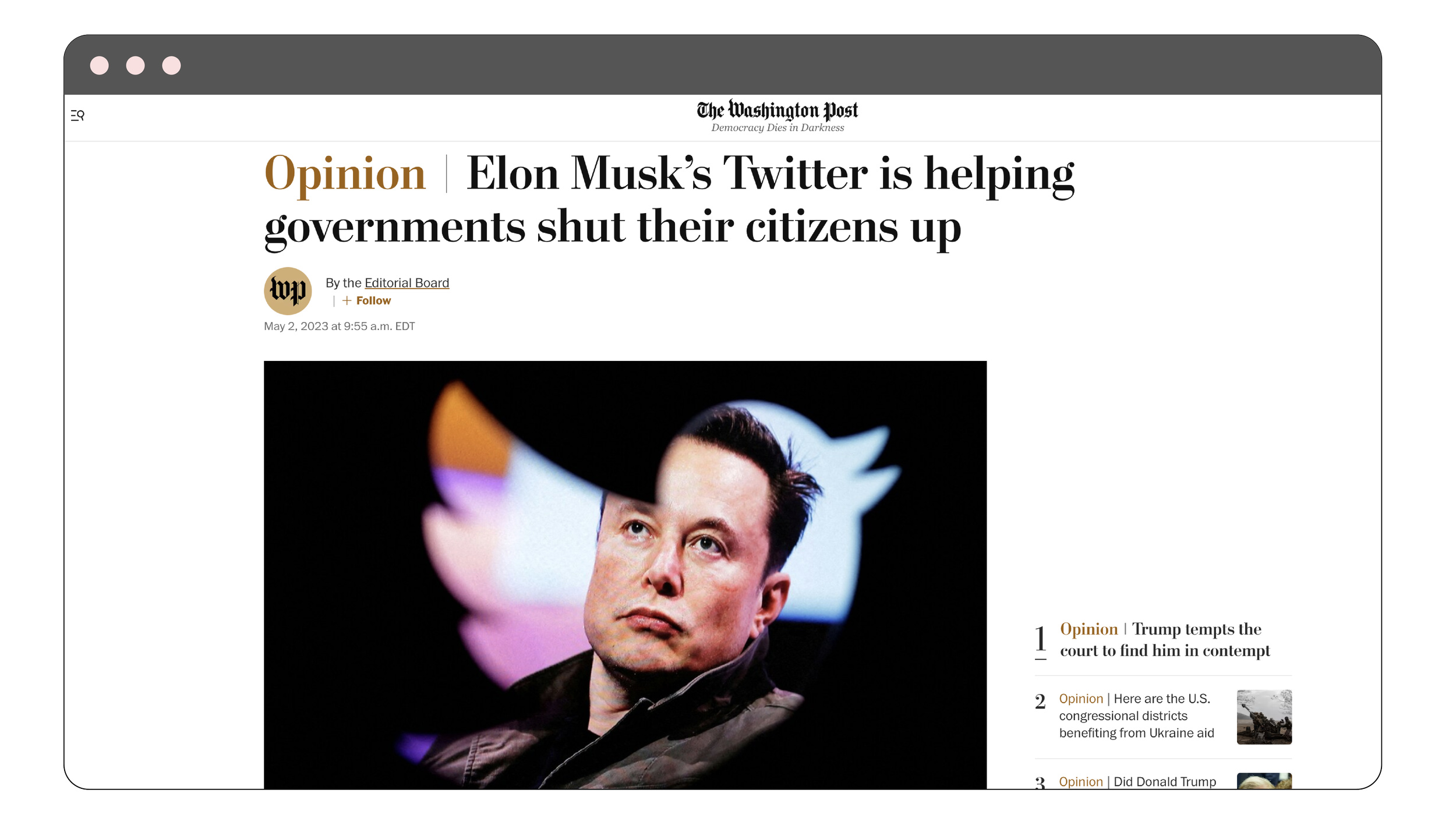
Our coverage is on the radar of newsrooms around the world. When we broke the news that Twitter is complying with more government demands under Elon Musk, it was cited in additional reporting by MSNBC, The Washington Post, Vanity Fair, and Jacobin; it was mentioned by Musk himself on Twitter/X, too. Our ongoing coverage of the intersection of AI and language, including our story about ChatGPT’s inability to function in low-resource languages, spurred additional reporting by MIT Technology Review and Axios, and our report on the launch of Worldcoin’s biometric cryptocurrency led to additional coverage from Bloomberg, MIT Technology Review, and The Verge.

Awards and Recognition
South Asian Journalists Association
American Illustration 41 – American Photography 39
Society of Publishers in Asia
Society for News Design 44
SABEW Best in Business Awards
ASME – National Magazine Awards 2023
True Story Award
Diversity and Inclusion
Diversity and inclusion are core to our work at Rest of World, both in our operational design and mission.
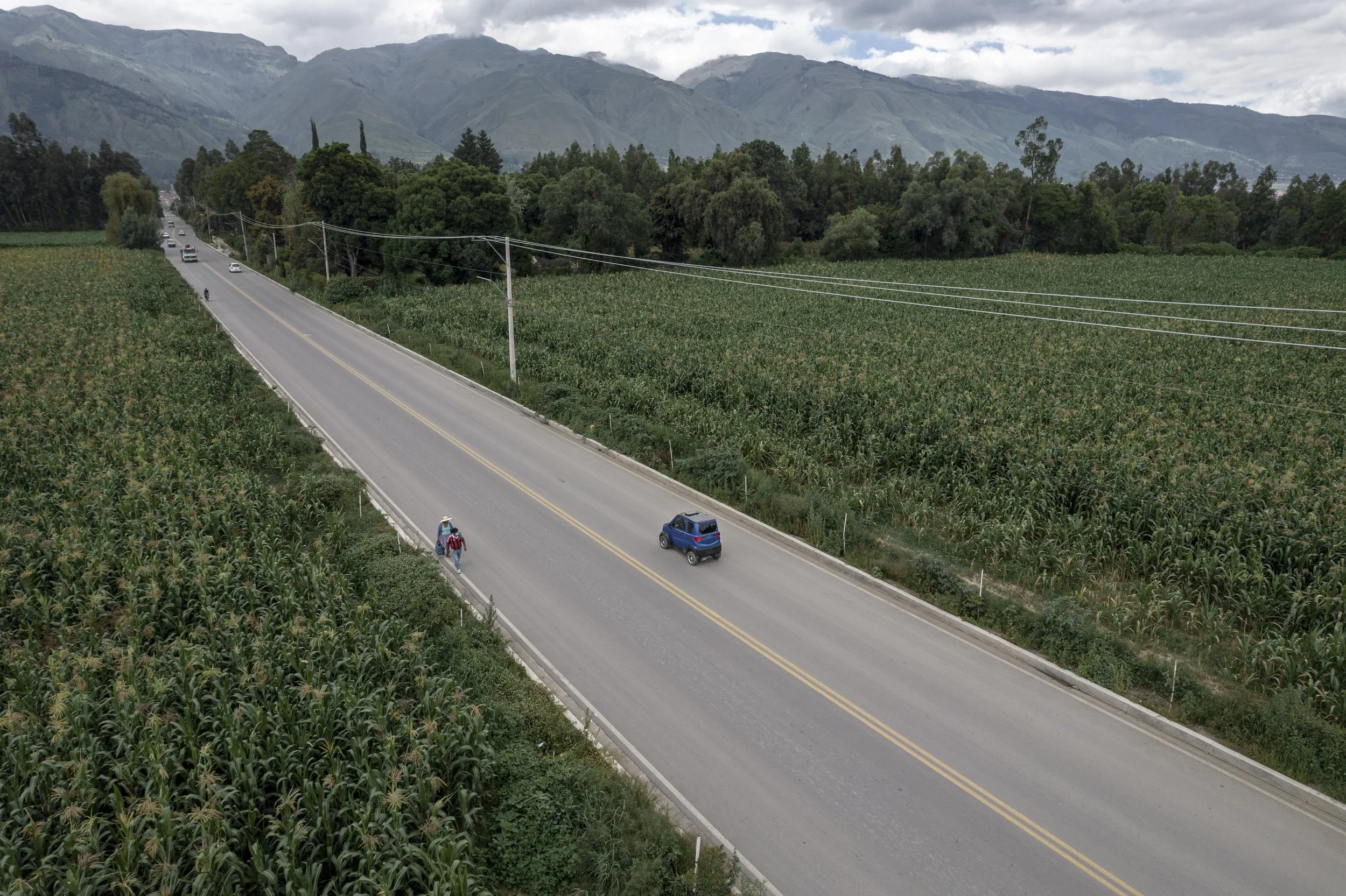
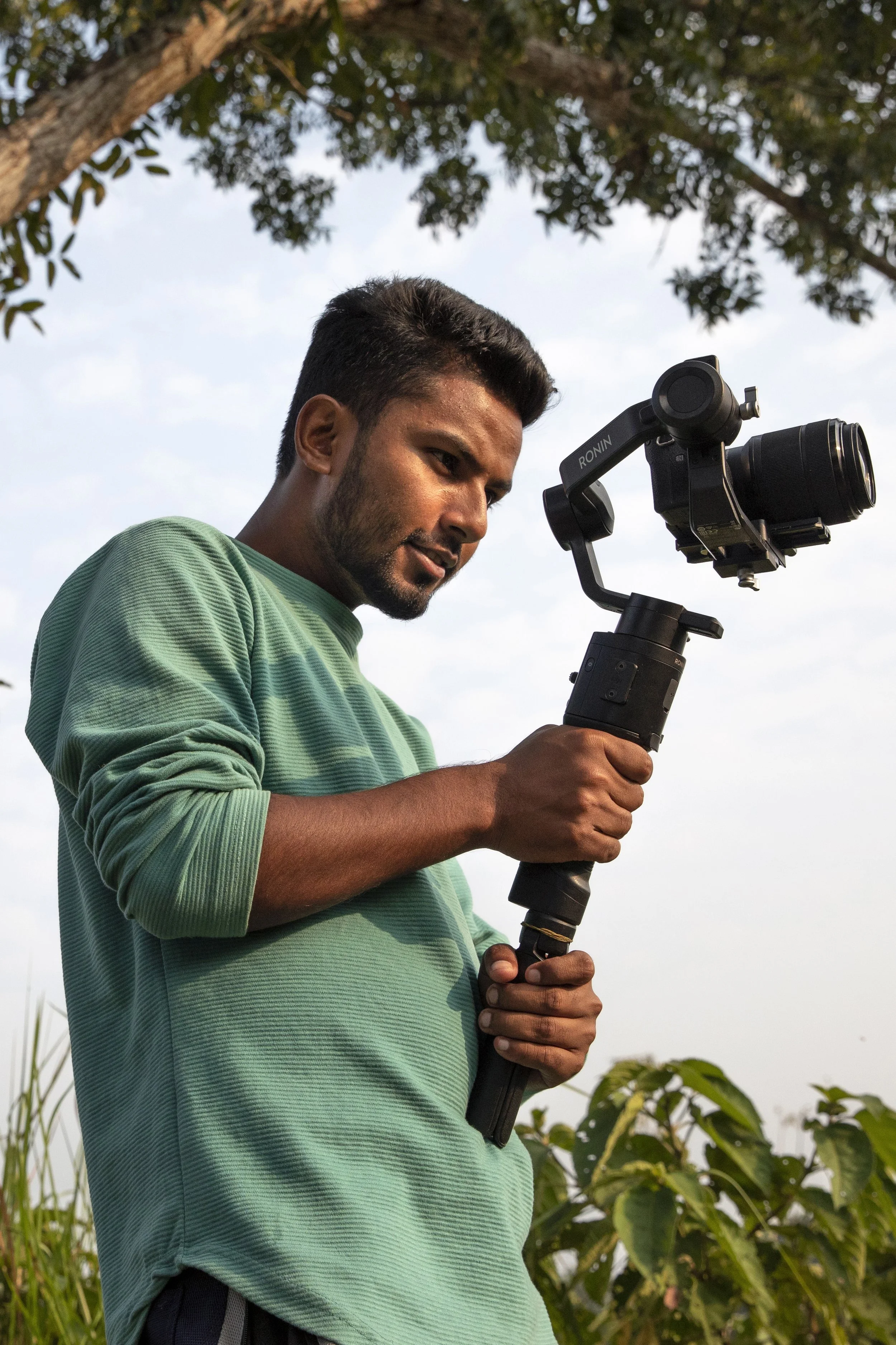
Our full-time staff of 35 are spread between our headquarters in New York and across the world — from Mexico City to Abuja, Bangkok to Bengaluru. We are led by a journalist born and raised in Nepal. All full-time regional editors and reporters are native to the countries they cover in Asia, Africa, South Asia, and Latin America.

63%
90%
15%
23
22
“Thank you for making this website exist. These long, research-heavy articles on other countries just don’t exist.”
SAMIR, PHYSICS STUDENT
INDIA
Financials
Income & Expenses
Income
Expenses
View our financial statements
Donor Recognition
Rest of World is deeply grateful to our institutional and individual donors who provide critical financial resources to fuel our ambitious mission. We especially wish to recognize our donors who contributed more than $1,000.
Your belief in our journalism means so much to us. Thank you!




Individual donors
Amy Rao
Carl Schmidt
Jonathan Rosenberg
Peter and Lynn Wendell
Richard Dabo
Rye Barcott
Wendy Schmidt
“This is what I wish I could see more of in other publications. These things are important for people to learn about, read about, and understand. You don’t really see it anywhere else, which is what I think makes you guys really unique.”
PHILLIP, NON-PROFIT WORKER
UNITED STATES



Leadership
Board of Directors
-

Sophie Schmidt
Founder & Publisher,
Rest of World -

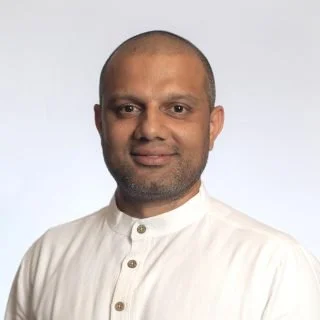
Raju Narisetti
Leader, Global Publishing,
McKinsey & Company -

Anup Kaphle
Editor-in-Chief,
ex officio, Rest of World

Executive Leadership
-

Sophie Schmidt
Founder & Publisher
-
Anup Kaphle
Editor-in-Chief
-

Michael Donohoe
Chief Product Officer
-

Eli Berger
Chief Operating Officer
-

Emily Tracy
Chief Development Officer
-

Gabriel Boylan
Head of Audience
-

Michael Zelenko
Executive Editor