On the inDrive Driver Unity Facebook group, drivers across Pakistan gather to share their daily challenges and struggles, from troubleshooting app-related glitches to comparing car fuel averages. Occasionally, they even curse other drivers — the smart alecs, whom they call shapar. “They’re shameless people,” Tariq Saeed, an inDrive driver from Karachi, wrote in a post last month. “Maybe you are a shapar yourself,” someone called Hamza responded. “All you do is cry.”
There are 435 million gig workers globally, according to the World Bank. But despite their large numbers, they’re part of an increasingly isolated ecosystem. Rest of World’s reporting on gig workers shows that they band together in close-knit communities on Facebook, WhatsApp, and Telegram groups — with a distinct vocabulary.
These 10 words, sourced from gig workers around the world, describe specific tasks associated with food delivery and ride-hailing. They also help bring a sense of lightness and some banter to work that’s inherently precarious.
Shapar 🇵🇰

Among Pakistani ride-hailing workers, a shapar is understood to be someone who betrays the pack by not bargaining with customers.
Bid-based models have been leaving drivers worse off in Pakistan. Having to bargain with customers for rides has made their work more laborious and hypercompetitive, sometimes forcing them to accept the lowest fares, they told Rest of World. A driver who does not negotiate for a higher price or picks up a ride at the fare the customer offers is disliked within the community, and is often called a shapar. In Urdu, the word translates to “wing” or “the strongest feather in a wing,” but is also used ironically to describe someone sly, a suck-up, or a teacher’s pet.
Khep 🇧🇩
Frustrated with Uber and Pathao charging hefty commissions, gig drivers in Bangladesh decided to khep, or bypass platforms altogether.
Khep means “side hustle” in Bengali, but thanks to its adoption by Bangladesh’s ride-hailing community, the word is now commonly associated with ride-sharing drivers going off-platform.
“We’d rather khep than work on the apps. All the effort is from [the drivers’] end anyway,” Jisan, a Pathao bike-taxi driver, told Rest of World. “The motorcycles are ours, the bills for petrol are ours, it’s our hard work. Platforms only help by getting us on the apps, and even for that, they’re charging a commission.”
Bololô 🇧🇷

For Brazilian gig workers, bololô has come to mean a rallying cry and a call to protest, bringing together delivery drivers in a show of solidarity.
A Brazilian Portuguese word for the sound of a motorbike’s exhaust while it’s being revved up, bololô is now used to protest physical or verbal assaults from rude customers. Delivery workers across the country have been organizing bololôs — noisy protests made up of horns, fireworks, and revving engines.
“It’s the only alternative these workers have found of being seen and of showing what happens to them,” Abel Santos, vice president of the Federal District Association for App Workers and Motorcyclists, told Rest of World.
Amagundane 🇿🇦
The word amagundane is used by gig workers in the Cape Province of South Africa to describe sellouts who refuse to unionize or participate in protests. It literally translates to “rats” in Zulu.
Amagundane are also partly blamed for the fact that driver unions are struggling in Africa’s major countries because they refuse to ride with the rest of the pack. Typically, amagundane drivers are ostracized: They are removed from drivers’ groups on social media platforms or simply get ghosted by their peers. They are also denied the privileges that other drivers have access to, such as being warned about places to avoid amid deadly robberies targeting drivers in South Africa.
Bom hang 🇻🇳

In the gig worker lexicon, bom hang refers to the act of ghosting delivery drivers and online shops.
“Bom” means “bomb” and “hang” translates to “package” in Vietnamese. Getting bom hang-ed is especially hard on food delivery workers because they lose out not just on the delivery fee, but also on the money they pay restaurants to pick up the food — which the customer is supposed to reimburse with cash. In countries like Vietnam, where cash-on-delivery is the norm, nearly 15% deliveries fail.
“This morning, I just got bom hang — a salted chicken. I’m pissed,” one driver shared in a Facebook group for gig workers in Hanoi last month. He said he had tried to get in touch with the customer for 30 minutes before realizing there was no point. “Here’s her number,” the post read. “Her name is Ngan.”
Bacup 🇿🇦
Ever heard cops on true-crime shows calling for backup? When South African gig workers type the word’s local variation, bacup, in their WhatsApp groups, it is usually the last resort.
Bacup is usually construed as a sign that the gig worker is in trouble and in urgent need of others to come to their rescue.
Crime is at an all-time high in South Africa — the country ranks third in the 2023 crime index by the California-based organization World Population Review. Gig drivers in South Africa have lost trust in law enforcement, which is viewed as too slow to respond when drivers call for help during attacks.
Gacor and gagu 🇮🇩

In Indonesia, some drivers are gacor, while others are gagu — driver accounts that very easily get rides and those that rarely get traction via the algorithm, respectively.
In Bahasa Indonesia, gacor literally translates to “easy to get”, and “gagu” means “muted.” In ride-hailing lingo, however, the terms refer to the lack of transparency in how app algorithms allocate rides.
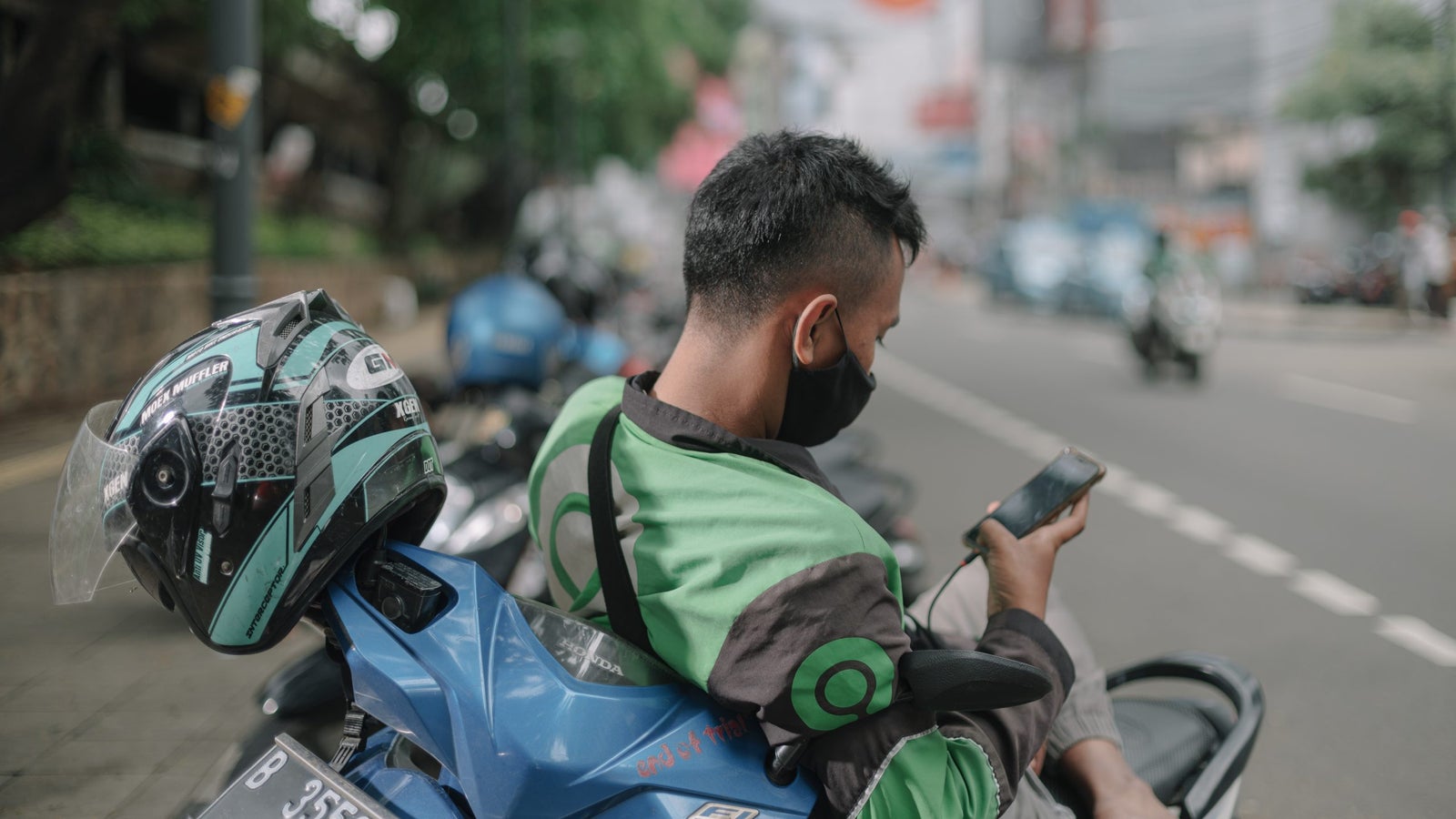
No one really knows why some Gojek drivers are gagu while some others are gacor. They liken working for the platform to playing a kind of game — albeit one that’s far from entertaining, which requires them to meet ever more challenging targets, and changes its rules without consultation or warning.
Captain 🇵🇰
We’ve heard of airline and ship captains, but when ride-hailing app Careem came to Pakistan in March 2016, it began calling its drivers “captains.”
Careem refers to its drivers as captains across its app and website. The word has now been adopted by the rest of the country’s ride-hailing sector.
New companies in the market — from the Silicon Valley-headquartered inDrive to Yango from the Netherlands — and their drivers have begun using the term. “We think it’s a little more respectful than just being called a driver,” Muhammad Umer, an inDrive worker from Islamabad, told Rest of World.
Amandla 🇿🇦

Amandla is a popular chant used by gig drivers in South Africa, as a sign of unity in the face of adversity.
The word translates to “power” in Zulu. It rose to popularity during the anti-apartheid struggle in South Africa, when crowds used it as a rallying cry during President Nelson Mandela’s speeches. Now, gig workers use “amandla” as a war cry when they go on strike, usually accompanied with a raised fist.
Drivers’ unions in South Africa have organized several strikes in recent years, in an attempt to hold companies such as Uber and Bolt accountable. While gig workers are still a long way from achieving the results they want, the amandla chant has become an important symbol of resilience in their struggle.
Rappitenderos 🇨🇴
In Colombia, workers associated with food delivery platform Rappi have started to band together and call themselves rappitenderos.
The word is a combination of Rappi and the Spanish word tenderos, which means those who work in customer service or customer-facing jobs. “Rappitenderos” has now been co-opted by the company itself, to refer to its delivery workers.
“I think this song will be an anthem for rappitenderos for ages to come,” said 27-year-old Julio Barrera, referring to his hit, “Soy Rappi.” He is part of a microculture of delivery workers in Spanish-speaking Latin America who have begun penning songs that speak to their struggles with angry customers, long wait times to pick up the order, traffic jams, and technical difficulties.