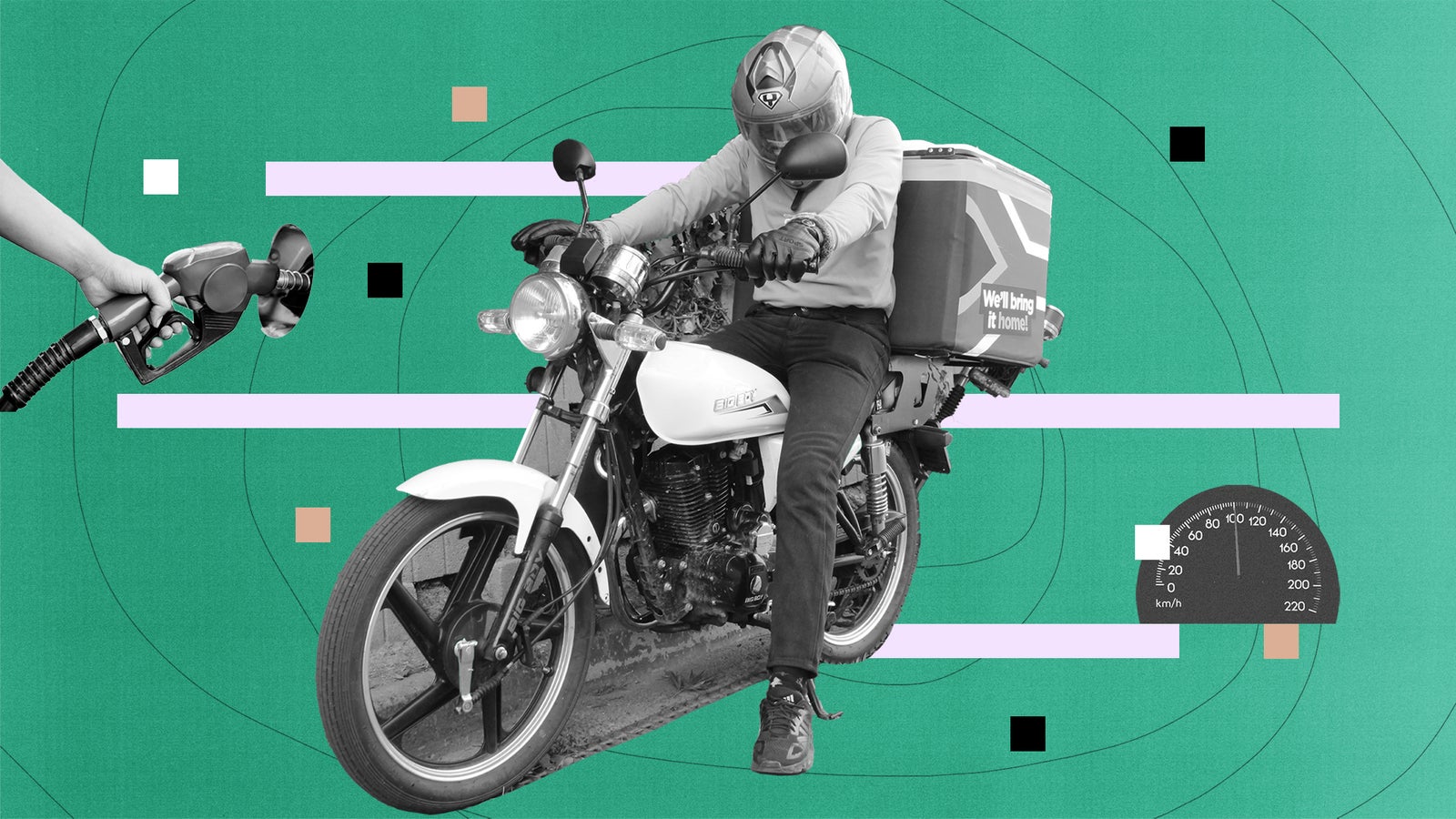
Gig worker Mkhululi Siziba claims he can deliver any order in 15 minutes. The 30-year-old works for the Checkers Sixty60 grocery delivery app in Johannesburg, and has a clean driving record, despite bike accidents being common among delivery workers in the city. Siziba told Rest of World he stops at nothing to ensure his customers are happy, and that his good ratings speak for themselves.
Siziba began working with Checkers Sixty60 in 2020, when South Africa saw a boom in food delivery services. He left his gig with Uber Eats to join the new app, which offered better pay, shorter hours, and work contracts. At the time, he said, he would deliver up to 28 orders every day, earning a weekly income of 5,208 rand ($272). But the competition is higher now — more gig workers have joined the app, and Siziba barely gets 18 deliveries per day. But he still makes more money than he did just working for Uber Eats.
Sziba’s daily routine
| 5 a.m. | Wake up and take a bath |
| 5:20 a.m. | Breakfast |
| 6 a.m. | Start work |
| 1 p.m. | Lunch |
| 1:30 p.m. | Get back to work |
| 7 p.m. | Finish work and eat a quick snack |
| 7:15 p.m. | Start night shift for Uber Eats |
| 10 p.m. | Drive home |
| 11 p.m. | Bedtime |
“It’s now [a] survival-of-the-fittest game, but l take it as a challenge. That is why I keep my 15-minute delivery time, driving at a speed of 100 kilometers whenever I get an order,” he said. “I can hardly go wrong.”
Checkers Sixty60 launched in South Africa in 2019, as a local alternative to delivery platforms like Uber Eats and Bolt. By the end of the 2021 financial year, the grocery app — owned by the Shoprite group, the continent’s biggest supermarket retailer — had 144,844 employees across the country. Despite competitors like Woolies Dash and Pick n Pay ASAP, it has continued to dominate the market, with 2.4 million downloads.
With his earnings from Checkers Sixty60, Siziba has bought a new car. But in January this year, the rising fuel prices prompted him to take on an after-hours gig with Uber Eats for extra income.
Due to the rising cost of fuel, South Africans find it cheaper to use delivery services rather than driving to the stores themselves. Gig workers are expected to make deliveries within an hour after receiving orders from customers — of which 30 minutes are required for packaging and the processing of invoices, said Siziba. This leaves him with half an hour to deliver to a distance of up to 10 kilometers.
But making deliveries on time is the least of his worries, he said. “It’s all about how many deliveries l can make in a day, and maximizing my earnings.”
Siziba said he is always looking out for better work opportunities. But in the meantime, the grocery delivery gig with Checkers Sixty60 is his cash cow.
“I feel lucky because I get to juggle two gigs which is the advantage of being an independent contractor,” he said.