
Has a tech corner of Taiwan generated the baby boom some in Silicon Valley are yearning for?
A covey of U.S. billionaire tech elites have urged Americans to have more babies, warning that otherwise, humanity faces population collapse and economic disaster. Low birth rates are the “the biggest danger civilization faces by far,” Tesla founder Elon Musk, father of 11 children, tweeted in 2022.
The world’s semiconductor supplier, Taiwan, has long grappled with one of the world’s lowest fertility rates, far below what’s needed to keep the population stable. Successive Taiwanese governments have done everything from offering baby bonuses to hosting singles mixers as a matter of national security.
It’s barely made a dent, except in Hsinchu’s Science Park, home to Taiwan Semiconductor Manufacturing Company (TSMC), MediaTek, United Microelectronics Corporation, and about 600 other tech companies. The semiconductors made here are crucial for everything from phones to AI.
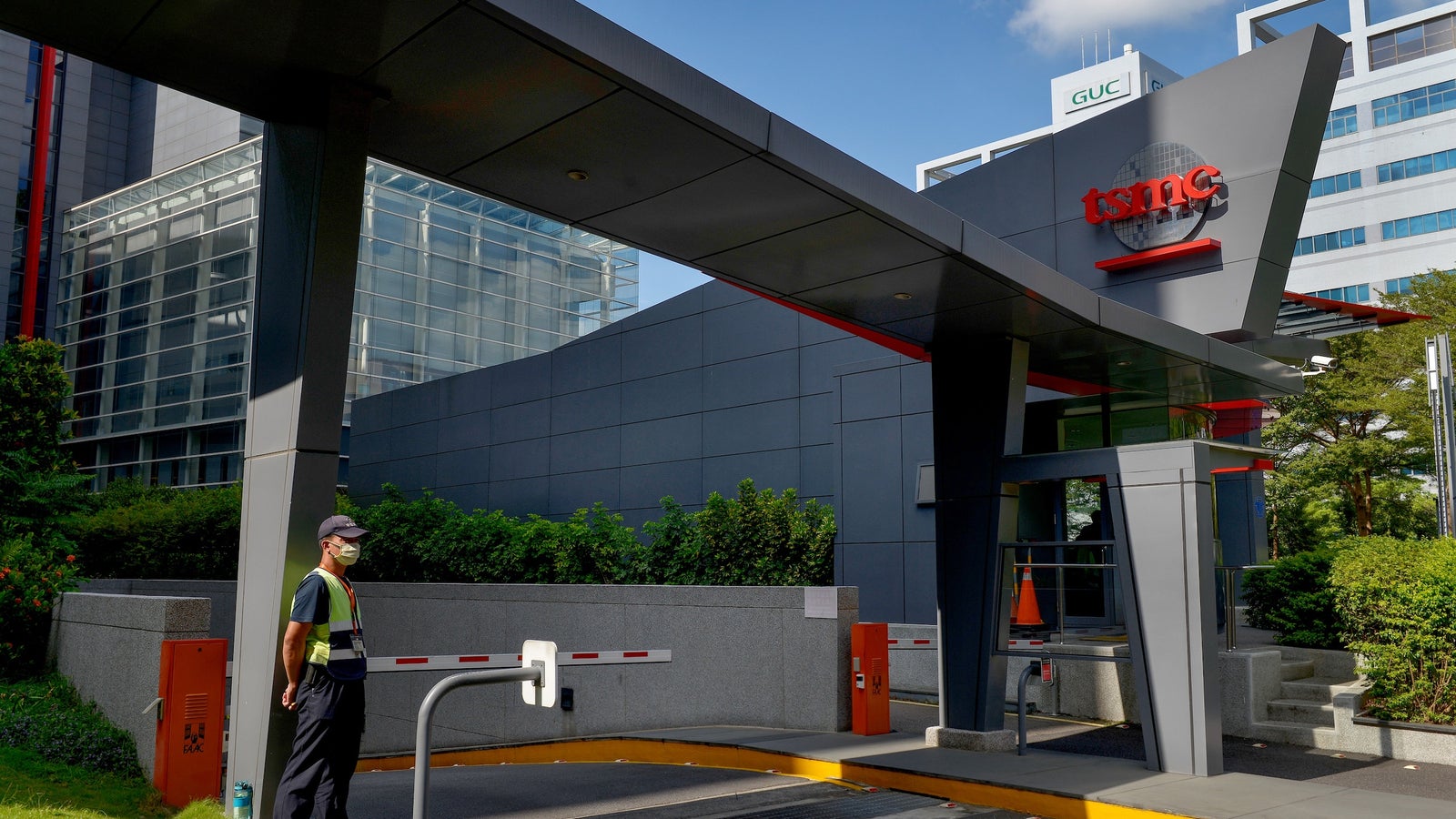
While Taiwan’s fertility rate hit 0.89 children per woman last year, and kindergartens and elementary schools closed their doors, Hsinchu seems insulated from the decline. Its fertility rate has consistently hovered around one child per woman. Residents told Rest of World that schools are running out of room, and pregnant women have to jostle for openings at postpartum centers. Hinschu’s population is growing as young workers move in to be close to work. The Science Park employed over 177,000 people last year. The combination of young talent and job prospects has created what demographers call the “HSP effect.”
“It’s [due to] an influx of young, educated adults in their prime childbearing years,” Yang Wen-shan, a demographer at Academia Sinica, told Rest of World. “They tend to have higher and more stable incomes and are more likely to start families.”
Fertility rates are falling across the world. The U.S.’ rate hit a historic low of 1.6 last year. In San Francisco, the number of babies born last year dropped by 19% compared with 2019.
But a lower fertility rate doesn’t mean population collapse. Rather, the United Nations projects a global population increase to 9.7 billion by 2050, followed by a possible peak and gradual decrease by the end of the century. The only exception is eastern Asia, whose population is expected to shrink in the next decades, according to the U.N.
Every weekday afternoon, Chia-hsin Kuo picks up her two daughters from an elementary school in a fast-growing suburb of Hsinchu. The air is filled with the noise of children racing around the playground and parents crowding the sidewalk — a scene that has become uncommon in the rest of Taiwan.
The 39-year-old moved to Hsinchu after marrying her husband, a MediaTek engineer. After they had kids, she gave up her administrative job to become a full-time caregiver.
“We’re not unusual here,” she told Rest of World. “It’s common to have two kids, maybe even three.”
Hsinchu’s prefectures are the only places on the island where the number of children under 14 exceeds seniors. The pace of population growth is so high that the city’s childcare infrastructure is struggling to cope, Liu Chong-hsian, a Hsinchu city councillor and former UMC engineer, told Rest of World.
“We have been expanding school facilities and adding new classes near the Science Park to meet the growing demand,” she said.
Tech companies are proud of the parents in their workforces, so much so that in 2023, TSMC bragged its employees were behind 1.8% of the newborns that year. A year later, the news resonated in faraway Silicon Valley, where pronatalists have been pushing people to have more children.
“Super-low” fertility rates in places like Taiwan, or U.S. cities such as San Francisco, have motivated some people to think pronatalism is necessary, demographer and pronatalist Lyman Stone, told Rest of World.
“It’s good that elites of any kind are waking up to the problem of low fertility,” he said. “But so far, tech elites don’t seem to be extremely committed to advancing the kinds of policy changes and cultural changes which could enable higher society-wide fertility.”
Leslie Root, a demographer from the University of Colorado, told Rest of World that cities like San Francisco show low fertility because people choose to leave when they are ready to have kids for places with better housing and a cheaper cost of living.
Silicon Valley’s pronatalism stems from philosophies such as “effective altruism” (a belief in impartially performing actions that will benefit the most people) and “longtermism” (a view that the distant future should be a moral priority), Root said.
In contrast, Taiwan’s anxieties about fertility are rooted in concrete economic reasons, such as ballooning long-term care payments and a shrinking workforce, she said.
There are many reasons behind Taiwan’s low fertility. Women are increasingly choosing not to marry, and by extension, not to have children, Ruoh-Rong Yu, a gender and labor scholar at Academia Sinica. Last year, Taiwan’s birthrate was just 5.76 newborns per 1,000 people, about half of what it was a decade ago. In various surveys, women worry child-rearing is too expensive. Some also reject the traditional Confucian values embedded in Taiwanese society, which places most of the responsibilities of family and caregiving on women, Yu said.
“With rising education and income, women are postponing or opting out of motherhood entirely, because the opportunity cost is too high,” Yu said.
This has led to concerns that Taiwan will soon have a shrinking pool of workers to power its industries. A talent shortage already looms in the chip workforce, which the government is filling with migrant workers and foreign students.
“While our young people are becoming increasingly capable, the number of them is simply not enough to meet our future needs,” demographer Yang at Academia Sinica said.
To encourage childbirth, tech companies have rolled out family-friendly policies. TSMC and MediaTek have built on-site kindergartens to ease the pressure on working parents, and employees receive financial incentives. Novatek provides monthly birth subsidies of up to 5,000 New Taiwan dollars ($166) per child until the age of six. Some companies also allow flexible or remote work for parents with young children.
Hsinchu’s tech workers are also highly paid, earning about 1.85 million New Taiwan dollars ($56,000) per year, more than triple the salaries in the rest of the country. The most senior TSMC employees can expect upward of 5 million New Taiwan dollars ($166,200).

The salaries are high enough that families can afford for just one parent to be employed at the park while the other stops working to raise young children. The split often happens along traditional gender lines, three Hinschu mothers told Rest of World.
The working spouses are rarely home, Kuo said.
“We call ourselves pseudo-single moms here,” she said. “Our partners’ hours are usually long, so most housework falls on us.”
The first years after quitting her job were tough, and she felt as though she had lost a part of herself, she said. But with time, Kuo has come to accept her choices.
“I sometimes miss working. But we made a plan, and this is how we’ve chosen to build our lives,” she said.