In Hong Kong, a city with excellent internet coverage but extremely cramped housing, internet cafes have long been a refuge — for teenage gamers running away from scolding parents, delivery workers on a break, and couples looking for a cheap but fun date.
For the equivalent of less than $10, they can spend hours or whole nights in dimly lit, air-conditioned rooms playing video games, watching movies, indulging in bowls of instant noodles, or falling asleep to the sounds of clicking mice and tapping keyboards.
The high-speed, affordable internet in Hong Kong means people don’t usually turn to cafes to go online. When the city’s internet cafe industry picked up around the year 2000, it catered primarily to a growing number of gamers who were unable to afford their own rigs. Groups of friends gathered to play Counter-Strike, Rainbow 6, and Audition Online.
The industry became so big that cafes started competing directly with one another. Alfred Chan, owner of Hong Kong’s biggest internet cafe chain, i-ONE, recalled how one cafe enticed customers with unlimited pineapple buns — a Hong Kong bakery signature. At their peak in the late 2000s, Chan told Rest of World, there were more than 500 internet cafes in Hong Kong.
But business gradually waned in the 2010s. Rents surged, and people increasingly turned to their phones to play games, watch videos, and work online. During the Covid-19 pandemic, internet cafes were forced to close for months; many gamers bought new computers and Nintendo Switch consoles to play from home. Many once-popular internet cafes closed for good, and the remaining few are struggling to survive.
i-ONE
Mong Kok
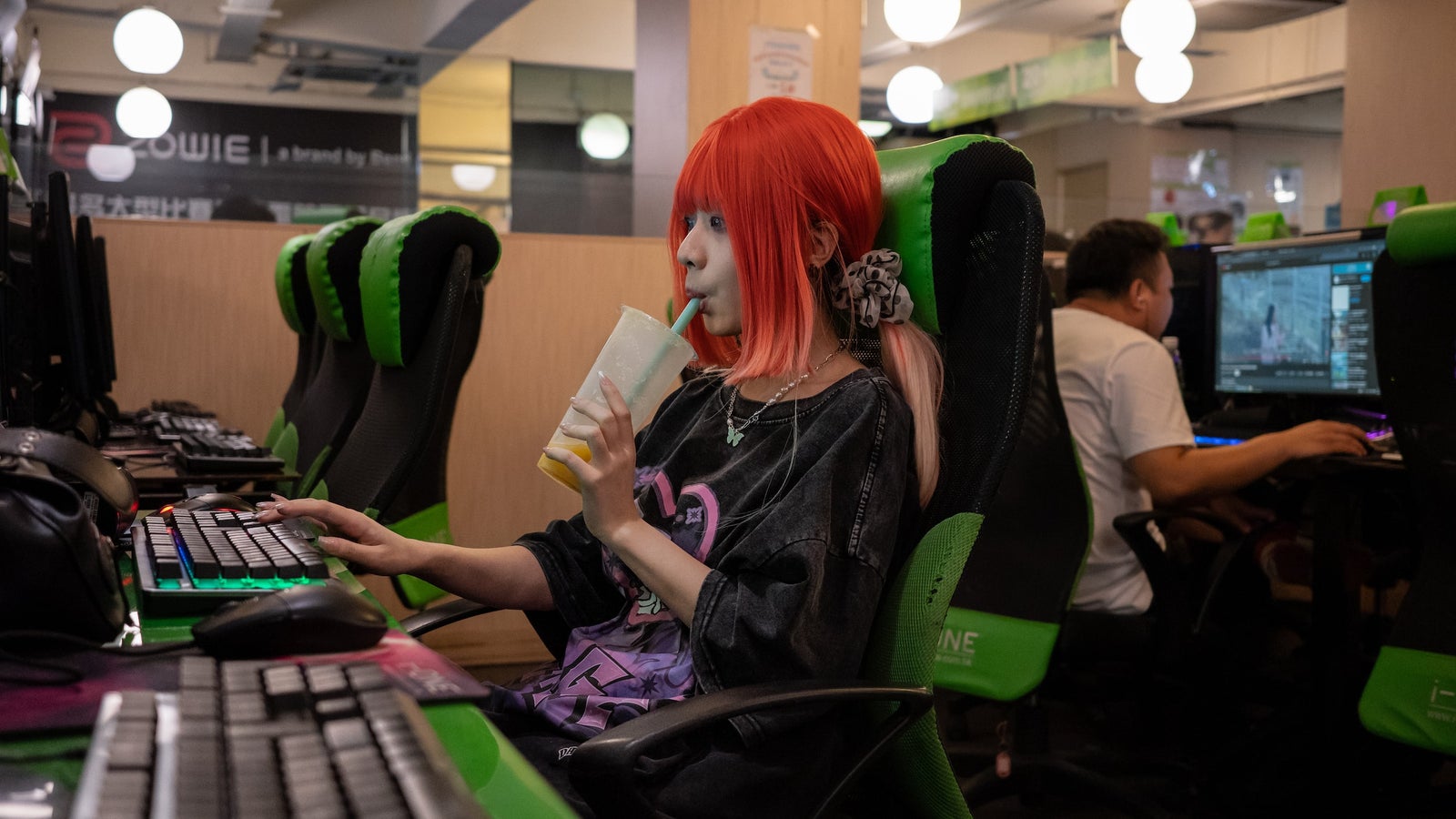
In the heart of Mong Kok’s bustling shopping district, located above a yoga studio, a hair salon and an escape room, one of i-ONE’s internet cafes was half-full on a Wednesday afternoon in June. Couples squeezed into the two-person booths. University students teamed up in a shooter game and swore loudly in Cantonese as their avatars were killed. The staff welcomed guests in front of a small shelf stacked with potato chips, instant noodles, and Monster energy drinks.
Venus Yeung, 21, watched a Japanese anime series after her morning shift at a claw machine store. A regular at the i-ONE cafe, she had spent nights here when she first moved out of her family home and couldn’t afford a hotel. “I feel so comfortable and relaxed,” she told Rest of World. “With about 40 Hong Kong dollars ($5.10), I can buy relaxation and happiness for myself. I think it’s worth it.”
Owner Alfred Chan opened i-ONE in 1999. The son of an entrepreneur who founded a Chinese medicine trading company, Chan was frustrated by his shoddy internet connection at home, and saw potential in renting out computers and internet services to other Hong Kongers.
It was a success. At first, 90% of his customers were men, but the release of Audition Online — a dancing game first introduced in South Korea in the mid-2000s — brought in more women, Chan recalled. Immigrant domestic workers from Indonesia and the Philippines came to chat with their families from the cafes. In 2005, when Korean farmers came to Hong Kong to protest at a WTO conference, journalists flocked to the i-ONE branch in Mong Kok to use its fast internet connection, turning the place into a makeshift international press center.
By around 2012, i-ONE, under a franchise model, had 40 branches across Hong Kong. But over the next decade, the rise of mobile internet and Covid-19 closures decimated the industry. Now, there are just five i-ONE cafes left.
Some new customers have emerged during the post-pandemic era. Chan said pop fans come in to buy in-demand concert tickets, hoping the faster internet would give them an edge over other fans.
But Chan also said the industry’s decline appears inevitable. “Covid[-19] was the last straw,” he said, adding that the few remaining stores had survived thanks to loyal customers. “I cannot rule out that one day, they are not coming back, and we may become the last internet cafe in [Hong Kong’s] history.”

-
The i-ONE cafe mainly served men when it first opened in 2000. -
-
A customer watches YouTube in a corner of the cafe.


J.Net E-sports Center
Kwun Tong
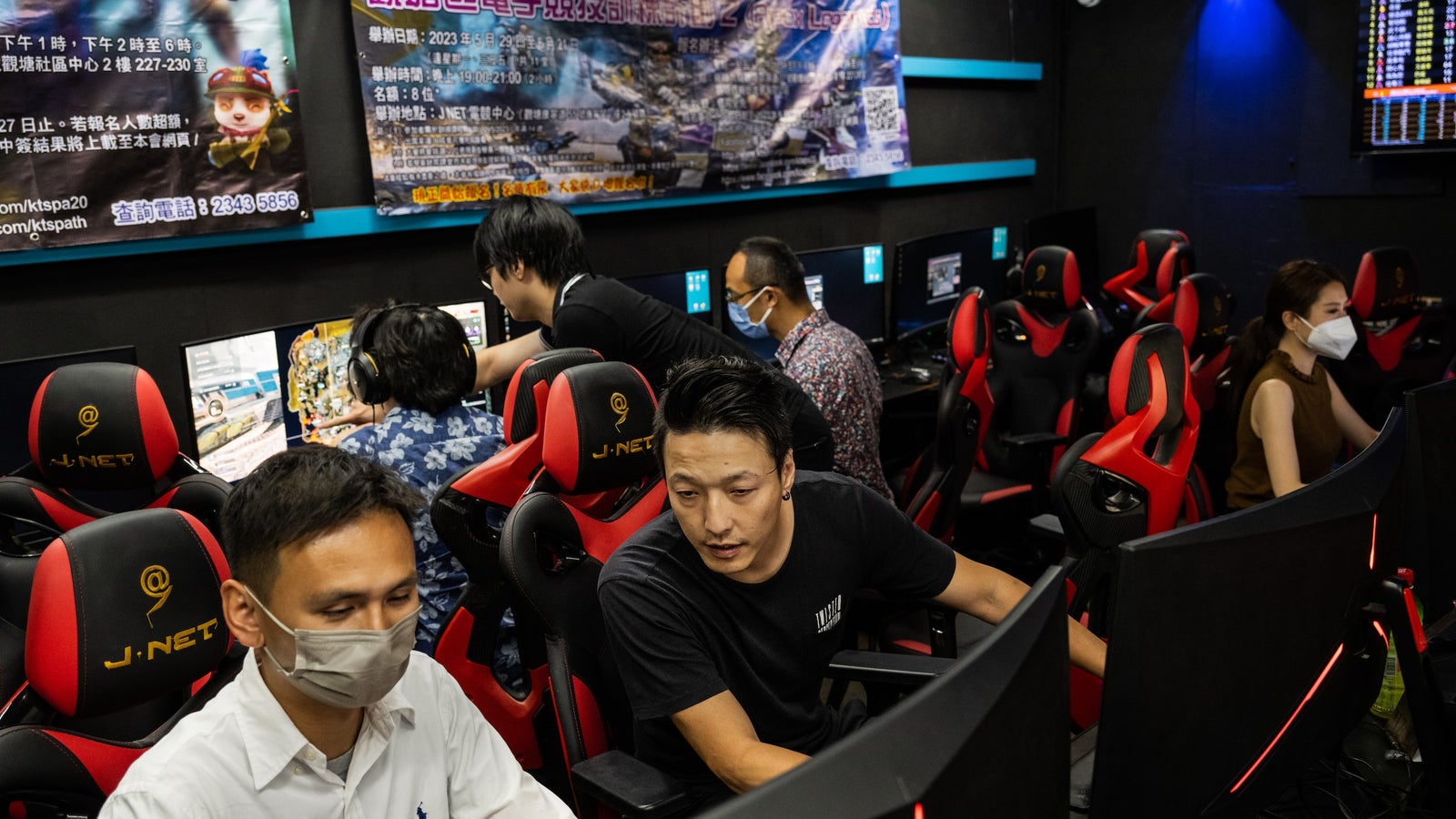
Located in a residential area in eastern Kowloon, internet cafe J.Net has two distinct types of customers: In one room, under dim lighting and amid rows of computers, young gamers wear headphones and battle each other in League of Legends or Diablo. In the room next door, elderly customers sit around banquet tables under bright, fluorescent lights, playing mahjong and tucking into heaped plates of seafood.
This is how J.Net is surviving the industry downturn. Owner Joe Poon, 42, said he opened his first internet cafe in 2013, when Hong Kongers would line up for seats during busy hours. “You know how small Hong Kong homes are,” Poon told Rest of World, noting that many households had their only computer set up in the living room. “If you play games there, your family will be telling you off all the time.”
Poon had two internet cafes, which were doing well until the pandemic hit. To contain Covid-19 outbreaks, the government closed gaming venues for months, along with nightclubs and beauty salons. Poon eventually closed one branch, and turned J.Net into a restaurant that serves seafood and traditional cha chaan teng, or Hong Kong diner dishes.
Now, the restaurant and the gaming cafe coexist side by side, each serving its own community. Kim Wong, 35, who works remotely for a driving school, told Rest of World he uses J.Net as a coworking space. He said he replies to emails and answers calls from the gaming desk. Occasionally, he plays a few rounds of video games with other customers.
Since May, J.Net has been hosting free League of Legends and Apex Legends lessons with a government-backed sports organization. KY Lee, 24, an aviation engineer and former esports athlete, teaches the Apex class. During the pandemic, he told Rest of World, esports athletes switched to communicating on Discord instead of training together in person at internet cafes. J.Net is trying to bring the gamers back together in a physical space again — but it’s been tough.
Post-Covid-19, the restaurant business has been growing much faster than esports, said Poon. Three years ago, the 140-seat space would be 80% full. But these days, the cafe typically only has 10 to 30 gamers. Poon recently moved some gaming chairs to the banquet section — a tacit acknowledgement of the future of the internet cafe business. “Before, we called it a sunset industry,” he said, “but now it’s like a dead, stagnant pool.”

-
During the pandemic Joe Poon turned J.Net into a restaurant, which is now the fastest growing part of his business. -
Poon says the cafe now serves only a fraction of its pre-pandemic capacity.


-
Customers play mahjong in esports training chairs. -
CCTV cameras provide an overview of the different areas at J.Net.