When it opened in 1997, the K@mandu Cybermatha Tea House was a vision of modernity. Visitors were greeted with an air-conditioned breeze and a friendly smile from the receptionist, who directed customers to their stations. The cafe employed “cyberguides” who shared tips and tricks on how to surf the net. The main room was divided into small sections by varnished wooden partitions, creating a grid of cubicles. It was abuzz with activity as tourists and locals went in and out of the adjacent art gallery, bookshop, and restaurant.
One of the first internet cafes in Nepal, K@mandu was the brainchild of then 37-year-old Sanjib Raj Bhandari, the so-called “Bill Gates of the Himalayas.” He told Salon in 1997 that he had the idea to open the cafe “after visiting similar venues in Singapore and Sweden.”
It was Raj Bhandari’s telecom company, Mercantile Communications, that secured a digital leased line connection with Singtel (Singapore Telecommunications) in 1995 to provide internet access in Nepal, earning him his nickname. A year later, the emergence of satellite connections made the internet even more accessible. That led to a boom in internet cafes across Kathmandu in the early 2000s, especially in neighborhoods popular with tourists who were willing to pay high rates to stay in touch with their families. Soon, Yahoo and MSN chat rooms took off with locals.
Meanwhile, an optical fiber cable finally connected Nepal with India — and the rest of the world. Eventually, that reduced internet access costs drastically, and a new class of urban Nepalis could log on without ever stepping into a cybercafe. Citing a collapse in customers, K@mandu shut down around 2005. Then came smartphones, and cheap data. These days, the average Nepali rarely visits cafes to browse the internet.
RR Photo Studio
Nepaltar
In late June, dark monsoon clouds cast a gloomy shadow over the narrow alleys of Nepaltar, the bustling suburb of Kathmandu where RR Photo Studio is located. The smell of exhaust, dust, and smoke from burning corn cobs blends with the cacophony of buses, motorcycles, pedestrians, and street vendors.
RR Photo Studio is one of the few internet cafes left in the area, where people can print and scan documents, and fill out online forms. Rajkumar Bhandari, 45, has been running the shop since 2001. He and his wife Ranjita — hence the name RR — have adapted their business many times over the years.
Bhandari first sold newspapers, books, and notebooks out of his storefront. As a child, he had traveled to Varanasi, India, to complete his studies. That’s where he first started using the internet. “When I returned to Nepal … I missed the days my friends and I spent chatting on Yahoo messenger,” he told Rest of World. He reinvented his shop into an internet cafe in 2003. He said he was the first to offer internet services in Nepaltar.
Other cybercafes soon popped up, so Bhandari diversified his services by selling games and movies. As smartphones, laptops, and cheap data became widely available in the 2010s, he pivoted to printing, photocopying, and scanning services. He got into the photography business, editing and enhancing photos, and shooting passport and family portraits. He even started doing wedding photography.
Bhandari said that government agencies switching to online forms has been a boon. His customers need help filling out forms for everything from Covid-19 vaccination certificates to passports and national ID cards. “That’s been sustaining the business so far,” he said.
He said he still has about 50 customers walking in every day. He knows most of them by name, and treats them like family. He greets them with a smile and a friendly word.
Bhandari takes pride in his business. “My biggest mantra is that my service has to be perfect,” he said. He hopes to retire in about 10 years. Given the digital revolution, he thinks RR will probably go with him.

-
Ranjita runs RR Photo Studio with her husband in the Nepaltar neighborhood of Kathmandu. -
-
Rajkumar Bhandari says their business was the first to offer internet in the area when it opened. -


MSN Cyber Cafe
Thamel
In Thamel, the heart of Kathmandu’s tourist district, visitors can find almost anything: spicy Nepali dal bhat, cheesy pizzas, colorful trekking apparel, souvenir shops, hotels, and massage parlors.
Thamel was also once home to countless cybercafes that catered to out-of-towners. Most have closed or switched businesses over the last decade. MSN Cyber Cafe, owned and operated by Ram Chandra Gaire, is one of the few that remain. Gaire, 42, initially came to Kathmandu for college, but then decided to launch his own business. He opened his shop in 2001, with four computers that he bought from a friend in installments. He catered his business to international tourists who wanted to connect with their families and friends back home.
As more cybercafes opened up in the neighborhood, Gaire faced stiff competition. But instead of cutting his fees, he promised faster download speeds. “I paid the ISP extra so that the connection speed was faster than any other cybercafe in the area,” he said. “That helped me attract customers.”
Gaire remembers the heyday of his internet cafe with fondness. He recalls when tourists would mark their birthdays at midnight with relatives on the other side of the world through video calls. Watching them celebrate using the service he provided would bring tears to his eyes.
At one point, he had over two dozen computers that were occupied most of the time. He said he invested his money in land and hotels, and became a successful entrepreneur.
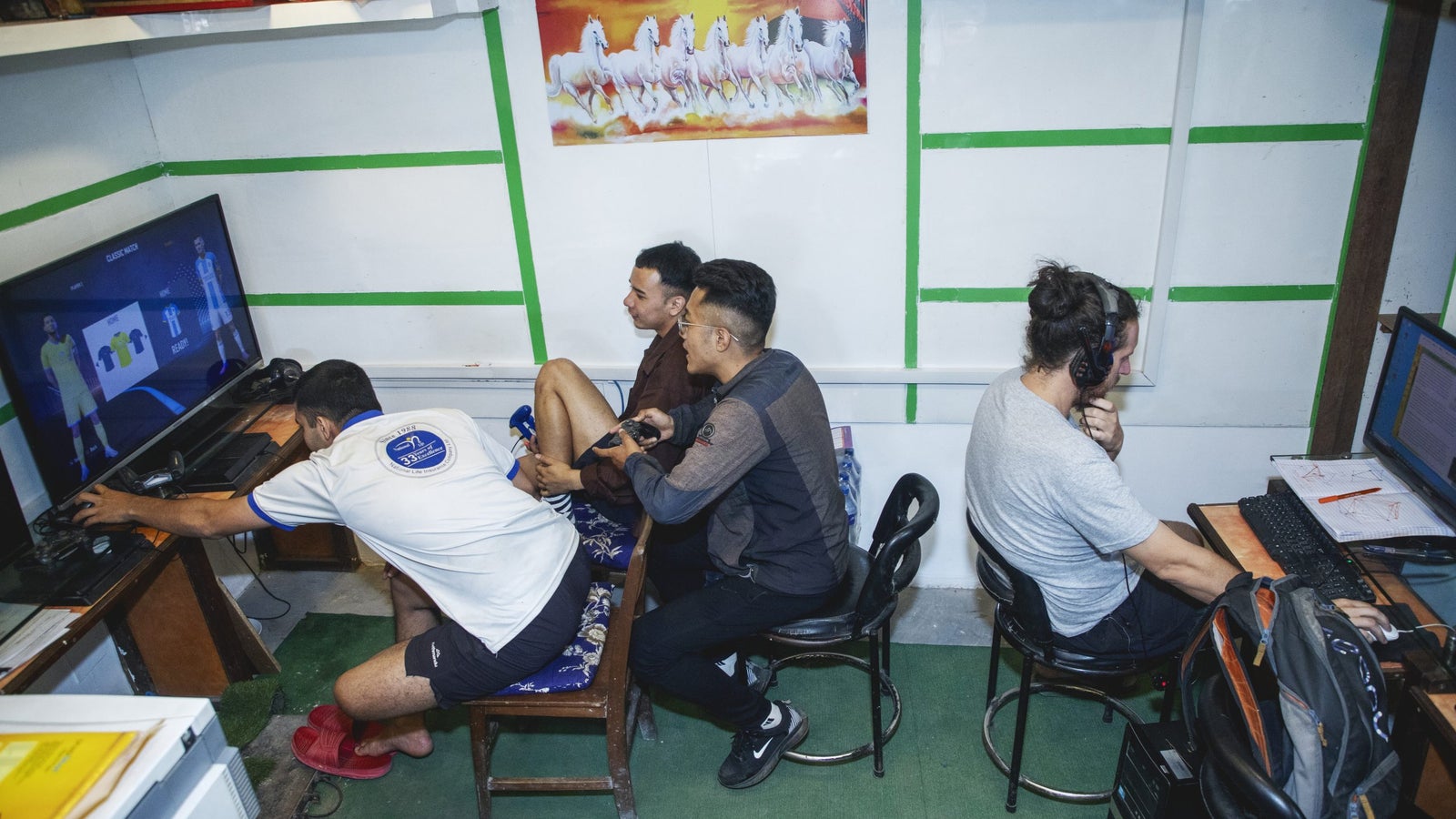
But over time, his internet cafe business declined. People started using smartphones and laptops more than PCs, and Wi-Fi became more available in hotels and cafes. Just last month, Gaire downsized his shop — he now has just four computers and two gaming consoles. He said he has about 30–35 customers daily, mostly tourists who need to print documents or want to play games.
“If I shut down, tourists won’t have a place to print their documents or use the internet. That motivates me to continue,” Gaire said.

-
-
Ram Chandra Gaire opened MSN Cyber Cafe in 2001.


-
MSN Cyber Cafe now mainly caters to tourists who need printing services or want to play games. -