One afternoon in December, Yusneibi, a RappiRappiRappi, a Colombian company, has been providing delivery services across most Latin American countries since 2015.READ MORE delivery worker in Colombia’s capital city, Bogotá, arrived at a house to deliver pet medication — only to realize that the customer had entered the wrong address. Unable to deliver the package to the updated location 14 kilometers away on her bicycle, Yusneibi took it to an assigned warehouse for returned products.
Shortly after, Yusneibi, who requested that her last name be withheld because she feared reprisal from Rappi, discovered she had a debt of 133,350 Colombian pesos ($34) on her account for the order.
When Rappi’s in-app support failed to help, Yusneibi sent a WhatsApp message to the Defensoría al Repartidor (DAR), an ombudsman set up to protect the interests of Rappi delivery workers in Colombia. After a phone call with a DAR employee, the debt was wiped from her account, she told Rest of World.
I feel like it’s a form of ‘fairwashing.’”
But a week later, the debt appeared again. The DAR told her they were looking into her case, but has not yet resolved the matter. Yusneibi, a Venezuelan migrant, has been unable to log in to the platform until she pays off her debt. She currently works shifts at an ice cream parlor to provide for her two children.
The DAR was launched amid much fanfare in October 2023, following negotiations between Rappi and Unidapp — a union for platform workers — over the rights of the company’s more than 150,000 Colombian delivery workers. Designed to be an “impartial third party” to mediate contact between Rappi and its delivery drivers, it focused on four key areas: gender issues, support for the migrant population, general well-being, and resolving app issues.
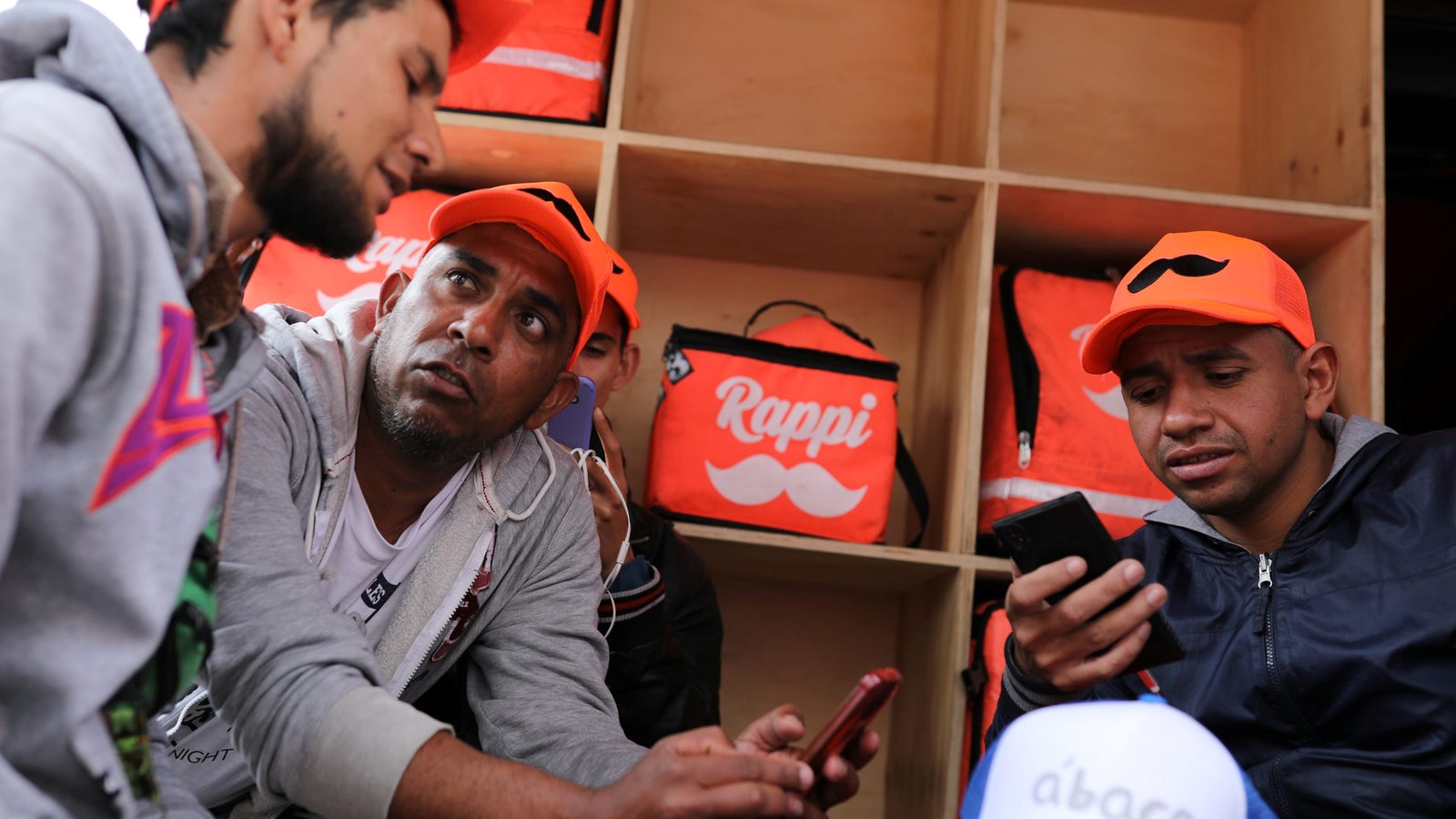
Three months on, rappitenderos — as Rappi delivery workers are called — across five cities in Colombia told Rest of World they were skeptical of the DAR’s effectiveness. Their concerns center around the ombudsman’s alleged close alliance with Rappi.
DAR employees “are paid by the company, they are employees of the company,” Jhonniell Colina, vice president of Unidapp, told Rest of World. “As long as it’s not autonomous, it’s not going to take off.”
Rest of World found seven people working in DAR offices across the country who cite Rappi as their employer on LinkedIn, including the director of the ombudsman, María Paula Hernández, who did not respond to an interview request from Rest of World. A visit to the DAR office in Medellín revealed that it is housed in the same building as Rappi.
Rappi did not respond to multiple interview requests from Rest of World.
“I feel like it’s a form of ‘fairwashing,’” Derly Yohanna Sánchez, a principal investigator at Fairwork Colombia, an organization that researches technology in the workplace, told Rest of World. The term, she said, was coined by Fairwork Brazil to describe companies’ performative promises of social responsibility to make them appear ethical to outsiders.

Since it was founded in 2015, Rappi, Colombia’s first unicorn, has raised $2.86 billion excluding loans and expanded to eight other Latin American countries. The company controlled 51% of the delivery market in Colombia in 2022, and is valued at $5.25 billion. Its meteoric rise hasn’t come without controversy: In 2022, the Colombian Labor Ministry launched a probe investigating Rappi for its approach to the health and safety of workers, and over whether the company had violated local laws by refusing to negotiate with the union.
One of the DAR’s objectives, according to a presentation shared with Rest of World by Unidapp members, is to “represent and defend the dignity of the delivery worker against Rappi.” Hernández has described the DAR to Colombian news outlets as “autonomous” from Rappi.
Yet, according to Colina, Rappi workers fear that using the DAR to complain about the company could lead to reprisal.
In June, some Rappi workers received a WhatsApp message informing them about the launch of the DAR, suggesting the ombudsman had access to a database of active delivery drivers, Colina said.
“In order for them to really help, they should have no relationship with the company,” a rappitendero told Rest of World, asking to remain anonymous because he feared retaliation by the company. “It’s just a smokescreen.”
Workers also told Rest of World they didn’t know the DAR existed for their supposed benefit. Gerardo Vielma, a Venezuelan rappitendero who has worked for the company in Bogotá for almost two years, is one of them. “It feels like nobody is keeping tabs on the injustices that Rappi commits against its delivery workers,” he said.
“The company wasn’t concerned about letting all of its rappitenderos know that the Defensoría exists,” said Luz Fique, Unidapp’s president. The union said it invited the ombudsman to assemblies in four Colombian cities at the end of 2023, but claims the DAR only attended one.
Some Rappi workers told Rest of World they have been disappointed by the ombudsman’s service. Javier Rodríguez, a rappitendero in Medellín, received a generic response from a chatbot when he contacted the DAR’s WhatsApp. The bot then fell silent after he struggled to locate the exact number of a problematic order that had left an unresolved debt on his account. “Battling Rappi is very difficult,” Rodríguez said.
To file a complaint with the DAR, a rappitendero must wait at least 48 hours after reaching out to in-app support about the incident to contact the DAR’s help center via WhatsApp. The chatbot then connects them to a DAR employee, but responses can often be delayed.
Why doesn’t [Rappi’s] support center itself deal with this part of the job?”
“Why doesn’t [Rappi’s] support center itself deal with this part of the job?” said Sánchez. “It’s important that these companies and platforms don’t [simply] delegate the responsibilities they have with the workers to another organization.”
For Sánchez, the DAR could be a response to political pressure on delivery platforms. The government of Gustavo Petro, Colombia’s first left-wing president, has revised a labor reform bill that seeks to hold delivery platforms increasingly accountable for their workers’ social security costs, giving contract workers the right to request a human review of any automated decisions. The bill is still being debated in Congress.
Colombia’s labor minister, Gloria Inés Ramírez, described the DAR as “excellent” to Rest of World. “It’s the first experience of protecting the rights of delivery workers of one of the world’s most important delivery platforms,” she said. She did not address questions regarding the DAR’s impartiality.
When Yusneibi, the delivery worker, first started working for Rappi three years ago, she said she had to make deliveries in high-risk areas. “On several occasions, it felt like my life was at risk.” But at the time, Yusneibi said, she did not have a place to express her concerns.
Yusneibi said she’d like to get back on her bicycle and deliver for Rappi again — but not before the app unblocks her account.