When he’s not chasing after criminals in São Paulo’s dangerous neighborhoods, police lieutenant Flavio Goncalves da Costa is busy discussing his risky operations on police-themed shows on YouTube.
The shows have turned Goncalves da Costa into a celebrity. Much of his content, which he posts under the name Tenente Bahía (Lieutenant Bahía) on Instagram to over half a million followers, is geared toward women, particularly mothers and caretakers who “feel they are taken care of by a policeman,” Goncalves da Costa told Rest of World.
He hopes they will throw their support behind him: Goncalves da Costa is running for city councillor in São Paulo, a city of 11.5 million people.
Goncalves da Costa is one of dozens of current and former police persons who are using their popularity on social media to get votes ahead of this weekend’s municipal elections in Brazil. There are more than 6,000 law enforcement officials on the ballots, and at least 45 of them have upwards of 10,000 followers on YouTube, Facebook, and Instagram. This growing trend has led to concern amongst security experts who warn that some officers share confidential information about special police operations, potentially damaging an already fragile relationship between police forces and vulnerable Brazilian communities.
“In areas dominated by criminals, the police presence is seen with fear and terror,” Roberto Uchôa, former police officer and a board member at the Brazilian Forum of Public Safety, told Rest of World. “Now we see a narrative being pushed by opportunistic police officers who glorify this [punitive] behavior” on social media.
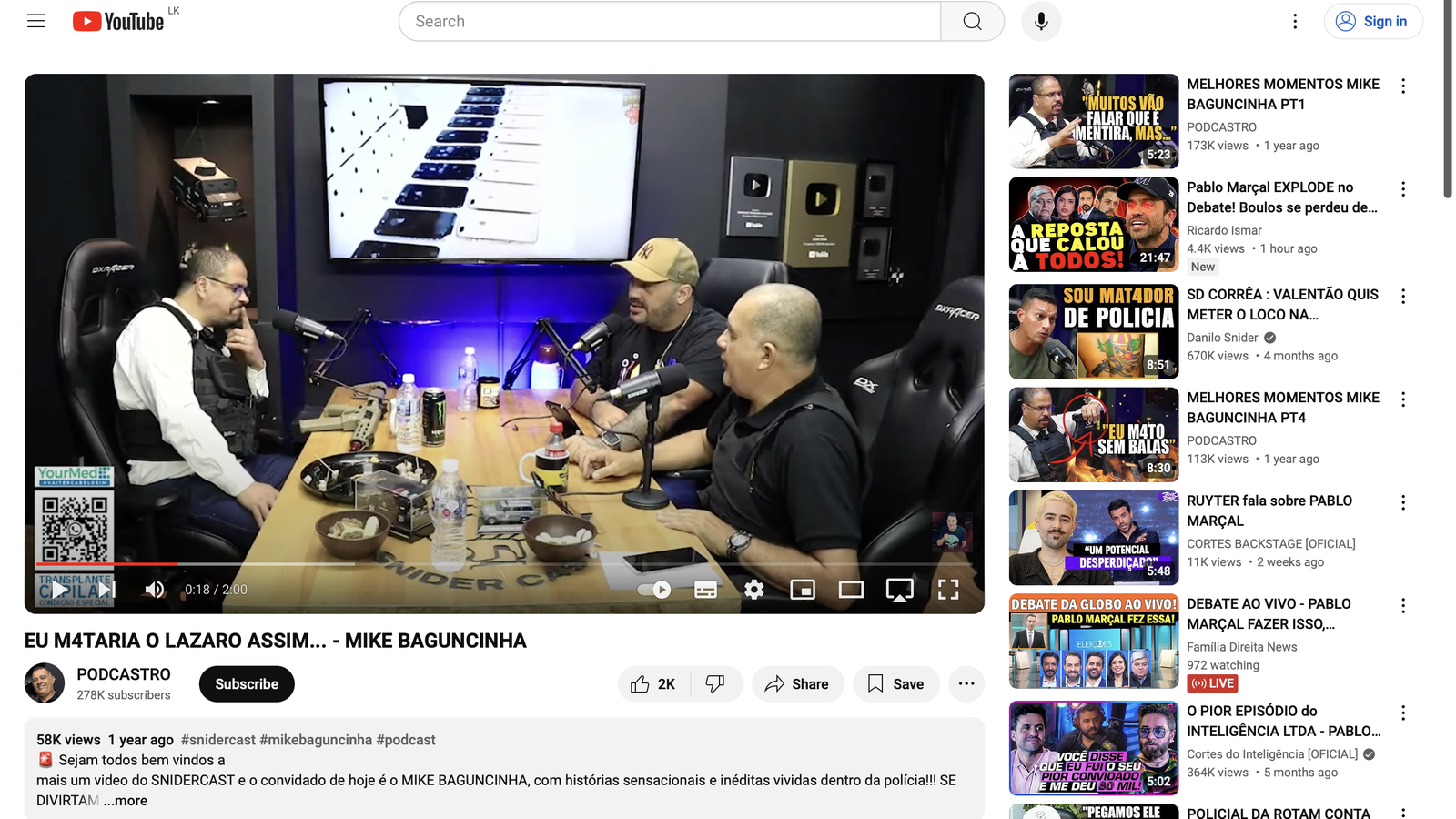
One factor behind the popularity of law enforcement candidates in Brazil is the rise of the podcast policial, or police-themed shows, on YouTube. Many who are candidates today have appeared as guests in the shows over the past years. Podcastro, a police-themed show on YouTube, has featured at least 10 police candidates in the past four months. Fala Glauber, a policeman in Rio de Janeiro, has amassed 2.6 million subscribers on his podcast show and livestreamed an interview with two police candidates last week.
“Police stories have always fascinated people,” Uchôa told Rest of World. While TV and films made cops popular decades ago, social media has blown the interest in them out of proportion, he said.
Buoyed by this obsession, some policemen are going out of their way to create appealing content for their channels. Carlos Alberto da Cunha, a police officer who was elected federal deputy in 2022, recently confessed he had staged police operations for his YouTube channel.
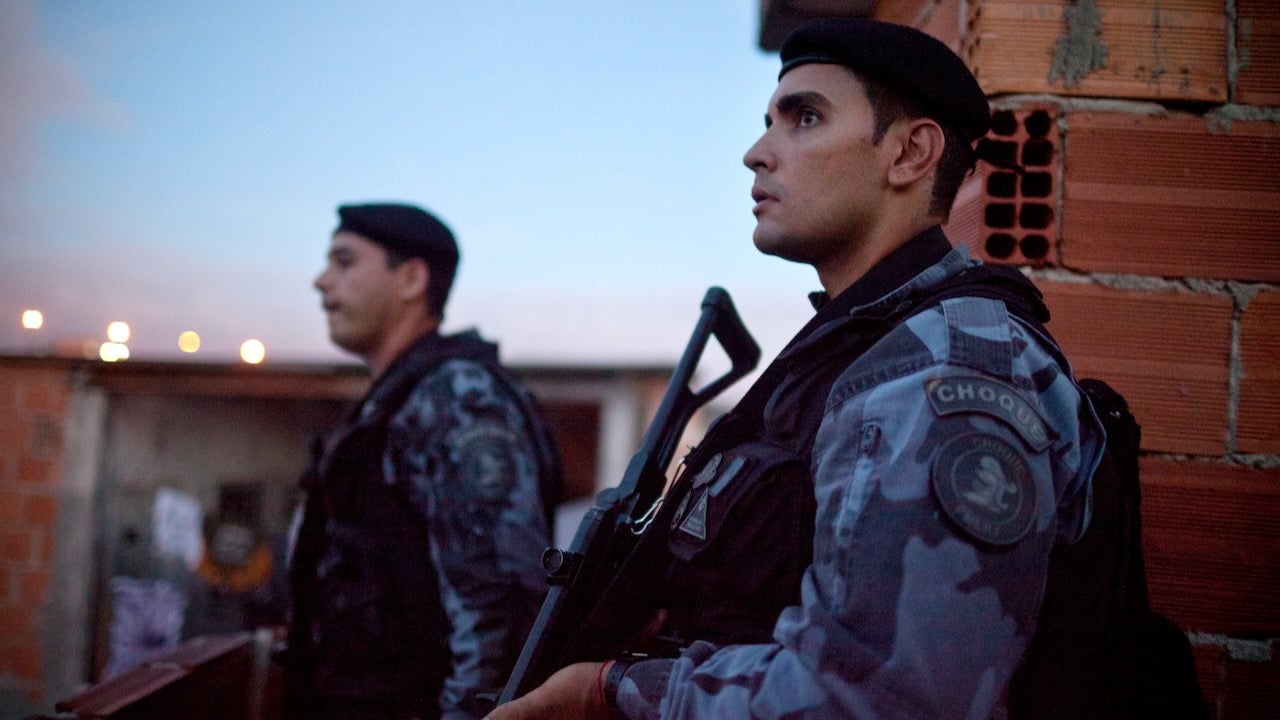
Several police candidates who are members of Brazil’s special elite police forces — heavily armed and present in the country’s crime-ridden cities — use their online platforms to advocate for a tougher stance on crime. “They post videos about police operations or share posts sensationalizing violent crimes while calling for harsher punishments,” Marcos César Alvarez, a researcher from the Center for Violence Studies (NEV) from the University of São Paulo, told Rest of World.
One of the most prominent elite police corps candidates, Israel Nantes Santos, who goes by Sargento Nantes, is running for city council in São Paulo. His online content is filled with violence: A video of him retelling how he killed a motorcycle robber went viral in 2022; in January, he posted a video of a robber being beaten by a crowd on the beach; last month, he shared footage of himself threatening an alleged criminal.
Other popular police candidates share less gory details about their work. Sérgio de Moura Cavalcanti, a military policeman who’s running for city council in São Paulo under the name Sargent Cavalcanti, co-hosts “Operação Lótus com Sargento Cavalcanti,” a YouTube podcast where policemen talk about their workdays.
Sthefany Pinheiro, the show’s co-host and Sargent Cavalcanti’s stepdaughter, told Rest of World their show is trying to be less sensationalist by highlighting policemen’s “more human” side. In one episode, Tenente Bahía discusses how his squad saved a criminal who was about to be killed by others, noting that “every policeman arrived safe and sound at their home” after the incident. The show has over 190,000 subscribers and its channel offers subscription tiers for exclusive content as well as its own line of merchandise.
Despite the wide range of police content online, there is growing concern about the role of members of law enforcement in office. “An increased presence of military members, policemen or security agents in local legislatures could translate into harsher laws” and higher murder rates, said Alvares, pointing to a 2022 study by researchers from the University of São Paulo.
According to the Brazilian Forum of Public Security, the country’s police killed almost 6,400 people in 2023 — almost five times more than the U.S. Many of these killings were the result of “excessive use of force, contributing to a cycle of violence that undermines public security and endangers the lives of civilians and police alike,” according to a Human Rights Watch report from 2023.
Security experts and Brazilian judicial authorities are keeping a close eye on police candidates and the way they round up votes. Brazil’s rising crime rates are a pressing issue during this election cycle, said Alvarez, giving police candidates the upper hand in voter preferences.
But a recent study shows that the election of police officers to city councils could lead to unexpected social consequences. “What we observe is that there is a worsening in violence indices in cities with more police officers among their representatives,” Alvarez said.
In June, the Brazilian Federal Public Ministry ordered the suspension of 13 videos on podcast policial YouTube channels citing hate speech — including Fala Glauber’s show. In one of the videos, a police officer confessed to killing people during an operation, using dehumanizing words to refer to criminals. The ministry’s decision fined the individual YouTubers for “collective moral damage.”
Earlier this year, Brazilian Senator Marcelo Castro submitted to Congress a proposal to forbid police and military officers of any rank to pursue public office four years after they’ve resigned, citing the need to “clearly separate government careers with politics.”
“If they lose the election, they return to join the troops. And what are they [then]? Military or politicians?” he said during a press conference. “They are going to do politics inside the barracks, which is toxic for democracy.”