
Six or seven days a week, Gilberto Alves de Souza drives through the bustling streets of São Paulo. He drives at least 12 hours a day and sometimes even longer, picking up one passenger after another. At 62, he doesn’t see himself stopping anytime soon.
The money he makes as a ride-hailing app driver — roughly 4000 reais ($790) per month after he’s paid off all expenses — is his household’s only income. It supports him, his wife, and a teenage granddaughter who lives with them. In a country where the monthly minimum wage is 1,412 reais ($273), it’s a good income.
“I don’t think about quitting driving,” de Souza told Rest of World. “Only when the guy up there tells me my time has come, there’s no way for me to work. But as long as God gives me health, I’ll be a driver.”

The graying gig economy
The average age for delivery workers is 29 and the average age for ride-hailing drivers is 36, but many older individuals are turning to gig work, too.
Rest of World spoke to 52 workers above the age of 50 who ventured into gig work to keep up with rising living costs or because they cannot find employment elsewhere. As more and more workers transition to informal gig employment and populations age, the lack of social safety nets poses significant challenges.
Written by Laís Martins, Kimberly Mutandiro, Lam Le and Zuha Siddiqui. Narrated by Victoria Turk.
Original story: https://restofworld.org/2024/aging-global-gig-workers/
Most gig workers around the world are relatively young: Research published in 2021 by the International Labour Organization (ILO), a United Nations agency focused on improving working conditions, puts the average age for delivery workers at 29 and the average age for ride-hailing drivers at 36. But Rest of World reporting suggests that older individuals are turning to gig work, too — and their numbers are expected to grow in the coming years.
Over the past three months, Rest of World spoke to 52 gig workers between the ages of 50 and 75 years in Latin America, Africa, South Asia, and Southeast Asia. Some chose gig work to keep up with rising living costs or to make up for threadbare social security systems; others say it’s impossible to find employment elsewhere once they near retirement age. Still others say that gig work is a second job, one they can transition into full-time once they retire or are no longer employed. Many reported low earnings, long hours, and health complications from their work. Without being able to put enough savings aside for retirement, others communicated the feeling that there was no alternative. But for all its challenges and pitfalls, gig work can represent an accessible, flexible, low-barrier activity that enables older workers to offset expenses and continue to be active.
“The idea that you work 40 years in a factory and you get your pension through that — that’s less and less the reality for many people,” said Florian Juergens-Grant, social protection adviser at Women in Informal Employment: Globalizing and Organizing (WIEGO), a U.K.-based NGO that works to improve labor conditions for the working poor in the informal economy.
As long as God gives me health, I’ll be a driver.”
There is little to no definitive data on the participation of older people in the gig economy around the world. What’s left is a patchwork of data points that reveal an often invisible working class. In Spanish-speaking Latin America and Brazil, Uber and Didi estimate that people over 60 represent less than 5% of their active workers. GSM, the second most popular ride-hailing platform in Vietnam, estimates that approximately 3% of its motorbike drivers are over 50. That’s roughly 890 people. A 2023 World Bank report found that workers older than 55 represent around 3.8% of the global online gig workforce — a sector that includes clickworkers, translators, and other remote taskers. But even that small percentage could represent approximately 6.2 million workers.
Older gig workers is a demographic that’s expected to grow in the coming decades. The global population of people 65 or older is expected to double by 2050, surpassing 1.6 billion, according to the U.N. At the same time, family units around the world are transforming, often requiring older people to support themselves for longer.
“The family system is eroding,” Claudia Mahler, a U.N. independent expert on older persons’ rights, told Rest of World. “Many people of older age can no longer live with the support of their families because the younger generation is migrating to other countries or moving, so they are staying behind in this regard,” she said.
Meanwhile, decades of wage stagnation, persistent inflation, and high costs of living have hindered people’s ability to save for themselves in old age as much as they used to be able to. The Organization for Economic Co-operation and Development (OECD) projects that the average retirement age for people in OECD member countries will increase by two years by the mid-2060s. One reason is quickly changing demographics: As working-age populations shrink around the world, there will be an increasing need for people to work longer.
6.2 million The approximate number of online gig workers over the age of 55.
World Bank
Funda Ustek Spilda, senior researcher from Fairwork, a labor project at the Oxford Internet Institute, told Rest of World there are “important challenges” that need to be addressed for the long-term well-being of gig workers. “This includes access to social protections, financial security, health and safety risks, discrimination, and representation,” she said.
De Souza, the São Paulo driver, will reach retirement age in Brazil in just a couple of years. He has made contributions to his own retirement fund over the years, which means he’ll receive a monthly stipend of 2,800 reais ($552), a little over half of what he currently makes as an app driver. “But even [after I’m] retired, I’ll keep working. With this amount, I can’t afford to stop,” he said. “If I stop, we’ll be unable to eat, unable to pay bills.”
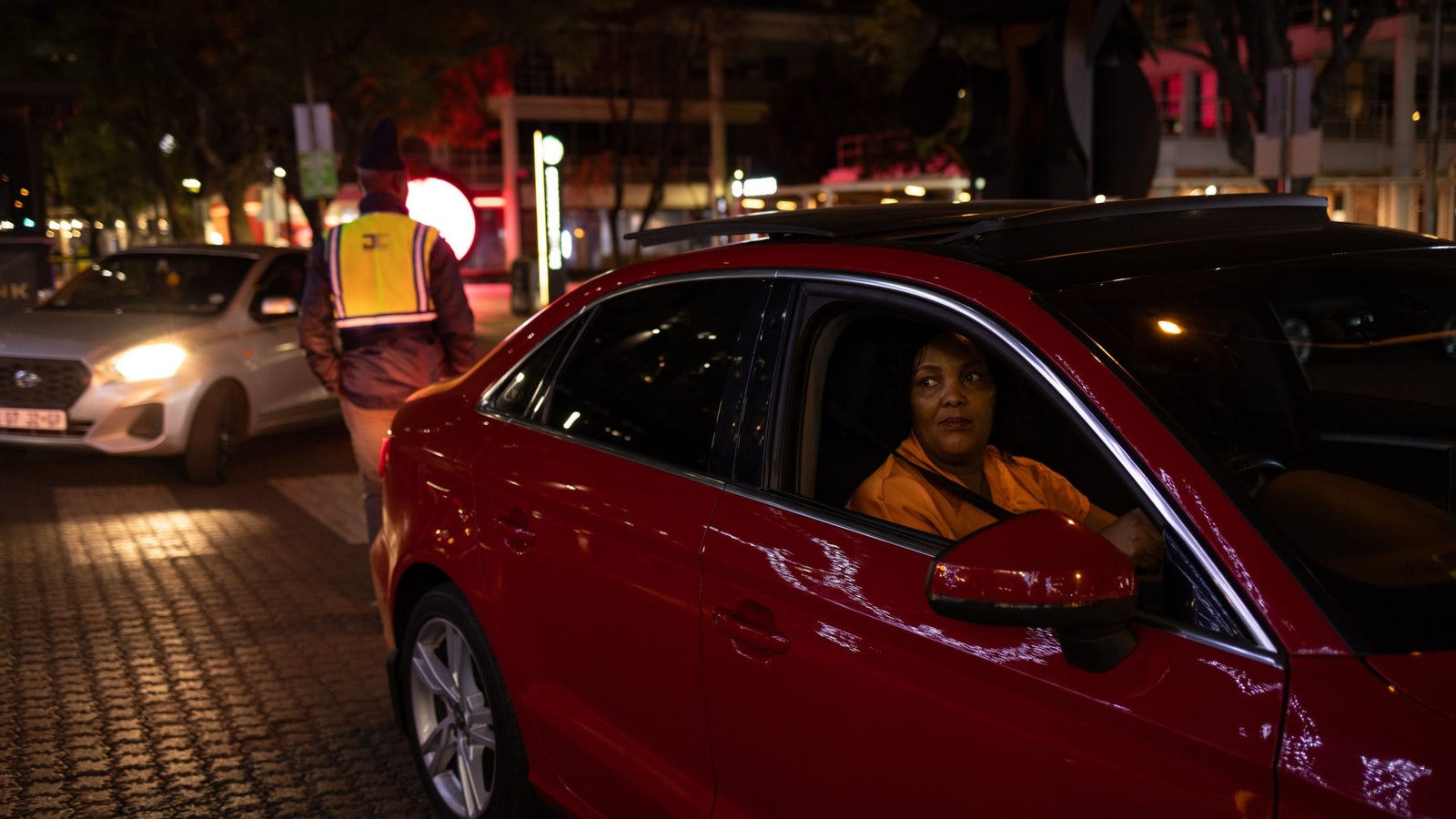
In 2018, 55-year-old farmer Nguyen Van Sau left his hometown in the Mekong Delta. When the pigs he reared to sell fell ill, he could no longer sustain his family. So he came to Ho Chi Minh City, where he signed up to drive for the super-app Grab. He worked nights as a security guard, but driving during the day offered him a degree of freedom. Nguyen now drives every day from 6 a.m. until midnight — sometimes later on weekends.
In developed economies, one of the reasons older workers join the gig economy could be “a path to wind down before fully retiring,” Aura Sevilla, an older workers specialist at WIEGO, told Rest of World. “But in developing countries, you will see older people who have been in informal employment all throughout their lives.”
I love driving, and being able to make some money to look after my family is what I enjoy the most.”
They continue to work in old age out of necessity rather than choice because of limited pension and savings, Sevilla said. Being a gig worker at an older age triggered a range of emotions for the workers Rest of World spoke with.
Sixty-five-year-old Nigerian Uber driver Kunle Shofolade joined Uber in 2019 after realizing that his retirement earnings weren’t going to cut it. He now works at least eight hours a day to save money, and hopes to retire at 70.
“There aren’t many drivers my age. But I love driving, and being able to make some money to look after my family is what I enjoy the most,” Shofolade told Rest of World. But working at his age can be tiring and frustrating. Some passengers don’t show any respect for his seniority.
Becoming a gig worker at an older age can come with stigma. Platform drivers from Vietnam to Pakistan told Rest of World they preferred their acquaintances to not know what jobs they were doing.


Fifty-eight-year-old Mirza Shahzada Khurram, from Islamabad’s suburbs, previously worked as an air conditioning engineer. After a jobless spell, he started driving for Careem as he needed money to support his family.
Meanwhile, 64-year-old food delivery worker Maureen Zephora Khumalo, from Johannesburg, told Rest of World some of her friends laugh at her for doing a job meant for “young people.” But “with harsh economic conditions and my children out of jobs, I [may] even work until my eighties because no one can give me money for free,” Khumalo said.
Experts say that for all its pitfalls, gig work is also a valuable opportunity for older people who still want to contribute to society but are unable to find employment elsewhere.
Some gig workers interviewed by Rest of World echoed that sentiment. They said they valued the flexibility of setting their own hours, and — in the case of web-based freelance workers — working from home.
Training artificial intelligence systems on online platforms is how I.I., a 60-year-old Venezuelan, spends her days. She requested to be identified by her initials to preserve job security. Before the political climate in Venezuela became too volatile, I.I. worked as a lawyer. “My career is difficult to practice and I fear for my life,” she told Rest of World. “That’s why I fell in love with this job so much; I do it from home and I earn what I want to earn.”
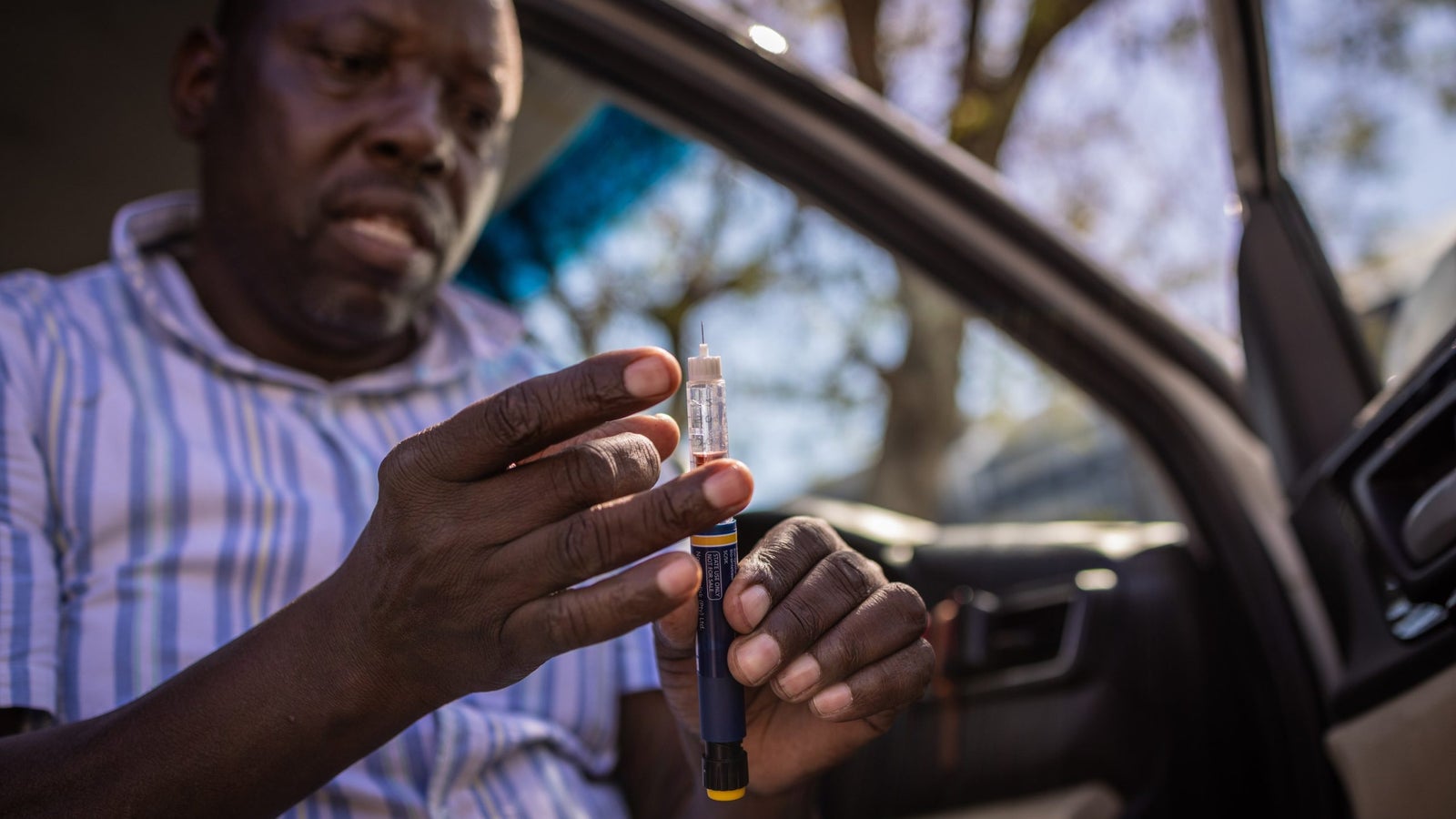

For many older workers, health is a primary concern.
Amjad Ali Khan, 53, said he became a gig worker because “there was no other work available” for him to do. He spends eight to 10 hours on the streets in Pakistan’s capital city, Islamabad, driving for ride-hailing platform inDrive. Khan told Rest of World the work tires him and he gets frequent headaches and neck pain — a consequence, he believes, of looking at his phone constantly to bid for rides.
Conditions such as colon inflammation, constipation, exhaustion, and fatigue came up in interview after interview.
According to a survey conducted by the International Labour Organization in 2021, only 41% of respondents working with online gig platforms reported having health insurance, and 20% or less said they were covered for employment injury, unemployment and disability insurance, or pensions.
Conditions for those working for app-based taxi or delivery platforms are far worse — less than 10% were covered by unemployment insurance and disability insurance, and approximately 30% were covered for employment injury.
Jennifer Cole, a biological anthropologist who researches health risks at Royal Holloway, University of London, also believes that gig workers are likely to overexert themselves physically, because the nature of the gig economy allows them to work for long hours. In a study on vaccine hesitancy that Cole did in the U.K. and published in 2021, she discovered that gig workers “tend not to have sick pay if they’re off work, which means that if they’re not feeling well, they’re more likely to go into work than to take a day off.” Most of these workers had been furloughed during the Covid-19 pandemic and were doing gig work on the side.
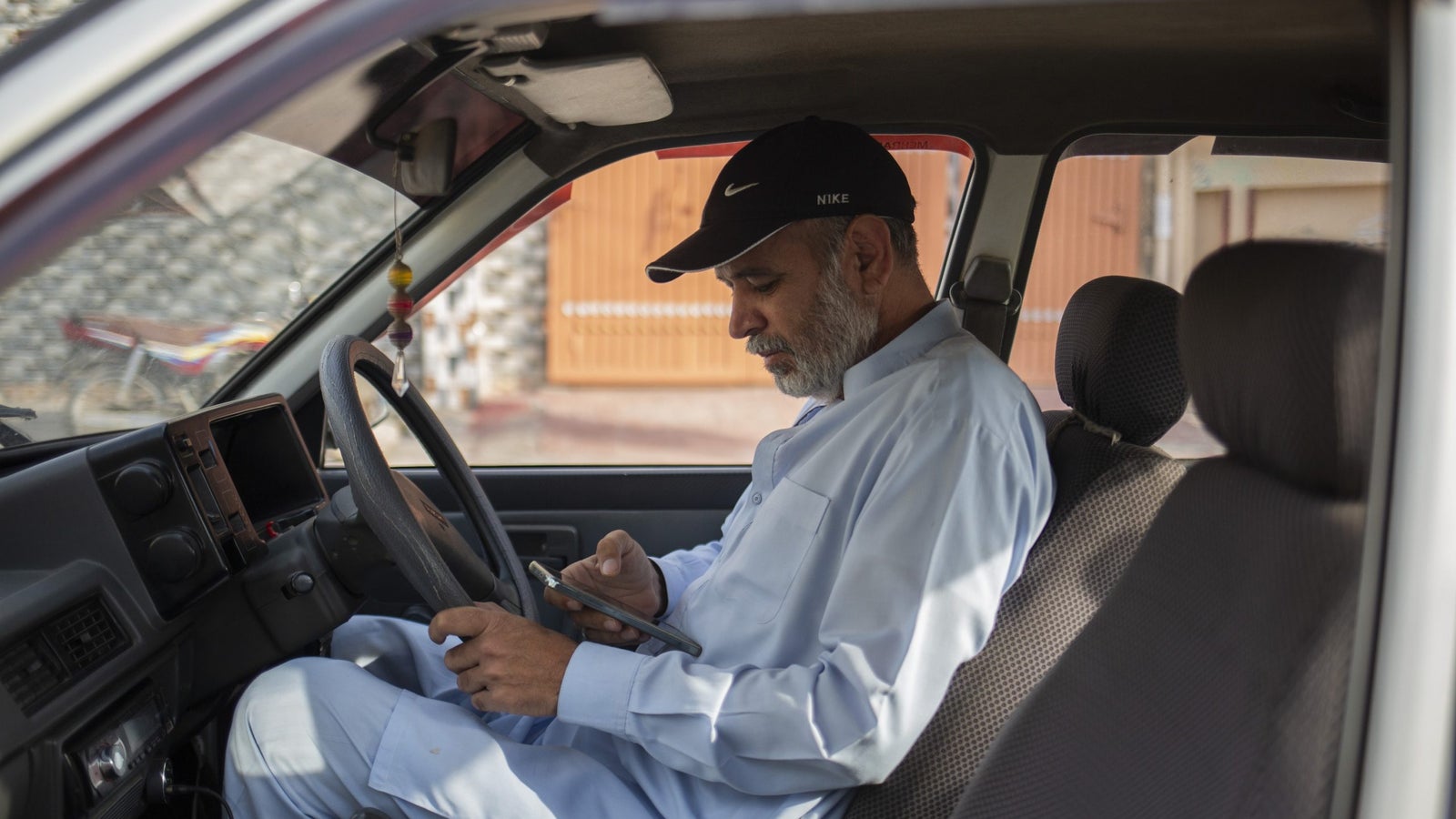
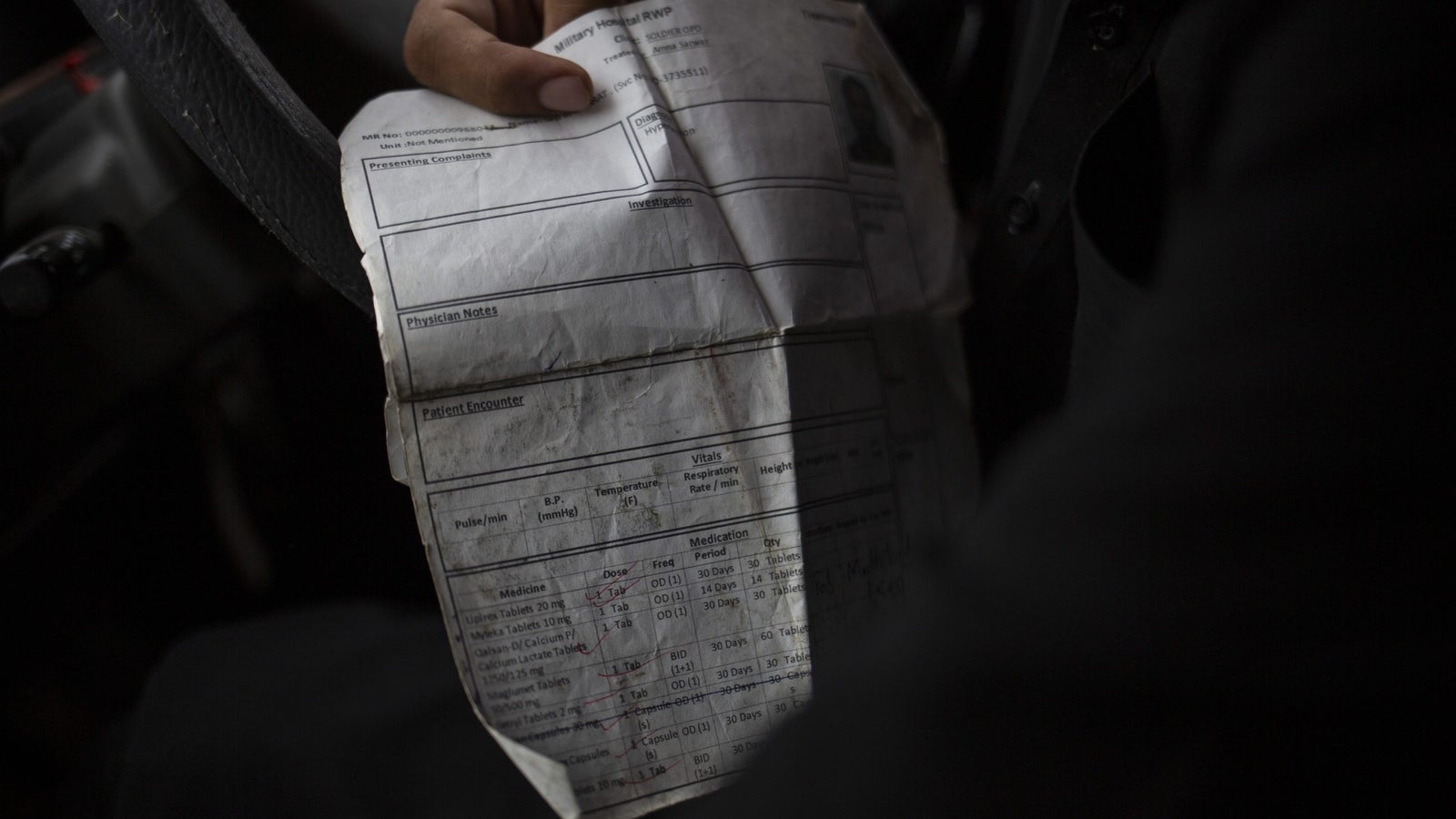
Saeedullah Khan, 62, a taxi driver-turned-gig worker in Karachi, is trying to save up money for knee-replacement surgery; Zulfiqar Masood, a 52-year-old gig driver in Lahore, says he has difficulty digesting his food and is often constipated. Meanwhile, Omar Alfonzo, a 53-year-old cloudworker based in Venezuela, suffers from pain in his rotator cuff — which becomes worse when he spends long hours working at his desk. Huynh Thanh Long, a 51-year-old gig motorbike driver in Ho Chi Minh City, has recently recovered from surgery for colon inflammation, which doctors told him was caused by prolonged driving.
The health risks associated with gig work can have real, lasting impacts on older gig workers. Last year, 57-year-old Donald Manzini, an Uber driver from Johannesburg, suffered a minor stroke as a result of, he claims, working long hours to save money. Uber insurance has not yet covered medical bills. Seven months later, Manzini has still not properly recovered. “I’ve worked [as a gig worker] for more than 10 years, but there is no form of help that the company has offered because we are independent contractors,” he told Rest of World.
Long, in Ho Chi Minh City, can now only do half-day shifts most of the time. Masood, the worker from Lahore, says he works 12-hour shifts and that his weight has increased. His family worries he has high blood pressure, but he seldom manages to get to the doctor.
In addition to health concerns, gig work is also considered a dangerous profession, with over 50 gig workers murdered on the job just in the U.S. since 2017, according to a study published by worker advocacy group Gig Workers Rising.

The vast majority of the older gig workers who spoke to Rest of World say that their primary motivation in taking on the work — not surprisingly — is to make ends meet. At the end of every week, de Souza, the São Paulo ride-hailing app driver, sits down with his notebook, pen, and calculator to note how many kilometers he’s driven, how much he’s spent on gas, and figure out his earnings. Some part of his income is set aside to pay for his car’s financing and insurance. An additional 76 reais ($15) goes toward an optional social security contribution.
As for other informal workers across the globe, the economics of gig work for older drivers are tricky to navigate. In addition to all expenses, such as equipment maintenance and gas, some also have to contribute to social security systems.
A 2021 survey by the International Labour Organization found that less than 20% of workers on ride-hailing and delivery apps have access to pension benefits. For online web-based platforms, 20% are covered by pension plans.
A global conversation is emerging about how to provide social safety nets for gig workers. “At the moment, there are regulations that are being brought about, attempts to ensure that workers have both labor and social protection rights,” Uma Rani, senior economist at the ILO, told Rest of World.
Companies like Uber, Bolt, and inDrive have failed to provide pension and unemployment benefits, which makes it difficult to make an exit.”
In some countries, legislative reforms are underway. In 2020, India, which has one of the biggest gig workforces in the world, approved the Code on Social Security, which establishes social security funds for gig workers. But the government has yet to implement it. In Chile, the existing labor code was amended to include rights for the category of “independent workers.” Under this category, platform workers are entitled to coverage for health, benefits in old age, and accidents.
But most gig workers are still excluded from social security systems, meaning there are few retirement prospects for those who have dedicated years to working on platforms. Brazilian gig workers have the option to pay a monthly contribution, which allows them to retire once they reach the minimum age of 62 for women and 65 for men or in case of disability. But few do: A survey from February 2023 by the Institute of Applied Economic Research found that only 23% of gig workers were contributing to the pension system.
In Vietnam, too, workers can contribute voluntarily to a pension scheme. In South Africa, gig workers are entitled to a state pension paid out monthly once they turn 60. However, the pension is subject to other conditions including workers being exempt from receiving any other social grants, and is capped at around the equivalent to $120. It is barely enough to pay for food expenses.
According to Rani, contributing to social security can be a burden for workers when they are already not paid sufficiently and have many other fees to pay, including the commission that platforms charge them.
23% The percentage of gig workers contributing to a pension system.
Institute of Applied Economic Research
In 2021, the ILO published a report in which it argued that, irrespective of status or classification as employees, all workers have the right to access social security. Since such systems are out of reach for most gig workers, some have developed their own strategies to survive once they’re no longer able to work. In Venezuela, Rafael Ramírez, a 52-year-old former systems engineer and teacher, said he might have retired by now had he remained in an office job. As an online gig worker, the prospect of ever formally retiring has slipped from his hands. He’s currently investing in shares and cryptocurrency, which he hopes will keep him afloat once he stops working.
Some will have to rely on relatives to take care of them. At 64, Tran Thanh, a Gojek delivery rider in Vietnam, hopes to work until he’s physically unable to — or until the platform deactivates his account at 70. His plan then is to stay home and trust that his children will take care of him.
In South Africa, the E-Hailing Partners Council, a rights organization for ride-hailing app drivers that has 3,000 members, plans to partner with insurance companies to create unemployment insurance and pension funds for drivers who find themselves unable to work. The organization estimates that 5%–10% of its members — or between 150–300 people — are over the age of 50. “Older workers are only a minority group, which makes it difficult for them to fit in,” Melithemba Chris Mnguni, secretary-general of the E-hailing Partners Council, told Rest of World. “Companies like Uber, Bolt, and inDrive have failed to provide pension and unemployment benefits, which makes it difficult to make an exit.”
The Kenyan Transport Workers Union is also fighting for recognition of its drivers as workers by the labor ministry. That would give them access to the national social security fund and the social health insurance fund, said Wycliffe Alutalala, industrial relations officer at the union.

Quitting gig work is a distant reality for many of the workers interviewed by Rest of World. Most said they will work for as long as their bodies let them, or as long as platforms allow them to. As more and more workers transition to informal gig employment and populations age, the lack of social safety nets could pose significant challenges.
“Traditional labor markets are not creating the employment opportunities that they should create to absorb these workers, and — as we have more and more sectors being platformized — we are going to get more workers [in the gig economy],” Rani, from the ILO, told Rest of World.
Despite the scant research about older gig workers, the topic is set to grow in importance. The United Nations and the ILO warn that one of the main results of the dismantling of formal employment could be a deepening of economic inequalities among older people. Social security systems need to be reimagined to ensure that workers have access to them, said Rani. “There is a whole part of the workforce that does not pay but also never gets any benefits out of it in any form,” she said, speaking about India. But she warned that what is currently a Global South problem — of workers not contributing to pension systems and other taxpayers having to assume this burden — could soon become an issue in the Global North, too. “It’s just a matter of time.”.
Sixty-year-old disabled Kenyan gig driver Patrick Chege Kamau has been driving for more than 10 years. He continued to drive even after becoming paralyzed in both legs after a spinal surgery in 2020. In March this year, he told Rest of World that he was exhausted, and unable to cope with long hours and the pressure of work.
But Kamau can’t even consider retiring: He needs to pay his son’s boarding school fees, and wants to send him to college.
Instead of slowing down in his older age, Kamau continues to work. To increase his earnings, he seeks out off-platform clients to fill the slow hours. “Driving is my career and my family depends on it to survive,“ he said. “As much as I’m tired and mostly live from hand to mouth, there’s no stopping now.”