Nepali Prime Minister KP Sharma Oli has resigned following two days of protests against rampant corruption and inequality, exacerbated by the government’s recent decision to ban some social media platforms in the country.
Last week, Nepal announced a ban on 26 social media platforms, including Meta’s Facebook, WhatsApp, and Instagram, which failed to comply with local registration requirements. But even weeks before the ban, there was discontent simmering on social media platforms over corruption by government leaders and a campaign to publicly shame influential children of the rich and powerful in the country.
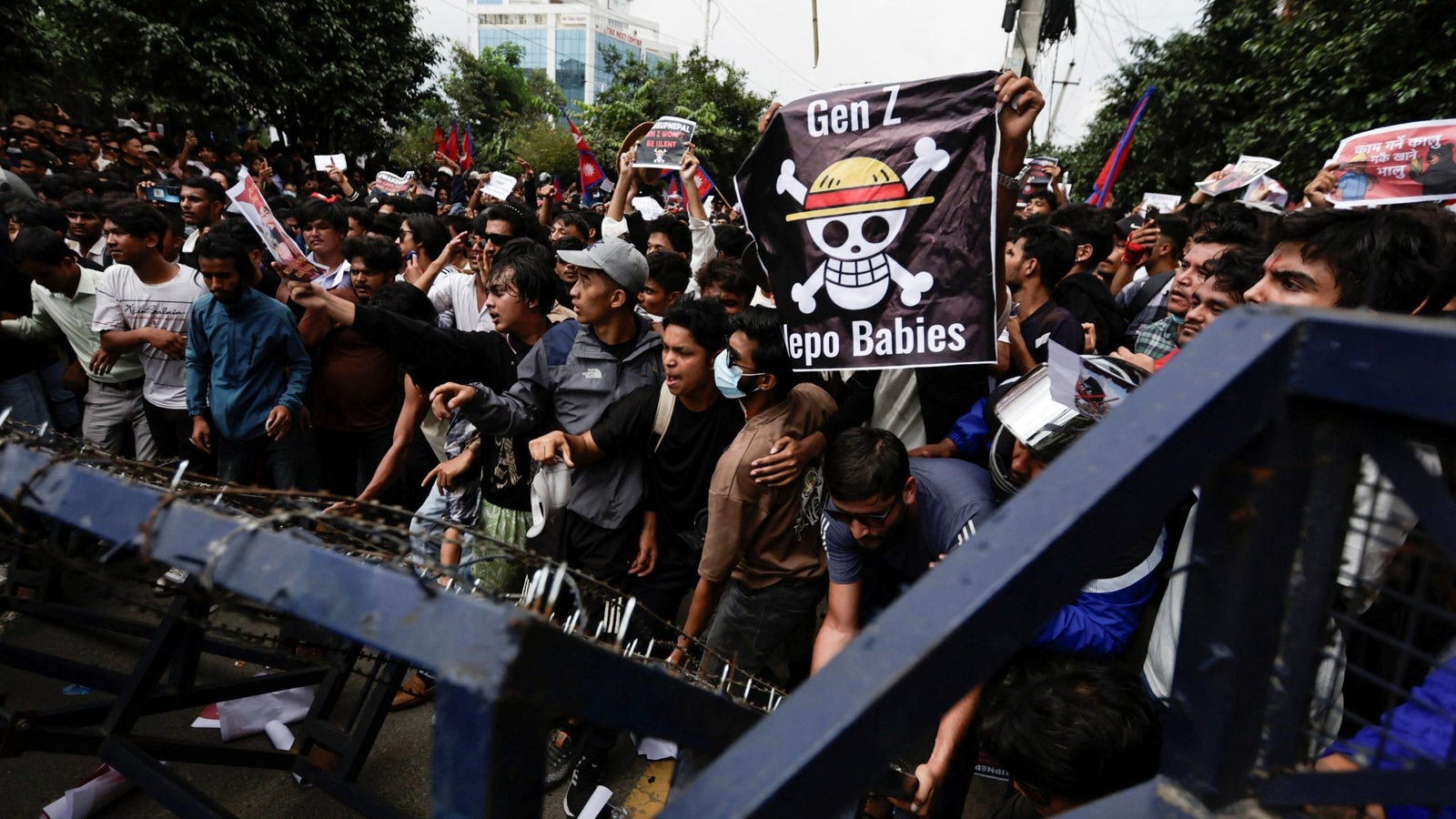
The online campaign soon transformed into protests — which were proposed as peaceful demonstrations — in the capital city Kathmandu and surrounding areas. But by the end of the day on September 8, 19 people were killed and more than 300 were injured as police fired tear gas and rubber bullets to control the crowds, local media reported. The ban on social media apps was lifted late on September 8 following the deaths of young protesters.
“What unfolded in Nepal is a stark reminder that digital repression and the violation of human rights are increasingly becoming part of the playbook of both democratic and authoritarian regimes,” Felicia Anthonio, #KeepItOn Global Campaign Manager at digital rights nonprofit Access Now, told Rest of World. “This is unacceptable and cannot be treated as business as usual.”
Nepal has millions of social media users, with 56% of the country’s population having internet access in 2023, according to the World Bank.
Rest of World breaks down what happened in the Himalayan nation, culminating in Oli’s resignation:
Why did Nepal ban Facebook, WhatsApp, and other social media apps?
In November 2023, the Nepali government issued directives for social media management, one of which stipulated that platforms must register within the country to operate there. It also mandated that each company appoint a resident grievance officer and a compliance officer for self-regulation, and take down any content flagged by the government within 24 hours.
The government said the move would tackle fake news, hate speech, and online fraud.
Some platforms, such as TikTok — which faced a nine-month ban from November 2023 to August 2024 — and Viber, met these requirements. Others were banned after they failed to comply.
Minister for Communications and Information Technology Prithvi Subba Gurung told the media that when the companies were asked to register, they made claims “as if they would not follow Nepal’s Constitution and laws.”
Big Tech’s argument
In March 2024, the Asia Internet Coalition, an industry association representing companies including Google, Amazon, and Meta, wrote to the Nepal government, stating its new policy creates “significant operational and logistical challenges.”
The AIC’s letter said: “The proposed registration process for internet companies in Nepal presents significant administrative hurdles for our members, involving the submission of confidential documents detailing user statistics, platform activities, security measures, and tax information.”
On August 17, Nepal’s top court stated in a judgment that “online and social media platforms of domestic or foreign origin should be mandatorily registered with the competent authority before operation, and mechanisms should be in place to evaluate and monitor undesirable content.”
On August 28, the government issued a “final” seven-day deadline to social media platforms to comply.
Critics of the move said the government maliciously misinterpreted the judgment to ban social media platforms that don’t register with the country’s communications ministry. Meta is already registered with the tax office and has been filing taxes in Nepal.
After the seven-day deadline had lapsed, Nepal banned 26 social media websites and apps, including Facebook, Messenger, YouTube, Instagram, WhatsApp, X, LinkedIn, and Snapchat, among others.
Nepal’s Gen Z protests and the “Nepobaby” trend
In the days before the ban, Nepali social media users borrowed the trending hashtag #NepoBaby from Indonesia, which is witnessing protests related to the misuse of taxpayer money by politicians and their families.
Nepali content creators earn over 3.5 billion rupees ($24.8 million) from YouTube, TikTok, and Facebook videos in a country with a GDP of $42.91 billion. When Prime Minister Oli was asked about this, he said the country’s pride and sovereignty were more important than just a handful of people losing their income. This also didn’t go down well with the Gen Z protesters.
On September 8, after the 26 websites and apps had been banned, young users — many of whom rely on the platforms to earn a living — planned a peaceful protest in Kathmandu, demanding an end to corruption and the lifting of the ban.
The protests took a violent turn, with at least 19 people reportedly killed.
A day later, Oli resigned.