In 2020, Priscila Chalán, a taxi driver in the Ecuadorian city of Guayaquil, ditched her gas-fueled car in favor of an electric vehicle made by Chinese company BYD. She was thrilled not only with the look of her new car but also the savings it offered her.
By mid-2024, those savings had begun to dry up as a drought left water levels in the country’s hydroelectric plants dangerously low, forcing the government to turn the power off every day for hours at a time. Unable to charge her car at home, Chalán began using BYD’s fast-charging public station whenever it became available — for $3 per charge.
Despite the cost and the hassle to charge, she’s confident in her decision, Chalán told Rest of World.
“I’m sticking with the EV,” she said. “There’s the problem of the electricity [supply], and I haven’t reached my financial goals, but there is profitability in keeping an EV compared to a gas car.”
Chalán is one of thousands of Ecuadorians who switched to EVs in the past two years after the government launched a series of incentives, amid rising gas prices. Many EV users are now struggling as the energy crisis has meant blackouts ranging from two to 14 hours a day, considerably limiting their vehicle use — and potentially stymieing the country’s EV ambitions.
In 2019, Ecuador passed an energy efficiency law requiring all new public transportation vehicles to be electric by 2025. The government began waiving import taxes for EVs, gave taxi drivers and private bus operators tax cuts, and offered subsidies for EV users to install power sockets at home to charge their vehicles. Since then, the number of EVs has grown by over 1,000%, with 3,828 new EVs sold since January 2022, or just above 1% of all cars, according to data from Ecuador’s Association of Automotive Companies (AEADE).
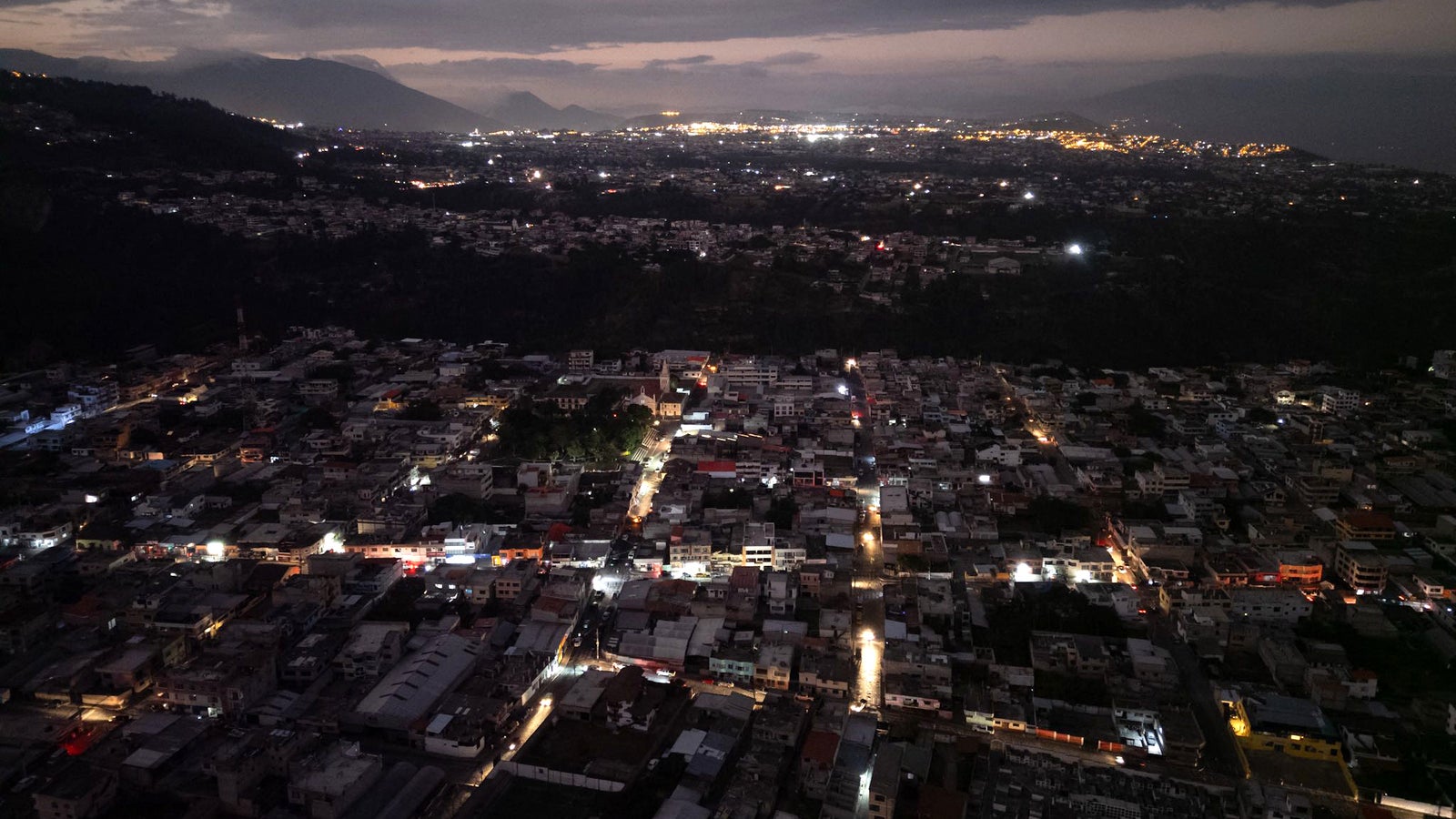
Meanwhile, an unprecedented drought last year has meant disruptions to power supply, as over 70% of Ecuador’s electricity is produced by hydroelectric plants. What began as sporadic and short blackouts became frequent, hourslong episodes that have severely impaired charging. Every three to four days, the Ministry of Energy publishes blackout schedules, but people have reported sudden and unannounced outages as well. Rural areas have gone as long as five days without electricity.
In December, President Daniel Noboa announced an end to the electricity cuts, but while the scheduled blackouts have been suspended, unscheduled outages are still common throughout the country. Longer and more frequent outages are likely to return, analysts say. The challenge for EV drivers remains a pressing concern, Luis Armas, an electrical engineer specializing in renewable energy, told Rest of World.
“For years, the country has relied mostly on rainfall to provide for energy while the demand has increased. It took one drought to tip us over the edge,” he said.
Armas, who had been considering buying an EV, changed his mind when the energy crisis began, and believes Ecuador is yet to make up for its energy deficit. “I see [owning an EV] having more setbacks than benefits,” he said.
Most EV users charge their vehicles at home, and there are few public charging stations. Except for a single charging station in the city of Cuenca developed by a state-owned university, the nearly 260 charging stations in Ecuador are all privately owned and limited to a brand-specific charger connected to the country’s grid.
Taxi drivers, in particular, face hourslong disruptions that prevent them from charging their cars when they need to, impacting their hours and income.
John Peñafiel is among them. In late 2022, Peñafiel, a taxi driver for over 35 years, sold his car and bought a Chinese-made Dongfeng EV in Guayaquil, the largest city in Ecuador, using a $4,200 government subsidy. He was immediately able to save around $600 a month in gas, he told Rest of World.

Those savings have plummeted since April, when Peñafiel started taking regular detours to a charging station with guaranteed electricity supply, nearly 10 kilometers (1 mile = 1.6 kilometers) from his usual charging spot. The charging station is exempt from blackouts because it is located near a fire station, but has only one charger compatible with his vehicle.
“It’s not sustainable,” Peñafiel said. “I’m seriously considering switching back to a gas-fueled car.”
Another taxi driver, Ulises Rodríguez, faces a similar situation. “Many of my colleagues are competing for the only Dongfeng charging station in the city,” he told Rest of World.
Dongfeng did not respond to a request for comment from Rest of World about how it is helping its users charge their EVs amid the energy crisis.
The largest charging station in Guayaquil was installed by BYD, which signed a deal with the municipal government in 2020 and has since introduced a fleet of 100 electric taxis. But Peñafiel said that he and many others in the city who own a Dongfeng EV “can’t charge our cars on BYD chargers unless you have an adapter.” Adapters can be costly and are hard to find on the market, he said.
BYD, whose sales in Ecuador grew by over 200% from 2023–2024 and which operates a network of 21 fast chargers, has also struggled to guarantee electricity supply for its customers. The Chinese company did not install generators in its charging stations when it built them in 2019 because “no one was thinking about electricity cuts,” Jorge Burbano, BYD’s country manager, told Rest of World.
“Ecuador still has potential in electric mobility,” said Burbano. But BYD users who charge at home can’t do much except work their schedules around the blackouts, he said.
Despite the blackouts, EV sales for personal use rose by over 69% in 2024 from the previous year, according to the AEADE. One reason was the increase in gas prices last year when the government eliminated subsidies, leading to a price increase of 26 cents per gallon.
For Chalán, the savings are worth the trouble — even as she and some of her colleagues deal with debt from being unable to work for several hours during the day due to the power cuts. She and her son, also an EV taxi driver, have had to renegotiate their EV installments, she said. But she remains committed to her EV.
“We have to find a solution,” Chalán said. “That’s all we have.”