When Guadalupe González Rodríguez saw a Facebook post offering people artificial intelligence-generated animated images of their dead relatives, she was instantly interested. “I wanted to give my husband a video of his mom, as a gift,” González Rodríguez, who liked using AI to enhance photos and videos on social media, told Rest of World.
She sent two photos, one of her husband and one of her mother-in-law, to a WhatsApp number. Within minutes, she received a five-second animated image of them both: her husband blinking almost naturally and his mother smiling and contorting awkwardly for a second.
Cerveza Victoria, a popular beer brand in Mexico, had launched the marketing campaign ahead of the Day of the Dead celebrations in November. Several other companies launched similar campaigns last month. AI regulation and cybersecurity experts told Rest of World they are worried that the images of deceased persons could be misused and lead to identity theft. Last year, one out of every five people in Mexico was a victim of cybercrime, including identity theft and scams, according to a study by cybersecurity firm Norton.
“The problem is that Mexico’s data protection law doesn’t include these types of practices or personal data management,” Luis Osorio, head of AI practice at Inetum, an IT consultancy firm, told Rest of World. There’s no legal clarity as to what use should be given to photos of dead people, which makes them more vulnerable to deepfakes or identity theft after they’ve passed away, he said.
J. García López, a funeral home in Mexico that launched its Día de Muertos campaign in October, received over 15,000 requests to create AI-generated videos of deceased persons, CEO Óscar Padilla told Rest of World. The funeral home ran the service as part of a marketing campaign called “You’re still here.”
“[It] was a way to touch a sensitive fiber of the families, since the memories of those who’ve left us are usually a smile, a hug, a burst of laughter,” Padilla said.
The funeral home’s tech team developed the AI software to animate images. “We had to do many trials to achieve what we were looking for: that the person’s natural facial expression didn’t change or get distorted,” Padilla said.
Daniela Rojas, senior program officer at Eon Institute, an AI-focused Mexican think tank, expressed concerns about how such companies store people’s images and biometrics. “I’d be concerned about how good their cybersecurity standards are so that this type of information doesn’t leak to malicious individuals,” she told Rest of World.
According to a 2024 study by consultancy firm KPMG, cybersecurity is the most urgent and high-priority threat faced by companies in Mexico and Central America due to the recent evolution of AI, especially generative AI.
“We don’t store the photos because we’d have to pay for those [gigabytes] for storage,” Padilla said, adding that files are automatically deleted after being sent to users.
In its terms and conditions, Cerveza Victoria states that it is not accountable for any of the inherent risks of using AI-generated images. The company did not respond to a list of questions from Rest of World.
Using AI to resurrect the dead has raised ethical questions elsewhere. In 2020, Jang Ji-sung, a mother of four in South Korea, was virtually reunited with an AI-generated avatar of her dead 7-year-old daughter. Ji-sung had said this helped her say farewell to her child, but “many psychologists have come up and said this might, in some cases, make the grieving process longer,” Rojas said. The discussion has yet to take hold in Mexico, where the practice of digital resurrections exploded in popularity this year.
The use of AI in this year’s Day of the Dead marketing campaigns didn’t go without glitches. Some of those who participated in J. García López’s and Cerveza Victoria’s campaigns complained on social media that the AI animation tool didn’t work properly.
Angélica Rivera Gabino, an accountant from the State of Mexico, uploaded a picture of a family member to J. García López’s website. “I never got the video they promised because an error kept popping up,” she told Rest of World. She doesn’t know what, if anything, happened to the photo she uploaded.
Claudia Del Pozo, CEO of Eon Institute, worries about the long-term effects of normalizing the use of AI for “animating” the dead.
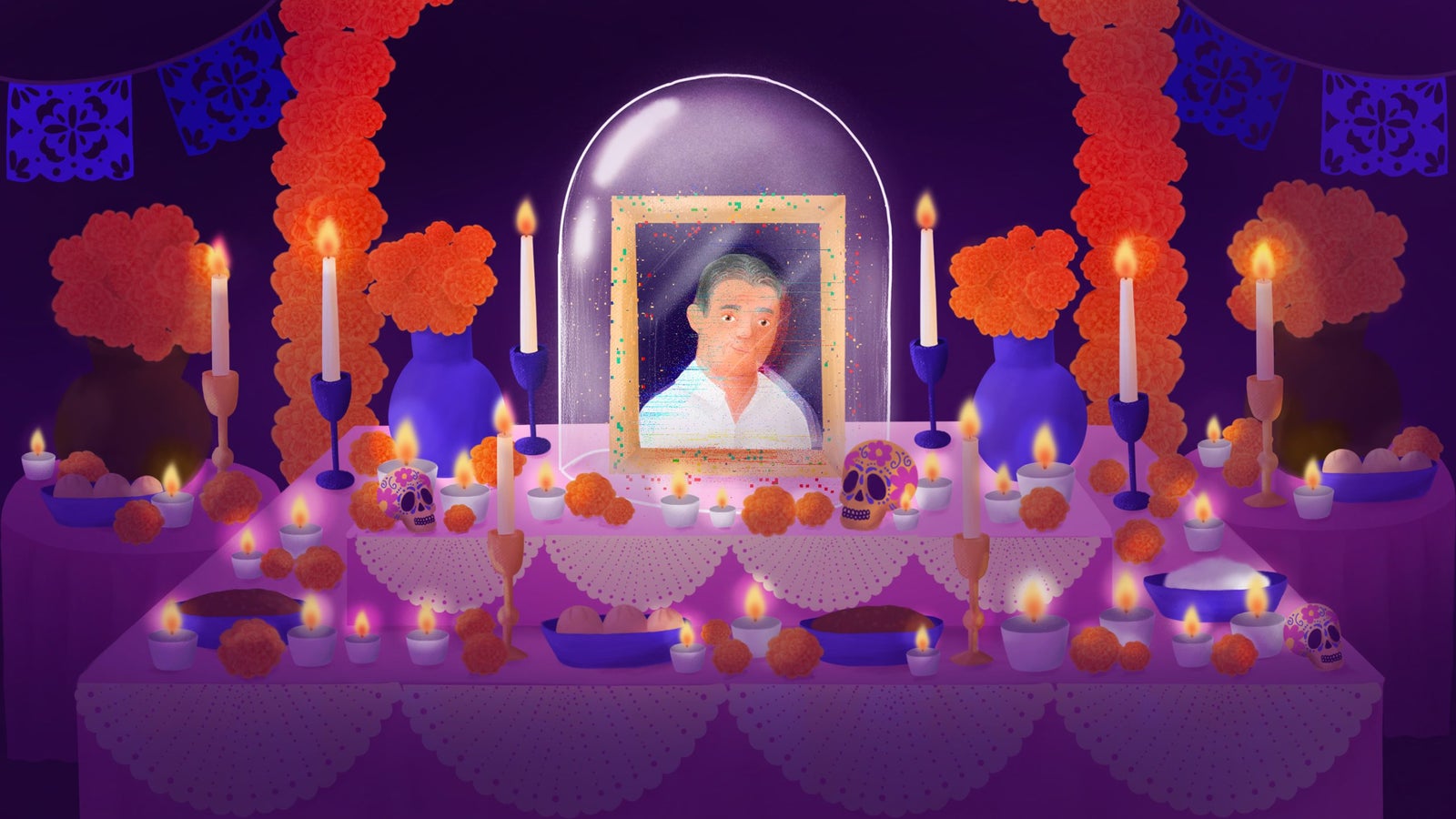
“When you set up the [Day of the Dead] altar, you know they’re dead. You’re trying to reconnect with the memory of them and to celebrate their life,” Del Pozo told Rest of World. Resurrecting people with AI, she said, “is almost like ignoring the fact they’ve died.”