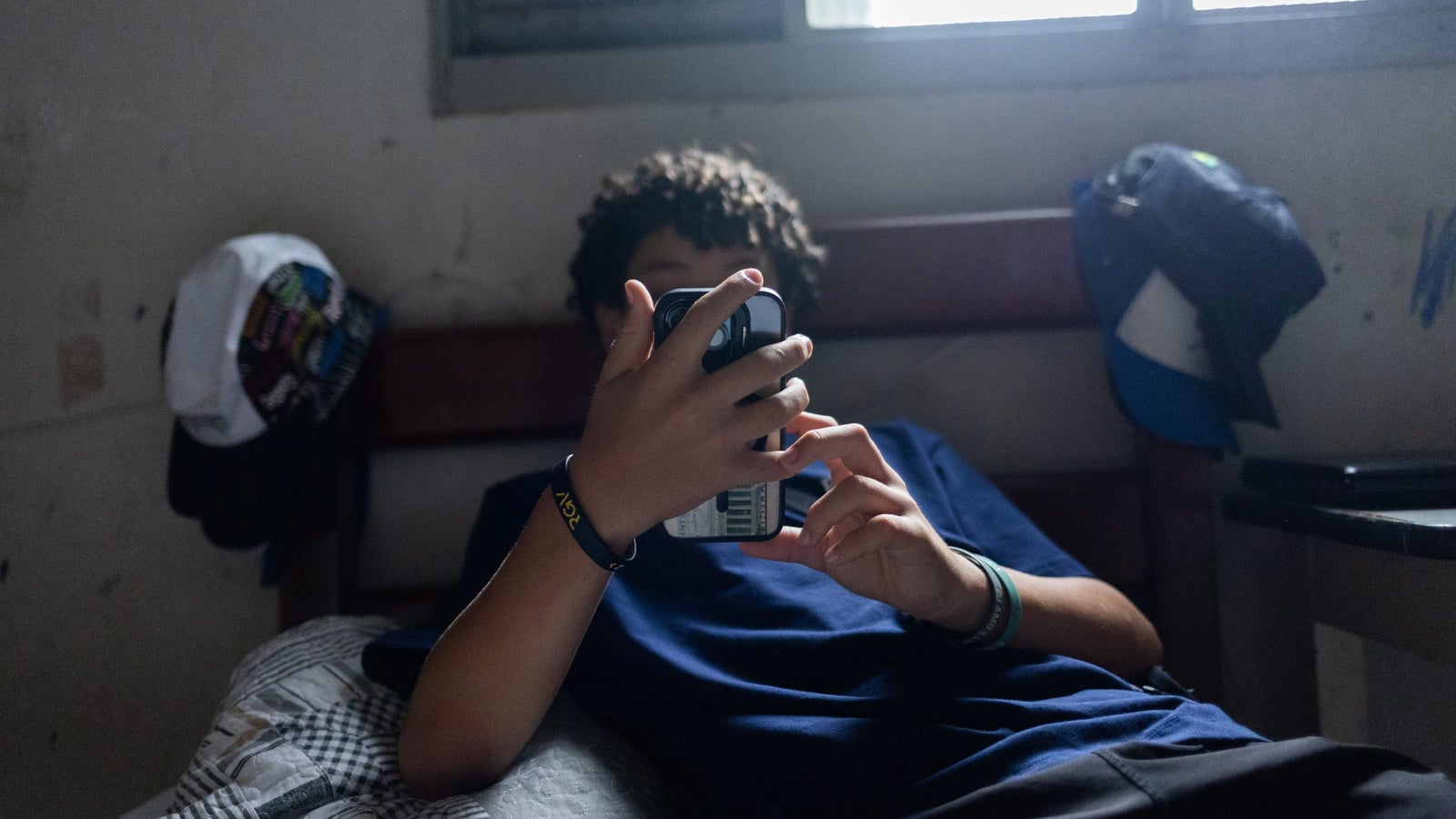
The hum of midday traffic in Santa Rita do Sapucaí, Brazil, was a familiar soundtrack to Guilherme’s hustle. Fourteen, slight, and armed with a plastic box of colorful candies — Halls and Fini — he wove between cars stopped at a light near the city center. But it wasn’t so much the few reais from each sale that fueled his energy as the lens of a nearby iPhone capturing his every move.
The true reward for the day’s labor rested with his online audience. Guilherme’s accounts on Instagram, Kwai, and TikTok drew more than 2 million combined followers this February. His videos, carefully crafted by him and posted by his management team, held the potential for a staggering 6,000 Brazilian reais, or about $1,000 a month — a sum that dwarfs the average adult income in Brazil. This wasn’t merely about selling sweets; it was about building a brand, a future.
“I want to be a big influencer, to be known globally,” Guilherme told Rest of World.
Guilherme’s manager, Yuri Araújo, has even bigger dreams for the teenager. “This boy can be the new MrBeast from Brazil,” he told Rest of World. MrBeast, with about 592 million followers, is the world’s largest social media influencer.
I want my son to thrive, the same way I went to work at 13, selling fruits and vegetables in a Kombi so I wouldn’t starve.”
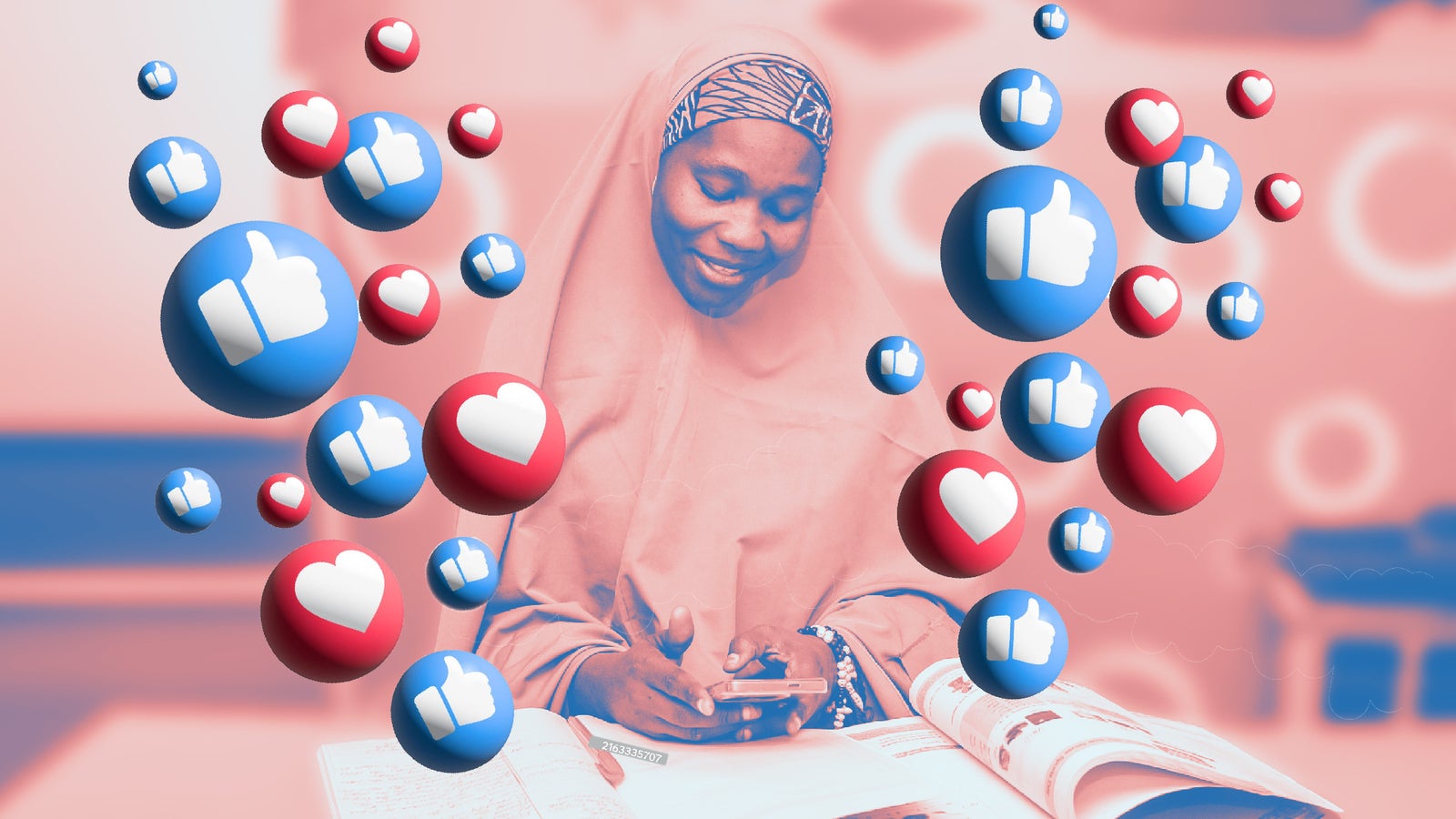
Child social media influencers like Guilherme are growing globally, and 83% of Brazilians aged nine to 17 have social media and WhatsApp accounts. Many check them daily. There is also a growing number of “kidfluencers” in Brazil who promote online get-rich-quick schemes to other children. Some are paid by TikTok and the short-video app Kwai. Others receive free products and services, or do affiliate marketing and advertise to their followers. Rest of World found scores of teenagers on Instagram in Brazil advertising courses on how to become rich as an influencer. The courses were sold on the digital marketing platforms Cakto and Kirvano for commissions. Rest of World is not revealing the identity of any minors, and pseudonyms are used in this story to protect their privacy.
Such work under the age of 16 is considered unlawful child labor in Brazil, unless the creator receives authorization from a judge to perform “artistic labor” — an exemption that is reserved for child actors and similar artists, and could include influencers. “[The law] aims to protect children and teens, and ensure that they can enjoy each phase of their life at the right time,” Luísa Carvalho Rodrigues, coordinator of child and teen rights at the Public Labor Prosecutor’s Office, told Rest of World. “These kids’ [brains] are still developing.”
Earlier this year, Rest of World spoke to some teenage content creators, including Guilherme, who do not have judicial authorization to work. Guilherme’s age is listed as 14 on all platforms, Micheli Freitas, Guilherme’s other manager at talent management company Salvador Influencer, told Rest of World. TikTok and Kwai did not check whether Guilherme was authorized to work before monetizing his account, and only asked for authorization from his mother, Freitas said.
“Since his career is starting, there’s no excessive revenue, so no need for judicial monitoring,” said Freitas. Salvador Influencer has so far not received financial compensation from Guilherme, and they are helping him as a form of social work, his managers said.
After Rest of World asked TikTok, the ByteDance-owned platform, about Guilherme’s account in April, it suspended him from its Creator Rewards Program, which pays creators over the age of 18 for views on longer videos. “We are implementing additional measures to prevent similar cases from occurring,” a TikTok spokesperson said. TikTok has a “robust” safety team and uses technology and humans to remove any content or interaction that may be harmful to minors, they said.
A spokesperson for Kwai, owned by Chinese social media giant Kuaishou Technology, told Rest of World in April that it had “immediately” closed Guilherme’s account after becoming “aware of the situation.” Kwai “does not work with child influencers in any way,” they said, and requires parental authorization from users aged 13 to 17. Guilherme was not part of its “official” creator program, they said.


A spokesperson representing Meta, Instagram’s parent company, declined to comment on underage creators using its platform for sales.
Child labor on social media in Brazil has come under scrutiny since 2022, when the judicial oversight body, the Justice Council, asked judges to look out for artistic underage labor. In October last year, the Labor Court fined TikTok 100,000 reais ($17,468) for moral damages from allowing children to monetize accounts without judicial authorization. The court has also set a fine of 10,000 reais (about $1,700) for each fresh infraction.
“[Children’s] protection is the duty not only of the family and the State, but of society as a whole,” Judge Marina Stefanoni wrote in the judgment.
A source in the Labor Prosecutor’s Office told Rest of World they continue to scrutinize TikTok for enabling kidfluencers to monetize accounts without a judicial permit.
The Labor Court judgment “does not address the exploitation of child labor by TikTok, and the company was not convicted for it,” TikTok said. The company has appealed the ruling.
After Rest of World asked Cakto and Kirvano about specific underage accounts on their platforms, Cakto banned one creator and said the minor was using an account originally registered by an adult. “We investigated internally and identified that all [accounts flagged by Rest of World] are properly registered by people above 18,” a spokesperson for Kirvano said.
When you’re too tired to work, don’t have a cent to pay bills, and are too poor to give up.”
Guilherme had been street hawking for one year when Toguro, one of Brazil’s top fitness content creators, gifted him an iPhone as content for one of his videos. Inspired, Guilherme decided to become an influencer posting fitness content.
He was “a great talent,” Araújo recalled. In just a month, Guilherme gained 8,000 followers on Instagram. Araújo discovered him online, travelled to his house in Santa Rita do Sapucaí and signed him on after feeling moved by Guilherme’s personal history as a street seller — Araújo, too, had worked in the streets as a child. He said he also considered Guilherme to be hardworking, unlike many people who view social media as a hobby. “There are influencers that film a video, [but then] sometimes don’t want to record a new one the next day, so that undermines the company’s performance,” Araújo told Rest of World.
His agency guided Guilherme to focus on street-hawking videos after analyzing Instagram and TikTok audience data, Araújo said.
“The videos about entrepreneurship [street vending] we tested, he ended up getting much bigger results,” Araújo said. “If we change it and do something else, we would lose followers.”
In the beginning, Guilherme struggled to handle criticism on social media, so his team got him a psychologist, Freitas said. “We take really professional care of him,” she said.
A year on, Guilherme usually records himself on his iPhone and edits the videos himself. His managers post content daily across his accounts. He portrays a charming, hardworking boy who perseveres in the face of hardship. In one TikTok video, which has 733,000 views, he shares how hard his job is.

“Sometimes, I feel sick because it’s too hot. So, I’m preferring cold weather lately,” he says.
In another video, Guilherme sits on a bus looking sleepy and tired, holding a box of candies. The caption reads: “When you’re too tired to work, don’t have a cent to pay bills, and are too poor to give up.”
In the eyes of Brazilian law, street vending isn’t just a tough gig for children, but also a dangerous one. The practice is deemed as harmful as toiling in mines or harvesting fields. A 2008 decree explicitly forbids anyone under 18 from this work. Still, online algorithms relentlessly amplify Guilherme’s content to viewers.
One day in February, Guilherme went to school, and in the afternoon headed to the modest three-bedroom house he shares with his grandmother, mother, 5-year-old brother, an older cousin, and about 15 dogs and cats. His grandmother’s manicure salon occupied the living room, the nail polish displays interspersed with statues of Catholic saints.
Guilherme typically rests for half an hour, then goes to the street corner to sell and film, according to his grandmother, who is his primary caretaker.
She worries about his safety and initially tried to dissuade him from street vending, she told Rest of World. But he didn’t listen. His grades were decent, so she let him continue. “I don’t let him stay out too late on the streets alone to sell because I’m afraid,” she said. “I want him to study to become someone in life. But now, he’s into sales.”
Social media has helped Guilherme’s family pay their rent, medical bills, and buy food, Guilherme’s managers told Rest of World. He has transformed “from a boy who collected recyclables to help his family to a boy who now has almost 3 million followers,” they said.
TikTok was Guilherme’s biggest client, according to his managers. His earnings on the platform, which pays for views, ranged from 1,000 to 6,000 reais ($175–$1,048) per month. “Sometimes, the algorithm delivers [my videos] a lot in a month, and not in another,” Guilherme said.
From the moment you step into school and learn the same teachings as everyone else, you become kind of like a robot.”
Besides TikTok, in Brazil, Instagram especially has become a marketplace for informal labor for adults and kids alike, Wagner Alves-Silva, an anthropologist at DeepLab, a research project at University College Dublin, told Rest of World. A report by DeepLab estimates that nearly 13% of Brazilians — about 27 million people — use Instagram for commercial purposes. The nation had the most social media influencers in the world in 2024, according to industry estimates. It is also one of the biggest markets in the world for social media users.
“There was a post-pandemic migration from informal labor to digital labor,” Alves-Silva said. “Even though [Instagram] is not a network designed for labor, it’s what it has become in Brazil.”

Rest of World analyzed dozens of Instagram accounts linked to minors and interviewed young influencers to understand their playbook. It’s a world of viral videos, replicated content, and ambitious goals — they aim for early retirement for their parents and billionaire status for themselves. These kids aren’t playing around; their bios are filled with professional-looking headshots and calls to action, urging followers to “learn from me now!” and invest in digital marketing courses.
The allure of the influencer lifestyle is strong, especially for young eyes. Renata Tomaz, a professor at Getulio Vargas Foundation, explained that children naturally mirror the adults they admire, and right now, that’s the world of online stardom. Alves-Silva highlighted how adult influencers are marketing social media as a shortcut to success for young entrepreneurs. And often, parents are the ones opening that shortcut.
Vanessa is a 13-year-old selling digital-marketing courses on Instagram with the full support of her mother, a business consultant in the Greater São Paulo metropolitan area who has more than 13,000 followers on the same platform. Vanessa is considered a “nano-influencer” with followers in the mere hundreds. In January, she earned about 300 reais (about $50) in commission from selling a course through Cakto, she told Rest of World. She bought a new pair of sneakers with the money.
On weekdays, Vanessa goes to school, takes taekwondo classes, and then spends about two hours writing video scripts. On weekends, she spends 90% of her free time recording and editing content, she said.
“From the moment you step into school and learn the same teachings as everyone else, you become kind of like a robot,” she said. Vanessa considers online marketing a creative tool and more desirable path where she can eventually be her own boss.
In an Instagram Reel designed to sell online courses, Vanessa performs bicep curls in the gym. She is smiling, and in an energetic tone explains to her viewers how to use visual hooks like her gym exercises to help videos go viral on social media.
Explainers on viral content are a moneymaker on Instagram, 14-year-old Fabrício has discovered. After one viral post, where he showed 6 million viewers how to edit a video to make it appear as though he was jumping over a gate, the teen gained more than 130,000 followers in six months. He now posts similar explainers on making viral videos, offers editing services, and earns a commission from advertising microphones, ring lights, and other filming gadgets.
Fabrício’s father is a 38-year-old sales manager in the city of Curitiba. When he was a teenager, he sold groceries, he told Rest of World. “I want my son to thrive, the same way I went to work at 13, selling fruits and vegetables in a Kombi [Volkswagen van] so I wouldn’t starve,” he said.
The two of them attended a digital marketing course online before setting up an account in Fabrício’s name, the father said. They decided Fabrício would be a creator of content and not a passive user of social media.
These days, Fabrício spends three hours a day making content after school.
His father said that when kids don’t work, it makes them unproductive. “That’s [the attitude] we cultivate today, and they end up on TikTok — dancing, playing, and watching porn,” he said.
[Children’s] protection is the duty not only of the family and the State, but of society as a whole.”
Guilherme’s digital world is a constant stream of feedback, a chorus of voices echoing his own journey. His livestreams and posts are met with a wave of comments. His managers recalled a few: “Wow, man, I was inspired by you — you changed my life.” “You gave me the courage to go out on the street.” “I started selling to be able to help at home.”
“He’s not only changing his life through social media, but he’s also inspiring many people to start entrepreneurship and change their lives,” his managers said.
For Guilherme, too, influencing isn’t a fleeting trend — it’s the blueprint for his future. With every view, every sale, he’s building toward a tangible goal: a new house, a haven for his family, a testament to his digital dreams.
The rhythm of the city streets is a constant interruption. A friend wanders into the flow of traffic, and Guilherme’s voice cuts through the noise, a cheerful shout: “Hey, Jão, get out of the way!”
A moment of quiet reflection follows, a pause in the relentless energy. “Do you think MrBeast will read the story?” he asks, a flicker of ambition in his eyes.