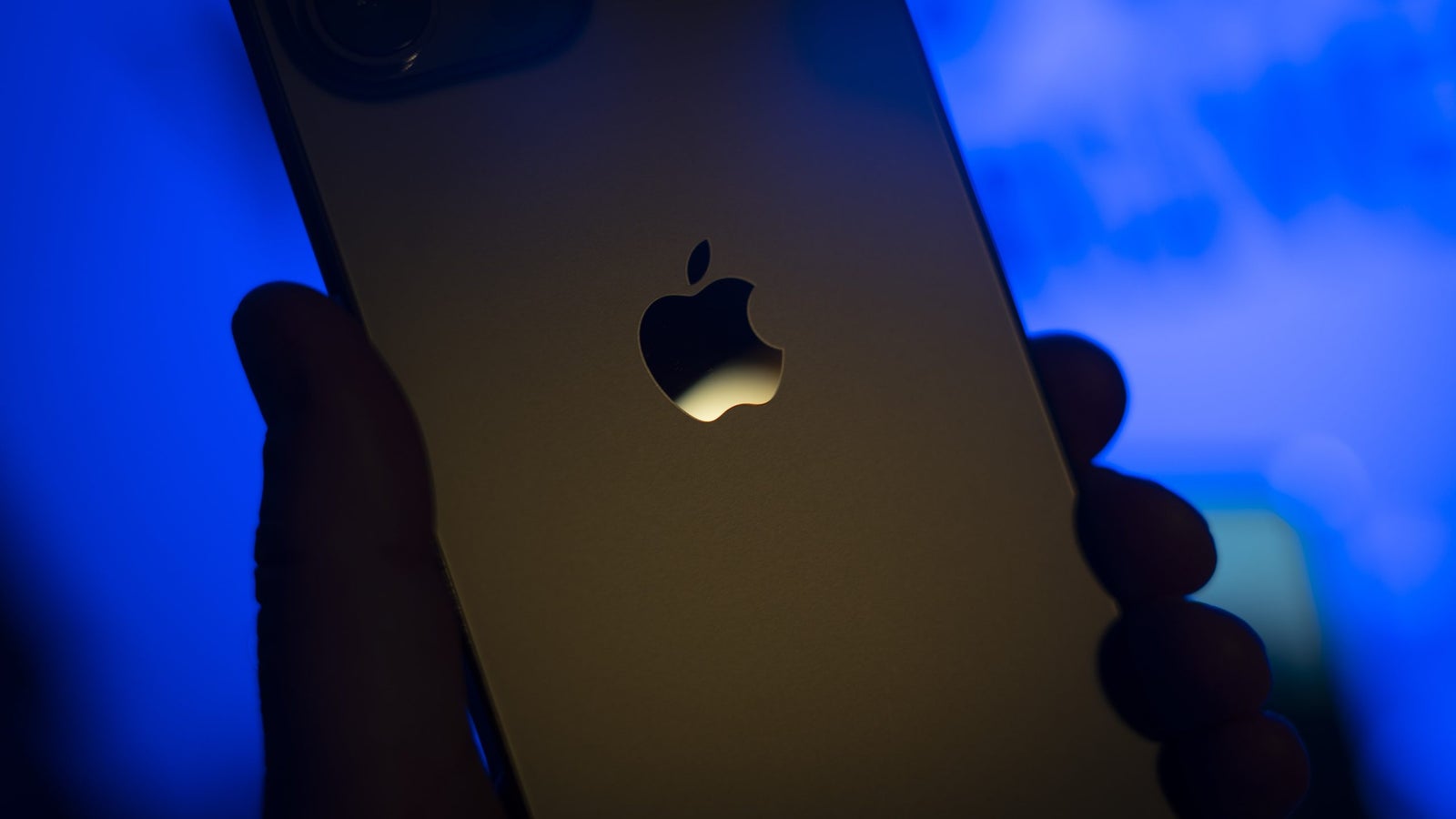
India’s opposition has accused the government of spying on them after multiple iPhone users in the country received an alert from Apple. “State-sponsored attackers may be targeting your iPhone,” the automated text message read. So far, all the members of Parliament who have come forward about receiving the alert are those who oppose the ruling Bharatiya Janata Party.
An inevitable political row has followed.
But amid the outrage, Apple’s muted public response has been perplexing, obfuscatory, and contradictory. So far, the iPhone manufacturer has not released a formal public statement. Attributions have been made to sources, government officials, or what Apple has purportedly said when contacted for a response. The absence of any clear or constituent articulation from the American technology giant has left the space wide open for random mudslinging and unverifiable claims and counterclaims.
The Narendra Modi government, while announcing an inquiry, has also described the protesting political figures to be “compulsive critics.” Officials say the alert is “vague,” generic, and no more than an automated advisory sent out in 150 countries.
“If it’s an algorithm tripping up, how can you explain why only one side of the political aisle has been warned?” argued Priyanka Chaturvedi, an opposition leader who received Apple’s alert, in an interview with me.
She has a point. But if the allegations are not to be hastily forgotten by a perennially distracted citizenry and a fast-changing news cycle, the opposition should be pressing Apple — apart from the government — to conduct itself with some basic transparency.
Since the controversy erupted, a statement from Apple has widely been quoted in the Indian media. It claims that Apple “does not attribute the threat notifications to any specific state-sponsored attacker.” There have also been media references to “false alarms” and “undetected attacks.” But, even now, it is not clear whether this is a regurgitation of an old statement first posted on Apple’s website on August 22, under the “support” section, or a freshly issued communique or a summarized reiteration.
How does one reconcile the somewhat ominous language used in the alerts received by the opposition politicians with the wishy-washy language on the website?
The alert to the politicians says they have been possibly targeted because of “who you are and what you do.” It also warns that the camera and microphone of devices may be compromised and remotely controlled. All of this sounds dire. But the statement available on the Apple website from earlier says, “detecting such attacks relies on threat intelligence signals that are often imperfect and incomplete.”
The tone of the private alert to users and the public articulation of these attempted hacks are entirely at odds. One conveys urgency; the other seeks to dial down the debate.
This is hardly India’s first surveillance controversy.

In 2021, there was a national furor when a global investigative project reported that Pegasus spyware, developed by Israel’s NSO Group, had been used to target the devices of at least 50,000 individuals globally, including serving ministers, journalists, and opposition members in India. Two years later, a panel of experts failed to reach any clarity. The inquiry panel informed the Indian Supreme Court that the government had failed to cooperate. Malware was found on some devices but could not conclusively be linked to Pegasus. The government refused to confirm or deny whether it owned or used Pegasus.
Ironically, as technology evolves, our lives are less and less private.
There was a time when the charge of political snooping was grave enough to bring down governments and create ferocious political debates. Congress and its allies were charged with widespread bugging of telephones in the 1980s. In 1991, with the shoe on the other foot, Congress accused the government of posting two “spies” outside the house of former Prime Minister Rajiv Gandhi, who was the opposition leader at the time.
In 2011, the senior-most minister in the Manmohan Singh government complained that a sweep of his office in the Finance Ministry had uncovered listening devices.
But today, the noise around surveillance, hacking, and eavesdropping doesn’t last even the length of a 24-hour news cycle. Perhaps most of us are resigned to the fact that there is no surefire way to protect ourselves.
Ironically, as technology evolves, our lives are less and less private.
That sense of vulnerability is also personal to me. In June this year, I sat on the cold floor of my bathroom weeping, as Elon Musk’s face stared right back at me with a devilish smile.
Mojo Story, the digital platform I helm, had been hacked. And every piece of content that we had produced had vanished from its YouTube channel. It seemed to me as if my life’s work as a media entrepreneur, including travels through the pandemic, had been erased. Thirteen thousand video reports had been replaced by one smiley Musk, set to music.
When you learn that you have been hacked, surveilled, or possibly intercepted — and this was not my first experience — it’s an acutely felt sense of violation. You feel as if someone has been hiding under your bed while you sleep. You feel stripped of privacy, dignity, and autonomy.
Mercifully, after a million angry protestations and pleas, our content was recovered. We were never able to track our hackers or indeed understand their motives.
India’s history shows that across parties and governments, intelligence agencies have been used — and often misused — to listen in on competitors, opponents, business leaders, and media. Perhaps we are too cynical to expect any government, politician, or bureaucrat to admit this.
But why would Apple, the world’s most iconic technology brand, not be more direct with consumers?
Apple should tell Indians what it knows.