Update: As of April 9 at 2PM ET, President Trump has announced that the tariffs will be paused for 90 days and replaced with a near-universal 10%. This does not apply to China, which will now have its exports taxed at 125%.
U.S. President Donald Trump announced sweeping new tariffs on nearly all imported goods — and the global fallout has been swift. Rest of World breaks down the details, and looks at how countries and companies in the regions we cover are responding to the unprecedented trade environment.
China
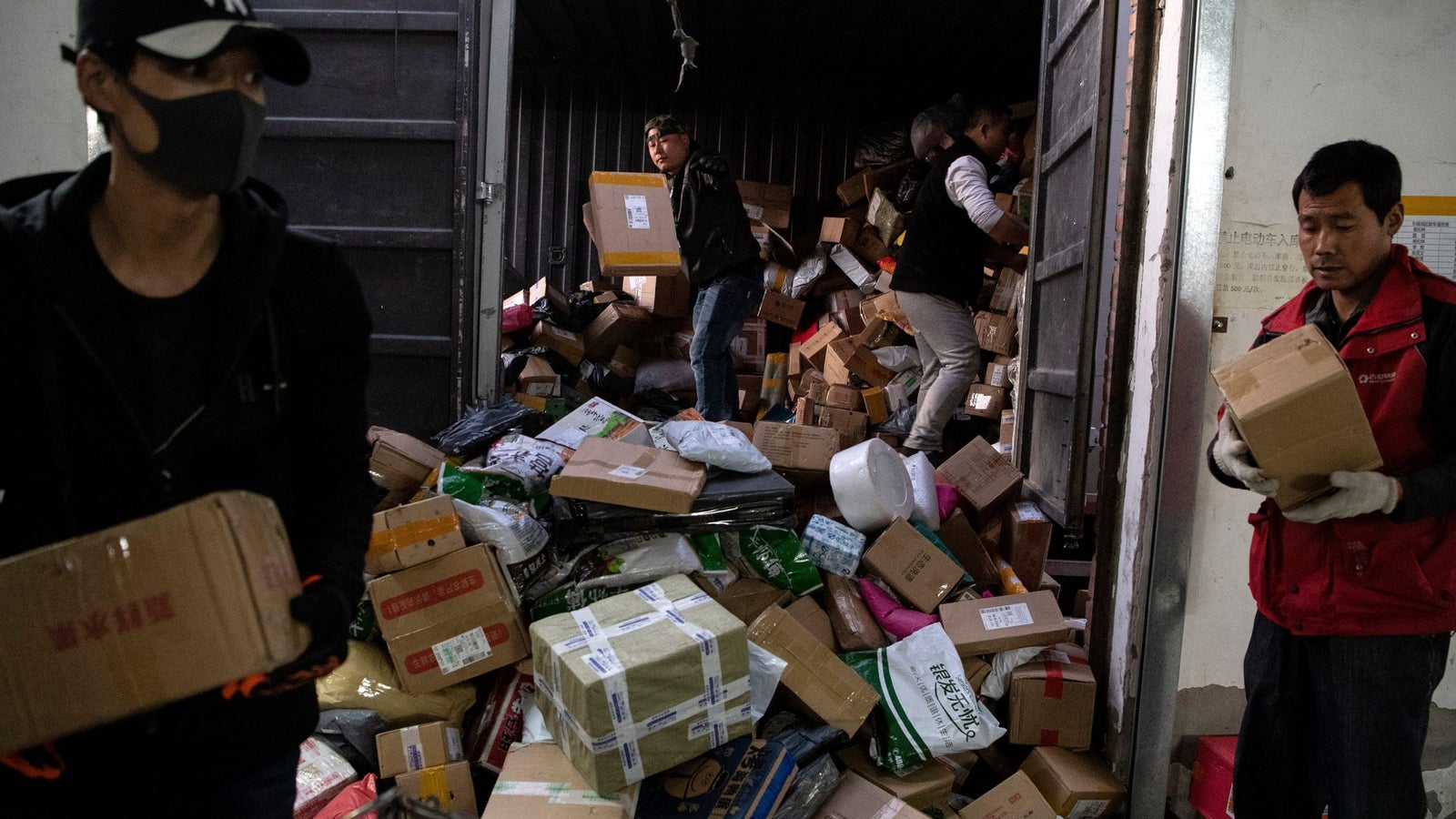
President Trump announced a 34% tariff on top of the 20% tariff he has already imposed on China. Then, in response to a 34% retaliatory tariff from China, Trump imposed an additional 50%, bringing the total to a staggering 104% — the highest for any country. He is also ending the “de minimis” rule that has allowed low-value parcels from China to enter the U.S. duty-free, starting on May 2.
Many American companies, from Apple to small e-commerce retailers, manufacture their products in China. A likely outcome will involve passing costs on to American consumers.
Read more on China and e-commerce:
Southeast Asia
Vietnam has been hit with a 46% tariff, positioning the country to be one of the biggest losers of Trump’s trade war. Vietnam is among the world’s most trade-dependent nations, with exports making up about 90% of its GDP last year.
During Trump’s first term, Vietnam benefited enormously from his policies, as Apple suppliers opened new factories in the country, and other Chinese vendors followed, even establishing a tech worker Chinatown. Now, with mounting costs, layoffs are on the horizon.
Read more on semiconductors and Southeast Asia:
South Asia
Trump imposed a 27% reciprocal tariff on Indian exports to the U.S., effective April 5. While pharmaceuticals — a key export to the U.S. — are exempt for now, sectors like gems and jewellery, textiles, and electronics are expected to take a hit. The PHD Chamber of Commerce and Industry, a century-old apex group, estimates the impact on India’s GDP will be limited to just 0.1%.
Read more on India’s tech manufacturing:
Africa
African countries weren’t exempt from Trump’s tariffs. He declared Africa’s largest economies — Nigeria and South Africa — as countries that have treated the U.S. “badly,” and hit them with a reciprocal tariff of 14% and 31%, respectively.
Unexpectedly, Lesotho, the country that Trump claimed “no one has heard of” last month, was hit with the highest tariff at 50%. Eastern African countries, including Kenya, Uganda, and Rwanda, faced the universal tariff of 10%, while Libya, Algeria, and Tunisia in North Africa got 31%, 30%, and 28%, respectively. Experts believe this move might push African countries to extend trading with China.
Read more on Chinese imports in Africa:
Latin America
While Mexico was left off the list of Trump’s latest round of tariffs last week, the country’s behemoth auto industry — which has seen a thirtyfold increase in EV production since 2020 — remained convulsed with uncertainty.
In response to a 25% levy on cars imported to the U.S. announced earlier this year, state governments across Mexico have begun implementing plans to mitigate the economic impact of the tariff on local industry. However, the fallout is inevitable, experts say.
Read more on Latin America: