The Oxford English Dictionary got it wrong.
“Rizz” is not the word of the year.
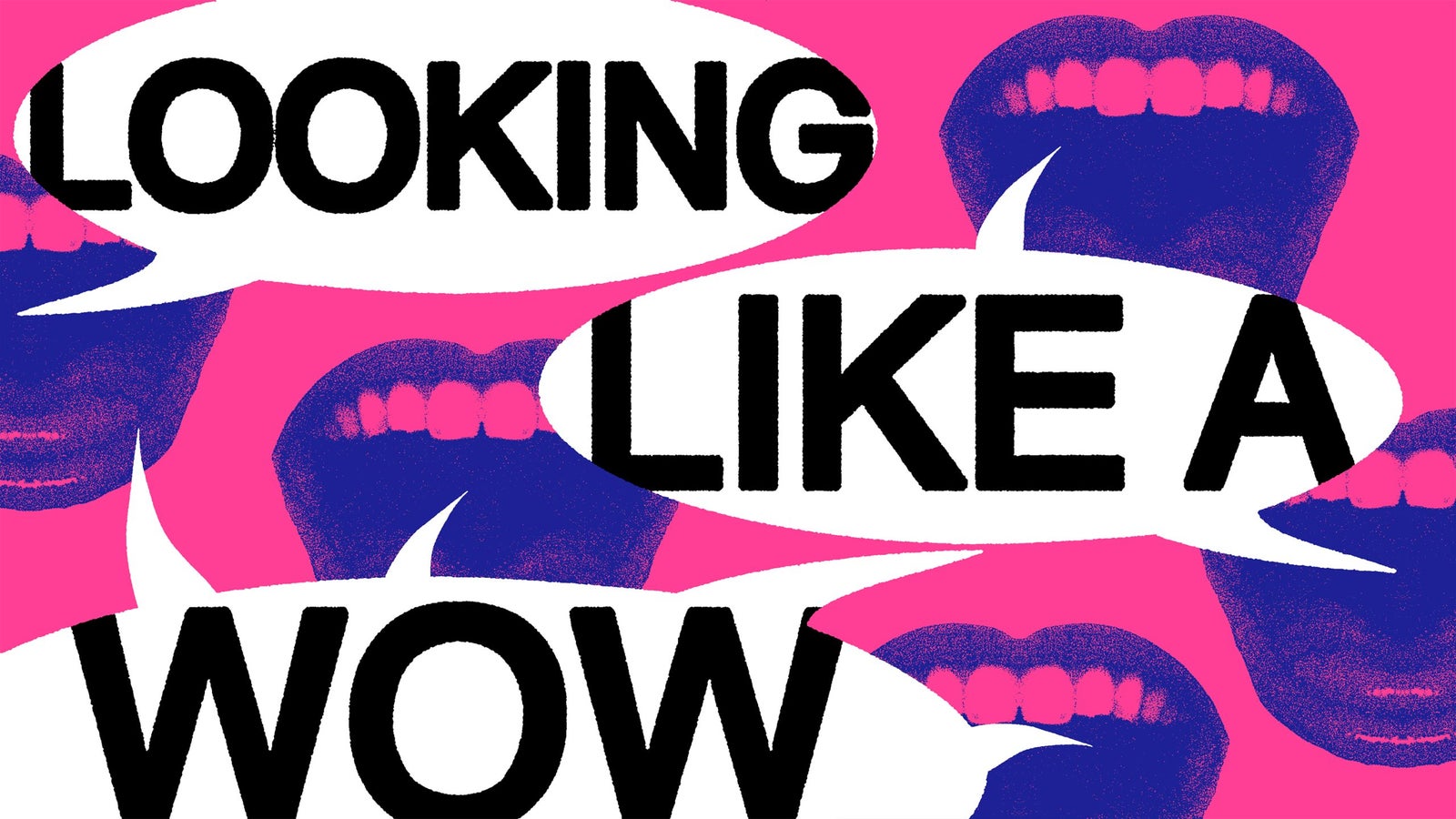
In India, our vote would be for a phrase: “Looking like a wow.”
This somewhat ungainly, even mildly ungrammatical sentence has been widely popular with movie stars, media moguls, market analysts, and mavericks alike. Actor Deepika Padukone popularized it, and Mukesh Ambani, Asia’s richest man, embraced it with rip-roaring laughter.
These four viral words have been impersonated, translated, adapted to reality television, and even set to music.
This week, a top minister in the Narendra Modi cabinet launched an event shouting the words into a microphone as thousands of women chanted them back.
At its heart, this is a story of how technology and social media — otherwise an unequal, hostile, often unsafe space for women — enabled the entrepreneurial passions of a self-made Indian woman.
This is the story of Jasmeen Kaur.
The woman who started the phrase owns and manages a small Delhi store that sells shiny, pearly kurta sets; velvety pant-suits; and shimmering silky fabrics. Married at the young age of 21, Kaur — now in her late forties — began her professional journey with two sewing machines in her living room, and a “Masterji” who sat cross-legged on the floor helping her stitch.
Today, with 1 million followers on Instagram, Kaur is a much sought-after celebrity.
Her fashion line is neither local and artisanal nor high-end and subtle. Instead, the clothes — like the woman who designs them — are in-your-face and unapologetic. They are cut from mass-produced, China-made machine fabrics. They might be considered garish and gauche for some sensibilities.
But that’s precisely why Kaur’s story is so powerful.
She ticks none of the conventional boxes. In many ways, Kaur has used Instagram to turn the idea of who can be an online “influencer” on its head. She’s not posh, manicured, or glamorous. Nor is she edgy, grungy, or satirical. She is entirely unselfconscious and authentic. And her success is a pushback against classist and elitist notions of what is tasteful, high-brow, and trendy.
Kaur models her new arrivals every afternoon on Instagram and Facebook. She has the storyteller’s gift for vivid description, especially in how she presents the color palette: “Laddoo peela” (yellow like a laddoo, an Indian sweet); “kaleji red” (deep red like liver or mutton); “ghiya green” (green like gourd); and so on. She jokes that her love for “laddoo peela” was a bad omen for India during the cricket World Cup (The Australians took the Cup; their gear is bright yellow).
It was during one such live sales pitch that Kaur spontaneously described the clothes she was modeling as “so beautiful, so elegant, just looking like a wow.” She was unaware that her life was about to transform almost immediately.
“They call me the ‘Wow Aunty’ wherever I go,” Kaur told me, chuckling and crying in turn during our conversation. “Yeh Live meri zindagi hai, mein iske zariye dadiyon, chachiyon, didiyon aur maasiyon se roz baat karti hoon. Main roti hoon toh woh rote hain, mein hasti hoon toh woh haste hain” — “This daily Live that I do [on Facebook and Instagram] is my whole life. Through this, I communicate directly with grandmothers, aunts, and sisters. If I cry, they cry; if I laugh, they laugh.”
This daily Live that I do is my whole life.”
Kaur, a devout Sikh, runs her business from the eponymous Jail Road market in West Delhi — located near South Asia’s largest prison, Tihar. Historically, this part of the city housed refugee colonies for Punjabis who moved from newly formed Pakistan to India during the partition in 1947. Kaur’s father, who died in an accident, ran a small restaurant near the railway station. Her eyes brim with tears when she speaks of him. “I wish he were alive to see what his daughter has made of her life. He would have been so proud of me,” she said.
As a middle-aged Indian who grew up before the country’s fintech and internet boom, Kaur often harks back to a pre-technology era in our conversation. “We used to play stapoo every evening,” she says, referring to a now-extinct Indian version of hopscotch. “Look at these children today — they are constantly on their phones, they never even step out.”
She pauses and laughs uproariously when I remind her how the smartphone has changed her life. “That’s true. Where would I be without my social life?” — a term she constantly uses to refer to social media.
India is Instagram’s biggest market globally, with nearly 230 million users. But it is a platform that remains dominated by men, who make up more than 70% of its user base.
Like elsewhere in the world, Instagram’s “beauty” filters and algorithm-backed subculture of vacuousness have often had a deleterious impact on the self-esteem and mental health of young women in India. Doctors speak of how the self-image of young girls is obsessively benchmarked against the faux notions of beauty that Instagram promotes and thrives on. Some even opt for needless cosmetic surgeries to photograph better.
Kaur offers a refreshing respite from the underbelly of social networks like Instagram. Even the kurtas she sells have sizes that go all the way up to 5XL, bucking beauty cliches.
I ask her what her message to women would be. “Work, work, work,” she says. “I was working even when my daughter Gurmehar was 1 year old.” Today, Gurmehar — now 18 — sometimes features in her mum’s videos. And what’s Kaur’s dream for the future? “Just this, I love what I do,” she says. “Now I must go if you have asked all your questions. My Live is starting in a few minutes.”