The United Arab Emirates’ digital revolution has an unlikely architect.
Khazna, a specialized real estate company that builds and rents out data centers, has quietly become the UAE’s AI infrastructure leader. The Dubai-headquartered company controls more than 70% of the country’s data center capacity. Its data centers store the servers of tech giants including Google, Amazon, and Microsoft.
Starting with only 2 megawatts of capacity in 2014 — just enough to power about 1,600 homes — Khazna has become the invisible backbone of the UAE’s trillion-dollar digital revolution. It now runs facilities capable of lighting up 200,000 households. It builds and rents digital warehouses, providing the power, cooling systems, and secure space that keep everything from Netflix streams to ChatGPT responses humming across the region.
Khazna’s rapid expansion reflects the UAE’s broader strategy to diversify beyond hydrocarbons. More crucially, it shows the Middle East’s ambition to challenge traditional Western dominance in digital infrastructure.
“We view data centers as the foundational infrastructure for the future economy,” CEO Hassan Al Naqbi told Rest of World. “Our long-term vision is to be a trusted partner for that foundation — not only across the Middle East but globally.”
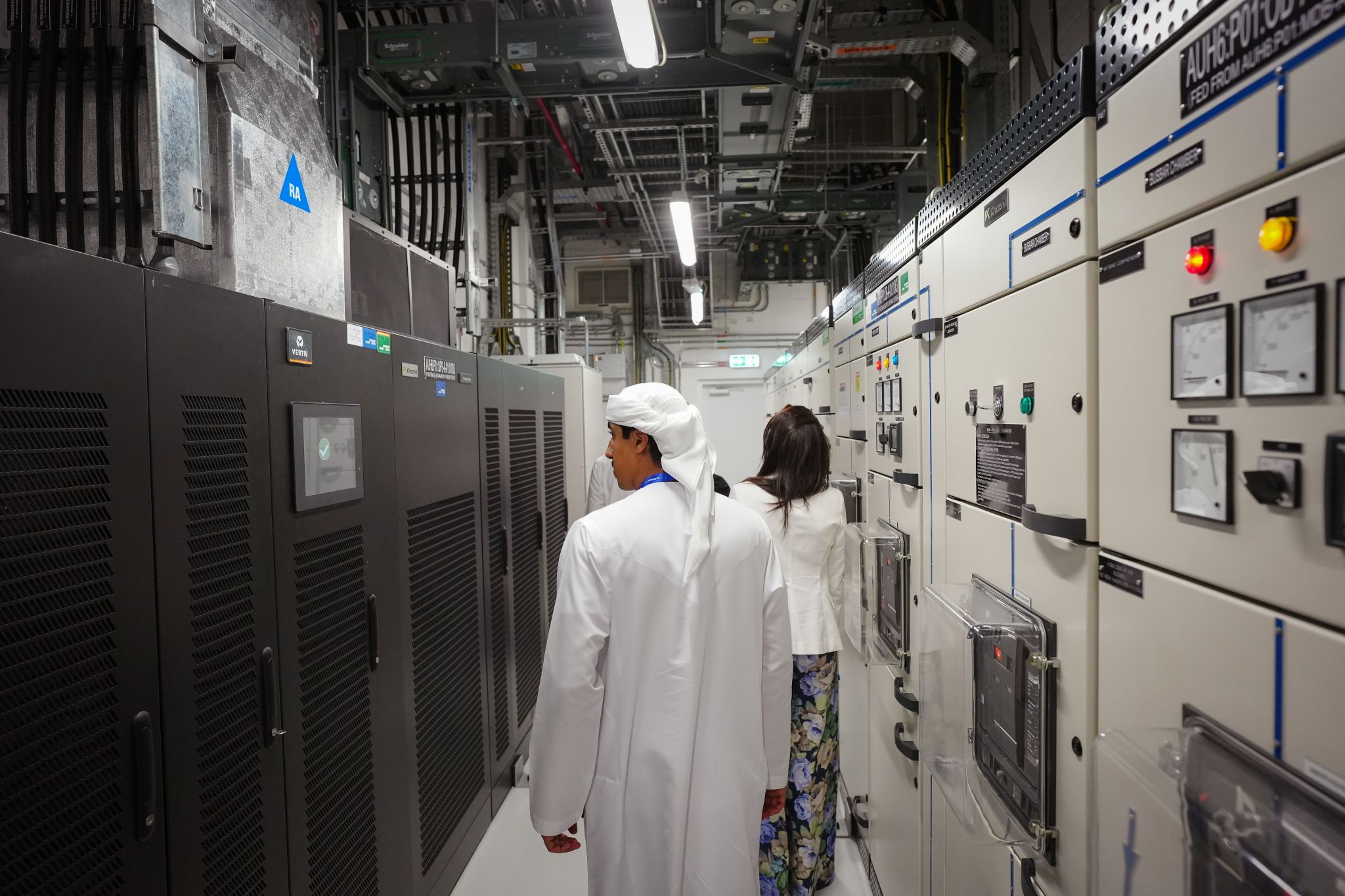
Khazna’s recent expansion includes projects such as a 32-megawatt facility in Abu Dhabi’s futuristic Masdar City and a massive 100-megawatt campus in Ajman designed for graphics processing units. The specialized AI chips generate tremendous heat because they run intensive parallel computations simultaneously.
Traditional cooling systems designed around air conditioning can’t remove heat fast enough at these levels, prompting operators like Khazna to deploy advanced solutions like direct liquid cooling and immersion systems that can handle 10 times more heat while using less energy.
Khazna’s business model emerged from a government mandate to build a national digital infrastructure. It has attracted major technology partners. Its parent company G42 — chaired by the UAE’s national security adviser, Tahnoun bin Zayed Al Nahyan — has partnered with U.S. companies including Stargate and Nvidia on AI. This has allowed Khazna to leverage G42’s existing business relationships: It collaborated with Nvidia to build AI factories with Nvidia-certified designs.
Advanced cooling technology is central to Khazna’s competitive advantage in building AI infrastructure.
We view data centers as the foundational infrastructure for the future economy.”
“The shift to extremely powerful GPUs packed into compact spaces has created major cooling challenges,” Johan Nilerud, Khazna’s chief strategy officer, told Rest of World. “The Ajman site is designed to meet those demands using advanced closed-loop liquid cooling systems and chip-to-chip cooling, reducing energy use and maximizing compute performance.”
Besides ongoing projects in Turkey and Saudi Arabia, Khazna’s expansion now extends far beyond the Middle East. It has identified sites in France and Italy.
Each new location must be built for scale, reflecting Khazna’s focus on future-proofing its investments, Nilerud said. This approach is particularly crucial in AI-focused facilities where chip technology, cooling demands, and connectivity requirements evolve rapidly.
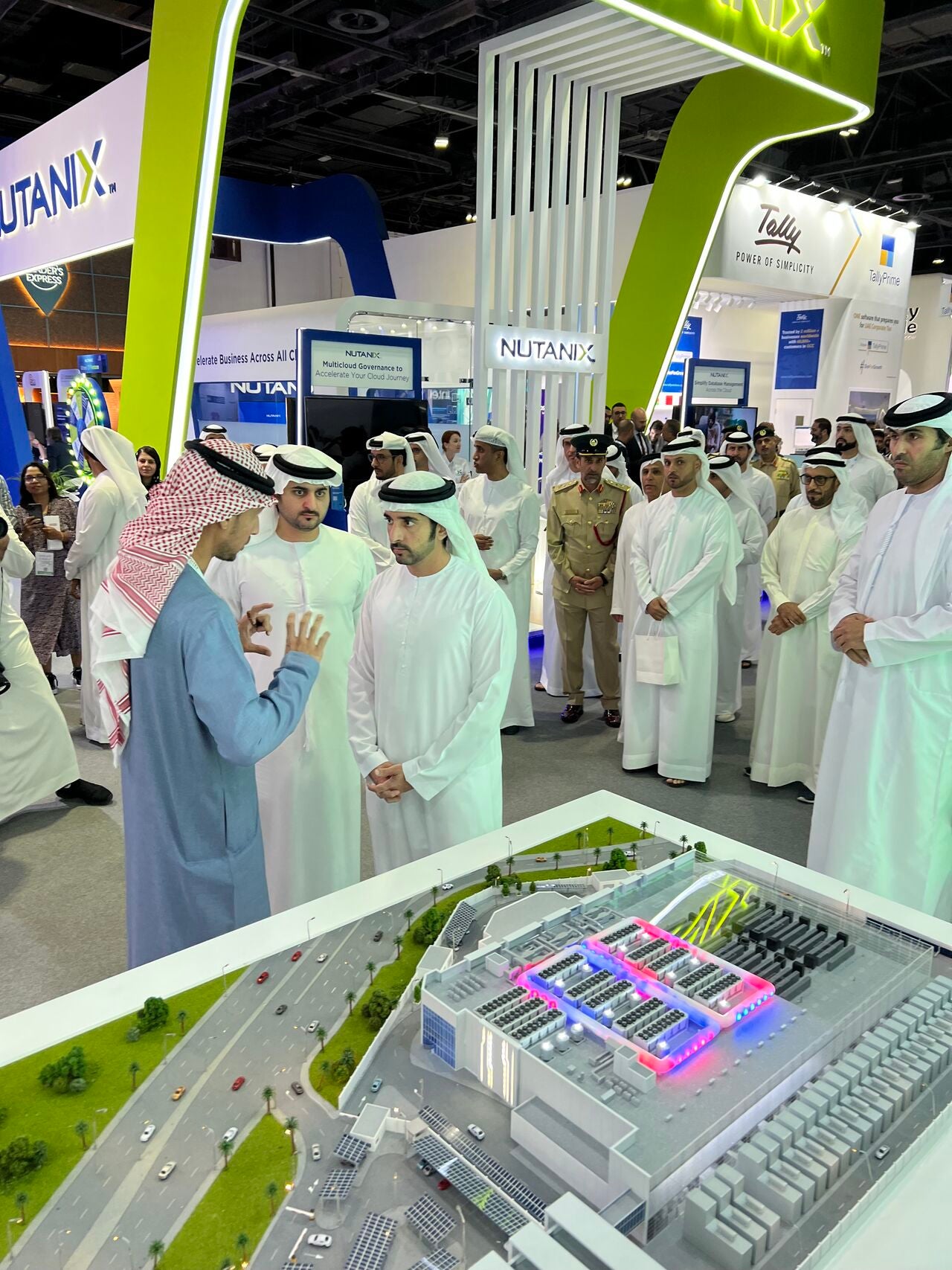
“The Ankara site is designed to serve both local customers and support Turkey’s broader data sovereignty needs,” Nilerud said. “Despite its size and strong GDP, Turkey remains significantly underserved in hyperscale infrastructure.”
Western markets have consistently underestimated the digital capabilities of Middle Eastern countries, according to Al Naqbi. Google, Amazon Web Services, and Microsoft were all drawn by both the UAE’s supportive regulatory environment and reduced latency for regional services.
“A common misconception is that the Middle East trails in digital infrastructure,” Al Naqbi told Rest of World. “In fact, countries like the UAE and Saudi Arabia are leapfrogging legacy systems.”
Market data supports this optimistic outlook, with cloud infrastructure spending in the UAE projected to grow 11% annually through 2029. Data center deployment in the region is also expanding steadily due to strict localization requirements in sectors like health care and banking.
“Unlike many other regions, a significant number of enterprises are investing in building their own data centers,” Victoria Mendes, a research manager overseeing the Middle East, Turkey, and Africa at IDC, told Rest of World. “This parallel growth in on-premises infrastructure is expected to grow at a five-year compound annual growth rate of 4%.”
Countries like the UAE and Saudi Arabia are leapfrogging legacy systems.”
Still, significant challenges remain across the regional market. Supply chain constraints pose additional risks, particularly for accessing the latest-generation GPUs and AI servers.
“Data center operators in the UAE face several challenges, including [a] shortage of skilled professionals,” Mendes said. “Managing advanced facilities while meeting sustainability goals demands expertise that’s scarce globally.”
Environmental concerns make it complex to operate in the desert climate, she said. Regional geopolitical tensions create additional uncertainty for long-term planning and investment decisions.
Across the Middle East, thermal management and water use for cooling present additional complexities, particularly for sustainable operations, said Bjorn Viedge, general manager at Alec Data Center Solutions, a Dubai-based builder of modular data centers.
“For a multitude of reasons, access to the latest GPUs and AI servers has the potential to be a bottleneck,” he told Rest of World.
Sustainability initiatives are already underway, with Khazna integrating solar power and biofuels to reduce environmental impact. The efforts align with the UAE’s goal of achieving net-zero emissions by 2050.

The economic implications extend well beyond the boundaries of the technology sector. The UAE’s National Digital Economy Strategy aims to increase the country’s share of non-oil GDP to more than 20% by 2031.
“It’s not an exaggeration to say that this infrastructure underpins the country’s economic diversification,” Viedge said. “Much like the UAE’s world-class airports powered its tourism sector, data centers will power its digital economy.”
If you wait two years, you are at risk of building something the chip technology has already outgrown.”
Construction speed remains the industry’s most pressing challenge as AI workload demands accelerate, said Nilerud. Delivering data centers fast enough to keep pace with rapidly evolving chip technology requires a careful balance between speed and operational standards, according to Al Naqbi.
“If you wait two years, you are at risk of building something the chip technology has already outgrown,” he said.
Khazna is taking a partnership approach to international expansion, working with local companies rather than going it alone. The company sees enormous potential in emerging markets such as Kenya, citing connectivity infrastructure and renewable power availability.
“We don’t aim to be the dominant player,” Nilerud said. “Our goal is to be a key contributor — bringing technical expertise and operational excellence that complement what’s already underway and help accelerate digital development.”