This story is built on previous Rest of World reporting from Emily Wither, Kaya Genç, and Danny Makki.
A dictator falls unexpectedly. Then what?
Fourteen years of a brutal civil war came to a sudden end on the morning of December 8, 2024, when rebel fighters stormed the Syrian capital of Damascus. Government forces fell away, and President Bashar al-Assad, whose family had ruled the country for more than 50 years, fled to Moscow.
Over the course of a year of reporting, Rest of World spoke to dozens of members of the Syrian tech community, both in and outside the country. These are some of the people who are now trying to build the country — and the digital future — they have long dreamed of.
In his first interview on the job, Abdulsalam Haykal, Syria’s new tech minister, acknowledges that modernizing the country’s infrastructure won’t be easy: “Syria was disconnected from the world for 15 years. And in that time, the world made a leap of 50 years. So, they weren’t a normal 15 years.”
Hayak had been in exile in Abu Dhabi when Assad was overthrown. He was initially unsure if it was safe to return. But while he debated joining the new government, he felt “the anticipation that every Syrian had over the years for this moment, when everyone can participate, everyone can feel this sense of ownership.”
“It was our dream, but it was surprising,” Hamza Hourani said of watching his country change overnight. Hourani is the founder of the educational app Quizat. “The first thing that happened when the regime fell is that the mobile phones started working again!”
While neighboring countries saw a tech explosion embracing online services, e-shopping, and fintech in the 2010s, Syria’s economy was plagued by corruption. Many large companies were controlled by Assad’s relatives or allies of the regime. Smartphone ownership was low. International apps like WhatsApp and Skype were popular but sometimes blocked by government blackouts.
The war kept Syria largely disconnected from the digital world. Infrastructure was destroyed, digital payment options were scarce, and internet speeds remained slow. State institutions operated with minimal efficiency behind stacks of paperwork. The necessary ingredients for a startup scene — from incubators to accelerators, mentorship, training, seed funding schemes, and venture capital — were absent.
According to tech entrepreneur Ragheed Obeid, “During the war, we had electricity for half an hour every day. Many people bought solar panels to access the internet. Video calls were almost impossible. It was very hard to upload your apps on Google Play. GitHub was banned. The one tech company that focused on food deliveries shut down eventually.” He fled to Turkey in 2018.
“I was wanted by Assad’s regime because I was an anti-government protestor. I said, ‘I’ll move [to Turkey] for maybe one or two months.’ I stayed in Turkey for the next 13 years,” said Mojahed Akil, an entrepreneur who fled to Istanbul. Since the fall of Assad, he has visited Syria and launched Halain.net, which he describes as a Syrian competitor to Airbnb.
Some of the 2.6 million Syrians living in Turkey as refugees have returned to Syria to help rebuild its tech sector. The educational app Quizat, the ride-hailing app YallaGo, and the grocery delivery app BeeOrder are three Syrian apps leading the charge. Their efforts are part of a growing movement to establish tech-driven startups and overhaul Syria’s digital infrastructure.
“We have a new generation who have been working for Google, Apple … and they’re just emerging out [of exile],” said Khaled Moustafa, founder of YallaGo. “So, they will be able to build. We will be able to rebuild.”
In February, the nation hosted its first tech conference in 50 years, aiming to connect Silicon Valley with Syria’s emerging tech industry. U.S. President Donald Trump has ordered the lifting of most sanctions, clearing the way for international funding.
Before returning to Syria, Abdulwahab Omira, who helped coordinate the conference, had been hesitant about a government led by new President Ahmed al-Sharaa, a former militant leader whom the U.S. had previously designated as a terrorist. But he found Sharaa to be open-minded, familiar with various AI tools, and enthusiastic about the tech scene. “He has an entrepreneurial mindset,” Omira said.
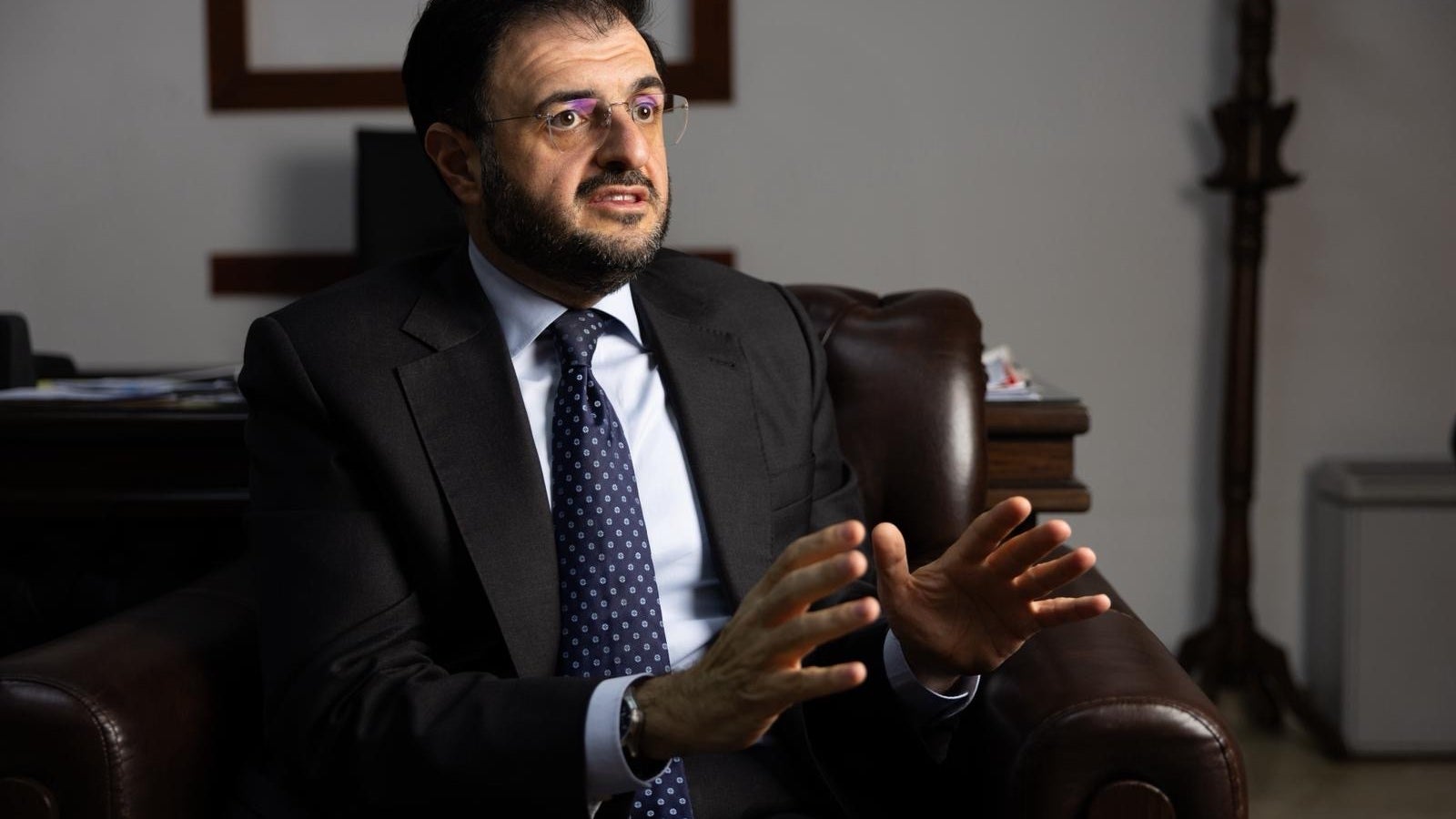
Modernizing the country’s infrastructure won’t be easy: Electricity is in short supply, internet speed is slow, and the vast majority — about 64% — of Syrians are still not online, though that is rapidly changing. “It might seem to an outsider as Mission Impossible,” says Haykal, the new tech minister. “That’s why you need the will, because it is a complex situation. So we have the intent and we have the will. What we need more of are the tools. Technology is a tool. Money is a tool. Experience is a tool. Expertise is a tool. And we’re building that tool kit.”
Haykal sees now as the time for action: “The only way is forward. Some people have the luxury of just walking away. But this is really a historic chance that won’t come again for Syrians, to come together around this moment and this transition.”